
Referral gratitude guide
Client Referral Thank-You Gifts Without the Commission Feeling
Thank someone for trust and advocacy while keeping the gesture personal, compliant and free of future obligation.

Quick answer
A referral thank-you should recognize trust, not mimic a commission. Check industry and employer rules, wait until the introduction is complete, keep value modest and unrelated to deal size, and never imply that more referrals are expected. A specific note often matters more than an expensive object.
Thank the trust behind the introduction
A referral puts the sender's reputation into the relationship. Thank that confidence rather than celebrating revenue won or assigning a price to the lead.
Write what the introduction meant and how carefully it was received. Do not disclose the referred party's private details or outcome.
Check whether a gift is allowed at all
Financial, legal, healthcare, real-estate, public-sector and procurement relationships can have strict referral, fee-sharing or gift rules. Confirm both organizations' policies before sending anything.
When a physical gift is unsuitable, a sincere note or compliant charitable option may be the better expression.
Referral gifts that do not look like payment
Keep the choice independent of the eventual contract value. Use meaning, provenance and restraint rather than escalating spend with deal size.
- ●A handwritten note with a small-origin food gift
- ●A named-hive experience tied to trust or thoughtfulness
- ●A book or maker object connected to a shared interest
- ●A private cultural experience with flexible timing
- ●A team-shareable gift where individual acceptance is restricted
Choose timing that closes the loop cleanly
Acknowledge the introduction promptly, then send any permitted gift after the referral action is complete. Avoid delivery during a tender, negotiation or decision involving the referrer.
Do not turn the thank-you into a campaign asking for the next introduction. One clear gesture is enough.
Write a note with no hidden ask
Name the trust shown, express appreciation and stop. Do not mention commission value, pipeline, quotas or a referral program unless the relationship is explicitly governed by one.
For a named hive, connect the name to an observed quality and explain the experience accurately without inflated environmental claims.
Protect every person in the referral chain
Do not reveal whether the referred person became a client unless that information can be shared. Collect the referrer's delivery details securely and offer an easy decline.
Never request a testimonial, social post or further introduction as the price of accepting the gift.
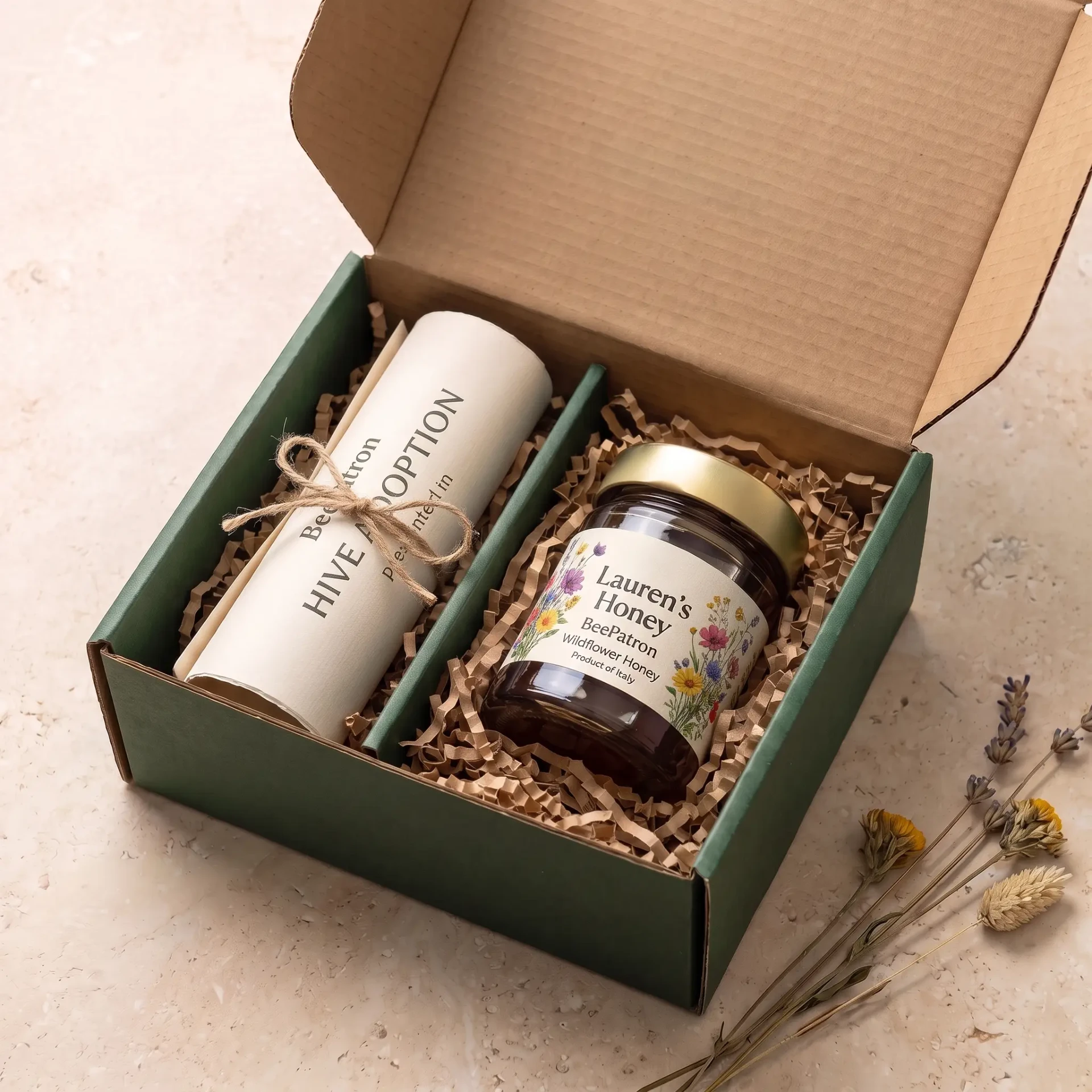
BeePatron presentation
See the BeePatron corporate gift presentation
A considered presentation built around personalized Tuscan honey, a hive adoption certificate and a story recipients can continue following.


Sources and further reading
Primary and institutional references used to review the factual claims in this guide. Product details and prices are BeePatron information.
Frequently asked questions
Is it appropriate to give a client a referral gift?
Sometimes, if applicable professional rules and both organizations' policies permit it. The gift should be modest and unrelated to transaction value.
How much should a referral thank-you gift cost?
Use policy limits and proportionality, not a percentage of revenue or deal size.
When should a referral gift be sent?
After the introduction is complete and away from any pending decision the gift could appear to influence.
What should a referral thank-you note say?
Thank the person for their trust, name why the introduction mattered and avoid asking for another referral.
Thank trust with more than a transaction
Create a restrained named-hive thank-you built around the relationship, not the value of the referral.
Design a referral thank-you