Beehive adoption is a way for people to support a real beekeeper and become connected to the story of a living hive, without needing to manage bees themselves.
Instead of simply buying a jar of honey from a shelf, you become a patron of a hive cared for by an experienced beekeeper. Depending on the program, you may receive updates from the apiary, a personalized certificate, photographs or seasonal observations, and honey associated with the supported apiary and harvest.
At BeePatron, beehive adoption is designed as a premium, personal experience. You choose a real named hive at Le Gusciane, follow approved seasonal information through a private Hive Room, and receive artisanal honey according to the selected package and harvest conditions. It is part gift, part connection to a real place, and part patronage of skilled apiary work.
What does beehive adoption mean?
Beehive adoption usually means that an individual, couple, family, or company financially supports the care of a real beehive for a period of time, often a season or a year.
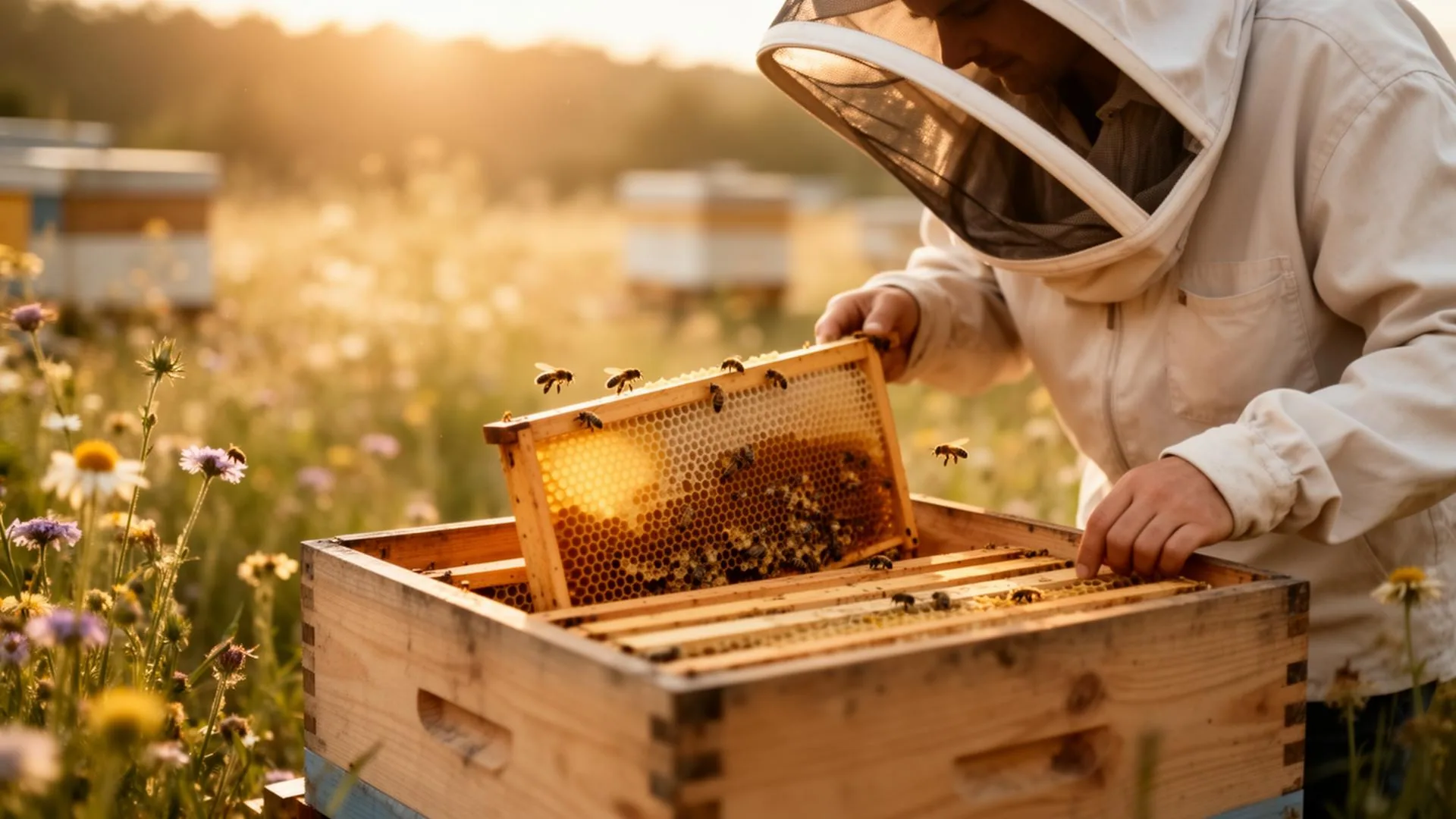
The bees remain in the hands of professional beekeepers, who manage the hive responsibly, monitor its health, support the colony through seasonal changes, and harvest honey when nature allows. The adopter is not responsible for handling the bees or maintaining the equipment. Instead, they become part of the hive's journey from a distance.
A simple way to think about it is:
You are not becoming a beekeeper. You are becoming a patron of a hive.
This distinction matters. Beehive adoption gives people a personal connection to beekeeping without requiring land, protective gear, training, or daily responsibility. It turns honey from an anonymous product into something with a place, a season, and a story behind it.
How does beehive adoption work?
Every program is slightly different, but most beehive adoption experiences follow a similar structure.
1. You choose an adoption plan
The adopter selects a plan that fits the level of experience or gifting they want. Some programs are simple symbolic sponsorships. Others include honey, certificates, seasonal updates, personalized packaging, or access to a digital dashboard.
With BeePatron, the experience is built around adopting a real hive and receiving a more premium connection to it throughout the season.
2. A beekeeper cares for the hive
Once adopted, the hive remains in its apiary and is cared for by a trusted beekeeper. The beekeeper handles everything that responsible hive management requires: seasonal inspections, colony support, honey super management, and harvesting only when the hive and season allow.
The adopter does not need to do anything. The whole point is to make beehive ownership emotionally accessible without making it operationally complicated.
3. You follow the hive's journey
This is where beehive adoption becomes much more meaningful than an ordinary purchase.
Depending on the program, adopters may receive:
- seasonal updates
- beekeeper notes
- photos from the apiary
- progress milestones
- harvest updates
- educational insights about what is happening in the hive
BeePatron goes further by creating a private hive dashboard where customers can follow their hive's season, view progress updates, and feel connected to the origin of their honey.
4. You receive honey or adoption rewards
Many adoption programs include some form of reward or keepsake. That may be:
- artisan honey
- a personalized adoption certificate
- a named hive
- a gift package
- printed or digital updates
- branded or customized jars
At BeePatron, the honey is not treated as a generic add-on. It is a central part of the experience: a beautifully packed harvest connected to the hive you supported.
Is beehive adoption real or symbolic?
This is one of the most common questions.
Beehive adoption is usually a real support relationship expressed through a symbolic form of ownership. The adopter does not legally own the physical hive, the bees, or the apiary. The beekeeper remains responsible for the colony and all practical decisions.
However, the support itself is real.
Your adoption helps fund the ongoing work of beekeeping, including hive care, time, expertise, and the realities of managing healthy colonies through changing weather and seasons. In many programs, the honey, updates, or certificates are connected to a genuine apiary and a real beekeeper, not a fictional concept.
The most trustworthy adoption programs are transparent about this. They clearly explain:
- who the beekeeper is
- where the hive is located
- what the adopter receives
- whether honey is included
- how the program supports beekeeping
BeePatron is built around this distinction. A chosen named hive becomes the heart of the experience, while Luca and Alessandro remain responsible for the physical apiary at Le Gusciane. Patronage does not transfer the colony, equipment, land or beekeeping decisions to the customer.
Do you own or exclusively adopt the hive?
In most online adoption programs, the word adopt describes a relationship, not a property transaction. Bees are livestock under active care, and a hive is working agricultural equipment inside an apiary. The beekeeper must remain free to inspect, feed, treat, combine, split, move or requeen colonies when conditions require it.
A purchase therefore does not normally give the adopter:
- legal title to the bees, hive boxes or apiary land
- the right to make colony-management decisions
- unrestricted access to the apiary
- a guaranteed claim on every product made by that colony
- proof that nobody else supports the same physical hive
Named does not automatically mean exclusive
Naming creates a clear personal focus: it gives the patron a hive identity to choose, remember and follow. Exclusivity is a separate commercial promise. Unless a provider explicitly sells exclusive patronage, customers should not assume that only one person or company can be connected to a colony.
At BeePatron, patronage is the accurate term. The named hive is central to your experience, but physical care and operational control remain with the Le Gusciane apiary.
Does the honey come from one exact hive?
Not always—and a responsible program should never imply single-hive provenance unless its harvesting and packing process can document it.
During a normal harvest, beekeepers may remove honey supers from several colonies, extract frames in the same working session and combine honey from the apiary before settling, filtering or filling jars. In that case, the honest origin is the apiary and harvest, not one physically isolated hive.
These descriptions mean different things:
- Single-hive honey: documented as extracted and kept separate from one colony.
- Single-apiary honey: produced by colonies at one apiary but potentially combined during extraction.
- Regional honey: associated with a wider geographic area and potentially sourced from more than one apiary.
- Monofloral honey: characterized mainly by one botanical source; it does not necessarily come from one hive or apiary.
BeePatron honey comes from the Le Gusciane apiary according to package, season and harvest conditions. Choosing a named hive personalizes the patronage journey; it does not by itself certify that every drop in a jar was isolated from that one colony.
For a practical breakdown of country percentages, regional claims, single-apiary terminology and misleading home tests, read our 2026 Tuscan honey label guide.
This distinction is increasingly important as European honey rules place greater emphasis on accurate origin labelling and traceability. The European Commission's honey overview explains current EU composition and origin-labelling requirements.
What happens when the honey harvest changes?
A hive is not a factory, and a harvest is not a fixed production run. Flowering, temperature, rainfall, drought, colony strength, pests and the beekeeper's duty to leave sufficient stores for the bees can all change how much surplus honey is available.
The colony's seasonal cycle is closely connected to flowering plants, temperature and precipitation. Brood rearing, foraging and food storage rise and fall through the year, while management decisions change with them. Penn State Extension's seasonal management guide provides a useful overview of that relationship.
A credible adoption program should explain:
- whether honey is guaranteed or conditional
- whether the stated quantity is fixed, estimated or package-dependent
- what happens when the harvest is late or smaller than expected
- whether honey may come from the wider supported apiary
- how substitutions, delays or other remedies are handled
BeePatron presents honey as part of the selected package subject to harvest conditions and season. That qualification is not a weakness in the experience; it is an honest reflection of agriculture.
What do you receive when you adopt a hive?
The exact inclusions depend on the provider, but a strong beehive adoption experience often includes a combination of emotional, digital, and physical elements.
Common adoption benefits may include:
- A named or assigned hive
- A digital or printable adoption certificate
- Photos or updates from the apiary
- Educational emails or seasonal hive notes
- Honey jars or harvest gifts
- Gift-ready presentation
- A way to support a beekeeper directly
With BeePatron, the experience is designed to feel premium:
- A chosen named hive at the Le Gusciane apiary
- A private Hive Room with approved seasonal information
- Progress milestones through the beekeeping season
- A meaningful story behind your honey
- Gift-ready certificates
- Artisanal honey according to package, harvest conditions, and season
- A refined experience suitable for personal purchase or gifting
This makes BeePatron more than a honey subscription. It is a way to become emotionally connected to where your honey comes from.
A named hive to follow. A real apiary to know.
BeePatron turns hive patronage into a premium seasonal experience rooted at Le Gusciane.
Explore BeePatron AdoptionWhy do people adopt beehives?
People adopt beehives for different reasons, but most fall into one of five groups.
1. They want to support bees and beekeepers
Bees and other pollinators play an important role in ecosystems and food production. At the same time, small-scale beekeeping requires time, skill, and year-round care that many consumers never see.
Beehive adoption makes that work more visible and gives people a direct-feeling way to support it.
2. They want a more meaningful alternative to buying honey
A jar of honey can be delicious. But honey from a hive you have followed through the season carries a different kind of value. It has context. It has a face behind it. It has a place of origin.
Beehive adoption turns consumption into connection.
3. They are looking for a unique gift
Many people struggle to find gifts that feel personal without becoming clutter. Beehive adoption works especially well as a meaningful gift because it combines:
- a beautiful story
- a physical product
- an ongoing experience
- a feeling of purpose
It is not just something to unwrap once. It unfolds over time.
4. They love nature, food, or craftsmanship
Beehive adoption appeals naturally to people who appreciate:
- premium food
- artisanal production
- rural landscapes
- sustainability
- traditional craftsmanship
- slower, more intentional living
For them, the hive is part of a wider appreciation for where good things come from.
5. They want something memorable for themselves
Not every adoption needs to be a gift. Some people adopt a hive simply because it feels special to have one connected to them. They enjoy watching the season progress, learning more about bees, and eventually receiving honey that carries a personal story.
How does beehive adoption help beekeepers?
A good adoption program creates value on both sides.
For customers, it creates a richer and more emotional experience around honey. For beekeepers, it creates additional financial support and a more direct relationship with people who care about their work.
This can help beekeepers:
- earn beyond the simple commodity value of honey
- tell the story of their apiary
- build a loyal audience
- create more predictable seasonal revenue
- highlight the care behind responsible hive management
BeePatron's model is designed around that idea. Rather than treating beekeepers as anonymous suppliers, the platform makes them part of the customer experience. Their identity, region, and role are visible, which gives the final product more authenticity and value.
How is beehive adoption different from simply buying honey?
Buying honey is a transaction.
Adopting a hive is a relationship.
When you buy an ordinary jar of honey, you may not know:
- who produced it
- where it came from
- what flowers shaped its character
- how the hive was cared for
- what season it belongs to
With beehive adoption, those details become part of the experience. You are not only receiving honey. You are receiving:
- a connection to a real place
- a connection to a beekeeper
- a seasonal story
- a sense of participation
That is why hive adoption can feel more premium than a standard honey purchase. The value is not only in the jar. It is in the journey that leads to it.
Is beehive adoption a good gift?
Yes. In fact, beehive adoption is one of the most naturally giftable sustainable experiences because it combines emotion, personalization, and something tangible.
It works especially well for:
- birthdays
- anniversaries
- weddings
- Mother's Day
- Father's Day
- Christmas
- housewarming gifts
- client gifts
- employee appreciation
- people who "already have everything"
A BeePatron adoption can feel particularly thoughtful because the recipient receives more than an item. They receive a named-hive story, a certificate, approved seasonal information, and artisanal honey according to the selected package and harvest.
It is the kind of gift people talk about because it is unusual, beautiful, and easy to understand.
What should you look for in a beehive adoption program?
Not all adoption programs are the same. Before choosing one, it is worth looking for a few signs of quality.
Look for transparency
A strong program clearly explains who cares for the bees, where the hives are located, what the customer receives, whether patronage is shared, and what the word adoption does and does not confer.
Look for a real experience
The best adoption programs do not stop at a certificate. They create ongoing connection through updates, storytelling, or digital access.
Look for thoughtful honey delivery
If honey is included, look beyond presentation. Check its stated apiary or regional origin, whether quantities depend on the harvest, when fulfilment is expected and what happens when nature changes the plan.
Look for gifting quality
If you are buying for someone else, check whether the experience feels gift-ready, elegant, and easy to present.
Look for beekeeper visibility
Programs that highlight real beekeepers tend to feel more authentic than programs that hide the human side of the process.
Look for careful environmental claims
Supporting managed honey bees, supporting a beekeeper and restoring biodiversity are related ideas, but they are not interchangeable. A provider should not promise a precise number of bees, flowers pollinated, colonies saved or acres restored unless it can show how that result was measured.
Strong pollinator work considers habitat, forage, wild pollinators, pesticide exposure and local ecology as well as managed honey-bee colonies. The Pollinator Partnership's Business for Bees program illustrates this broader approach.
Use this six-question provider checklist
- Who owns and manages the physical colony?
- Is the named-hive relationship shared or exclusive?
- What evidence connects the program to a real beekeeper and apiary?
- What is the precise origin of any included honey?
- What changes if weather or colony conditions reduce the harvest?
- Which environmental outcomes are documented, and which are simply aspirations?
BeePatron was designed around real beekeeper visibility, a named-hive relationship, premium gifting and seasonal storytelling from Le Gusciane. Package facts and harvest conditions remain more important than sweeping promises.
Final thoughts
Beehive adoption is a beautiful idea because it sits between product and purpose.
It lets you support a real beekeeper, connect with the changing rhythm of a hive, and receive honey with a story behind it. It gives people a way to participate in beekeeping without needing to become beekeepers themselves.
For some, it is a thoughtful gift. For others, it is a more meaningful way to enjoy honey. For many, it is simply a small but memorable way to feel closer to nature.
At BeePatron, we believe honey should not feel anonymous. It should carry a place, a season, and the care of the people who made it possible.