Tuscany Apiary Calendar
Beekeeping Seasons in Tuscany: What Changes Through the Year
A grounded seasonal guide to colony activity, flowering, inspections and harvest—plus why no responsible apiary can promise an identical calendar every year.
Quick answer
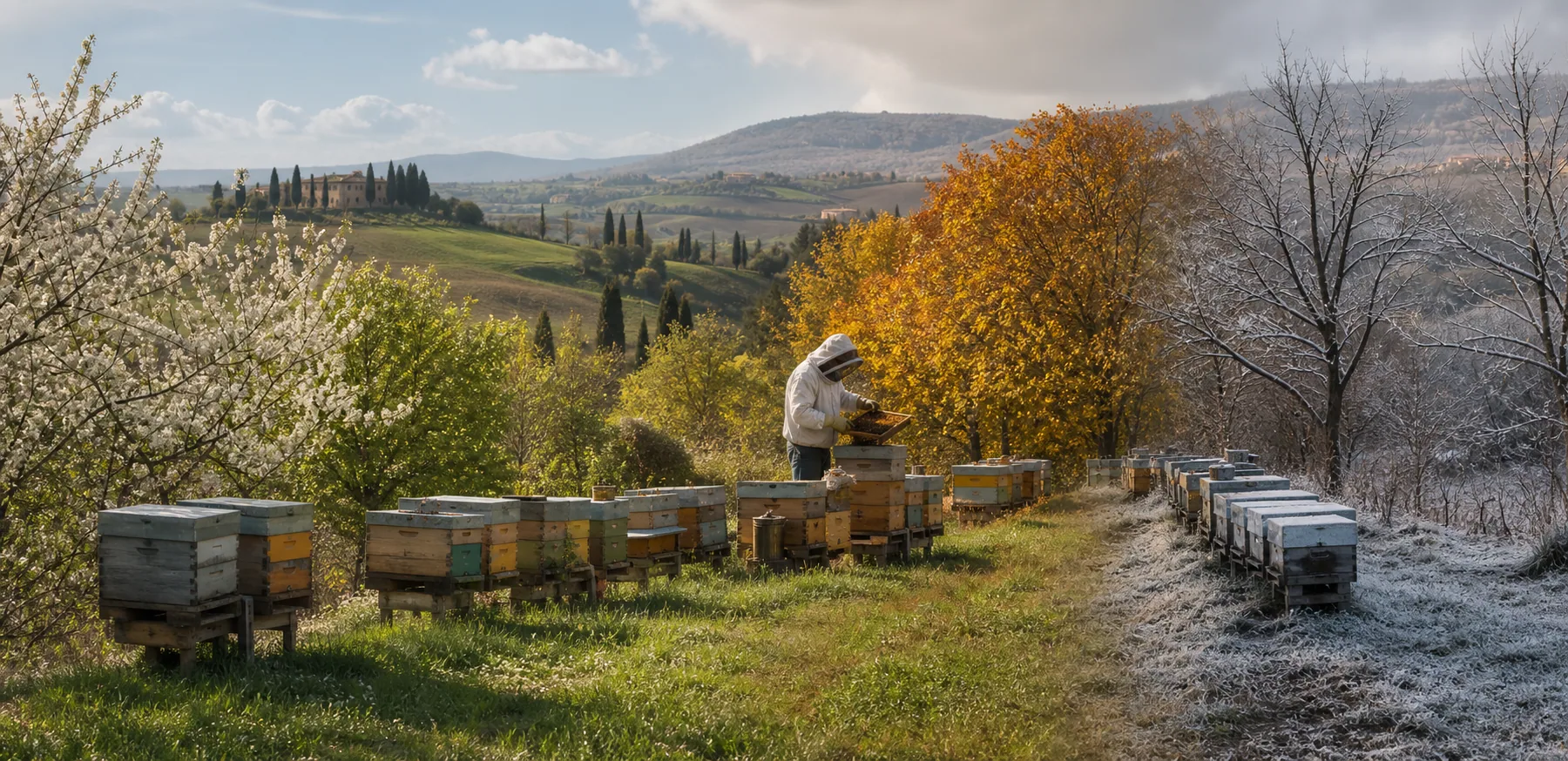
A Tuscan apiary generally moves from winter conservation into spring expansion, peak forage and swarm-management work, summer heat and possible harvest activity, then autumn preparation for colder months. Exact timing changes with altitude, local flora, rainfall, temperature and colony condition. The beekeeper responds to observed conditions rather than a fixed tourism calendar.
The apiary follows conditions, not a fixed clock
Seasonal guides are useful because colony needs and available forage change through the year. They become misleading when presented as guaranteed dates. A warm spell can accelerate flowering; rain can limit flight during a short bloom; drought can reduce nectar even when plants appear abundant.
Tuscany's varied terrain adds another layer. Coastal, hill and mountain areas do not move in perfect synchrony. Responsible beekeeping begins with the colony and its immediate landscape, not a generic monthly checklist copied onto every apiary.
Winter: conservation and careful observation
During colder periods, the colony conserves energy and relies on stored food. Activity at the entrance may be limited, though bees can fly on suitable mild days. Beekeepers avoid unnecessary disturbance and assess conditions with methods appropriate to weather and colony need.
Winter is also planning time: equipment can be prepared, records reviewed and the coming season considered. A quiet-looking hive is not an inactive system, and opening it simply to create content would put storytelling ahead of care.
Spring: expansion, flowering and close attention
As temperatures and forage improve, brood rearing and colony population can expand. The beekeeper watches food reserves, space, queen-right status and signs that require intervention. Swarming is a natural reproductive process, so management decisions may become time-sensitive.
Spring honey potential depends on the overlap between strong colonies, suitable weather and nectar-producing flowers. A beautiful bloom does not guarantee a crop: bees need access, flying conditions and sufficient nectar flow.
Summer: forage, heat and harvest decisions
Summer can bring strong activity, but it can also bring heat and dry conditions. Water availability, ventilation, forage gaps and colony health all matter. Harvest timing depends on what the bees have stored and whether the honey is sufficiently mature—not on a promised dispatch date.
When honey is removed, the beekeeper must preserve enough resources for colony welfare and manage the product hygienically. BeePatron therefore describes honey inclusions at plan level while keeping harvest language conditional on the apiary and season.
Autumn: preparing the colony for what follows
After major flows subside, attention turns toward food stores, colony strength, health management and equipment. Decisions taken now influence the colony's ability to enter winter in suitable condition.
Autumn is not merely the end of the story. It is the transition that reveals whether a beekeeping model values continuity. Photographs of honey jars are easy to celebrate; preparation and monitoring are the quieter work behind the next season.
How to follow a real apiary responsibly
Look for dated, location-specific observations and captions that say what is actually known. General education should be labelled as such. A digital experience should never imply that every patron receives a private sensor, owns a colony or can demand an inspection for entertainment.
BeePatron's public Apiary Journal is designed for verified beekeeper material and accurately described images. The Tuscany experience connects that evidence to broader seasonal learning while keeping package inclusions separate and explicit.
Sources and further reading
Primary and institutional references used to review the factual claims in this guide. Product details and prices are BeePatron information.
Frequently asked questions
When is honey harvested in Tuscany?
There is no single guaranteed date. Timing depends on floral source, weather, location, colony condition and whether stored honey is mature enough to remove.
Are bees inactive during winter?
No. Colony activity changes and may be less visible, but bees continue regulating the nest and can fly during suitable weather.
Is spring always the busiest beekeeping season?
Spring often requires close attention as colonies expand, but workload varies. Health, forage, heat, harvest and winter preparation create important work in other seasons.
Can patrons visit or inspect a BeePatron hive?
The digital experience does not itself guarantee physical visits or access to apiary operations. Current plan details describe what is included.
Follow Tuscany Through a Living Apiary
Choose a named hive and follow a seasonal story grounded at Le Gusciane in Camaiore.
Compare adoption plansContinue exploring
A Year in the Life of a Beehive
Explore the colony biology behind the seasonal framework.
Read nextThe Tuscany Beehive Experience
See how BeePatron connects seasonal learning to Le Gusciane.
Read nextItalian Beekeeping vs Commercial Production
Compare approaches without relying on simplistic claims.
Read next