Seasonal beekeeping guide
A Year in the Life of a Beehive: What Happens Each Season
A honey-bee colony is never static. Follow the annual rhythm from winter clustering and spring buildup to summer forage, harvest decisions, and autumn preparation.
Quick answer
A managed honey-bee colony contracts during winter, expands rapidly in spring, reaches peak foraging strength in late spring or summer, and prepares stores for the next cold period in autumn. Exact timing depends on climate, forage, genetics, weather, and beekeeper decisions, so a Tuscan hive will not follow precisely the same calendar as a hive in northern Europe or North America.
First, think of the colony as a superorganism
A hive is more than a box filled with individual insects. Workers regulate temperature, rear brood, collect food, defend the entrance, clean cells, and communicate forage locations. The queen’s egg laying responds to colony conditions, while drones appear mainly when reproduction is seasonally advantageous.
Because these roles are coordinated, beekeepers evaluate the colony as a living system: brood pattern, adult population, food stores, queen status, pests, disease signs, temperament, and available space all matter together.
Winter: conservation, clustering, and survival
In cool conditions, honey bees form a winter cluster and generate heat through muscular activity. They consume stored honey while gradually moving through the comb. The center of the cluster remains warmer than the exterior, especially when brood is present.
Winter is not simply ‘sleep.’ The colony is active inside the hive, and warm spells may allow cleansing or orientation flights. Beekeepers minimize unnecessary disturbance, monitor food risk, check weather damage, and manage threats according to local practice.
Spring: rapid buildup and swarm pressure
As days lengthen and forage returns, brood rearing accelerates. New workers are needed to replace winter bees and exploit nectar and pollen flows. A colony can expand surprisingly quickly when weather and forage align.
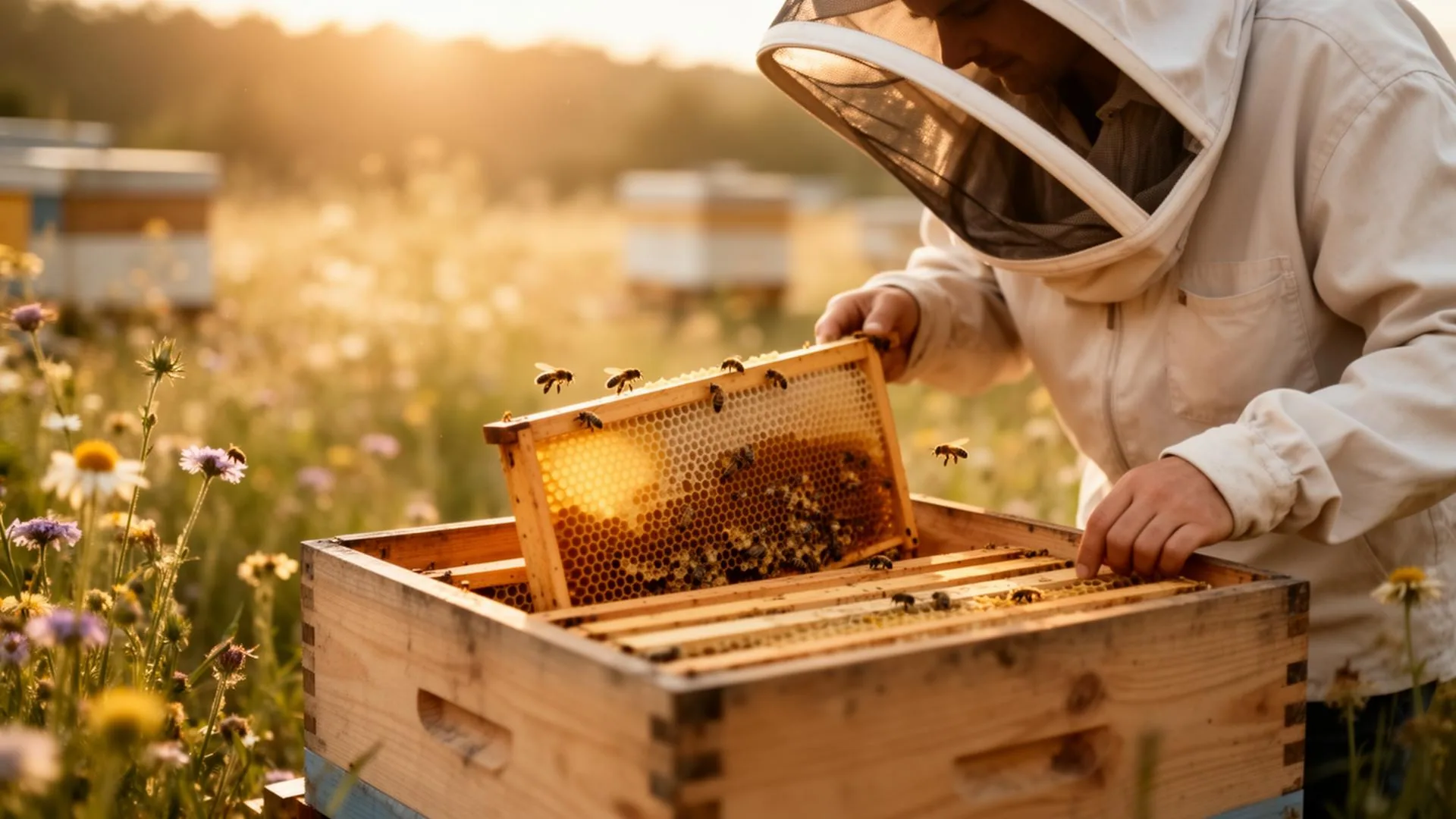
This is also a high-attention season. Beekeepers assess queen performance, food availability, space, and signs of disease. Crowded, strong colonies may prepare to swarm—the natural process in which part of the colony leaves with a queen to establish a new home.
- ●Brood area expands as pollen and nectar become available.
- ●Foragers return with fresh pollen, often visible in colored leg baskets.
- ●The beekeeper may add space when colony strength and conditions justify it.
- ●Swarm preparation and queen-cell development require experienced interpretation.
Summer: peak workforce and nectar processing
During major nectar flows, thousands of foraging trips connect flowering landscapes to the hive. Workers pass nectar among nestmates, add enzymes, and reduce moisture before cells are capped. Pollen supplies protein and other nutrients used especially in brood food.
Strong flight activity does not automatically mean a surplus harvest. Bees need their own stores, and weather can interrupt forage. Responsible harvest decisions account for colony needs, local conditions, and the season still ahead.
Harvest is a decision, not a guaranteed date
Honey is ready for extraction when it is sufficiently ripened, but the timing varies by apiary and floral source. Beekeepers inspect the comb and consider moisture, capping, weather, colony stores, and local requirements.
Adoption programs should therefore describe harvest windows rather than promise a biologically fixed date. Personalization, packing, and shipment occur after the apiary work and may add further time.
Autumn: reducing the nest and preparing stores
As forage declines, brood production often slows and the colony reorganizes for cooler weather. The balance between adult bees, food stores, queen condition, and parasite pressure becomes central to winter preparation.
Management differs by region, but common priorities include assessing stores, reducing excessive empty space, protecting against robbing, verifying hive integrity, and applying locally appropriate health management. Treatments must follow applicable product instructions and veterinary or regulatory requirements.
How Tuscany changes the calendar
Mediterranean conditions can provide earlier spring development and different forage sequences than colder regions, but altitude, rainfall, drought, and local flora still create substantial variation. ‘Tuscan honey’ is not one uniform crop; the season and landscape influence what bees can gather.
This local specificity is why apiary updates are more useful than generic promises. Photographs, beekeeper notes, weather context, and harvest information help an adopter understand the real colony rather than an idealized calendar.
What an adopter can watch for
You do not need to open a hive to follow its seasonal story. Ethical remote observation focuses on patterns rather than diagnosing from a single image.
- ●Changes in entrance traffic and pollen colors.
- ●Beekeeper reports about brood buildup, available space, and forage.
- ●Weather shifts that pause or intensify activity.
- ●Seasonal milestones such as super placement, inspection notes, and harvest preparation.
- ●The transition from fresh activity to autumn and winter readiness.
Sources and further reading
Primary and institutional references used to review the factual claims in this guide. Product details and prices are BeePatron information.
Frequently asked questions
Do honey bees hibernate?
No. In cool climates they form a cluster, generate heat, consume stored honey, and remain active within the hive.
When is honey harvested?
Timing depends on forage, weather, ripeness, colony stores, and location. Many apiaries use a harvest window rather than a fixed universal date.
Why do honey bees swarm in spring?
Swarming is a natural colony-reproduction process. A queen and many workers leave while the remaining colony continues with a new queen process.
Are all hives equally active?
No. Colony strength, queen condition, genetics, health, weather, forage, and management create meaningful differences.
Follow a real hive through the seasons
BeePatron turns the agricultural calendar into a personal story with hive updates, personalization, and harvest benefits.
Compare adoption plansContinue exploring
What is beehive adoption?
Learn how a real managed-hive adoption connects you to this seasonal cycle.
Read nextItalian vs. commercial honey
Compare small-scale extraction traditions with industrial processing.
Read nextIdentify authentic Tuscan honey
Understand labels, provenance, texture, and traceability.
Read nextThe BeePatron Apiary Journal
Move from this evergreen seasonal guide to verified, dated apiary observations when available.
Read next