Educational Gifts
Best Educational Gifts Families Can Experience Together
Meaningful family learning experiences with a practical seasonal observation framework for following nature together without creating another household obligation.
Quick answer
The best family educational gifts give adults and children a shared subject without assigning anyone a formal teaching role. Museum memberships, cooking projects, gardening and nature journals work well when they fit family life. BeePatron adds a distant real apiary, a named hive and seasonal moments the family can revisit together.
Looking for an educational gift rooted in the real world?
Explore BeePatron’s named Tuscan hives and discover the meaning behind each one.
Explore the HivesFamily learning experiences worth considering
Museum and garden memberships suit families who can visit regularly. Cooking connects measurement, culture and food. Gardening makes care visible. Nature journals give everyone a place to record different observations.
BeePatron combines several themes without requiring the family to keep bees or manage a garden.
Following a named hive together
Choose a name as a family, locate it on the illustrated apiary and return when a real update arrives. Bee True might mark a family value, Bee Everything a close relationship and Bee Adventurous a year of exploration.
The name gives the ritual continuity while the beekeeper’s work supplies new material.
A ten-minute family ritual that is realistic enough to continue
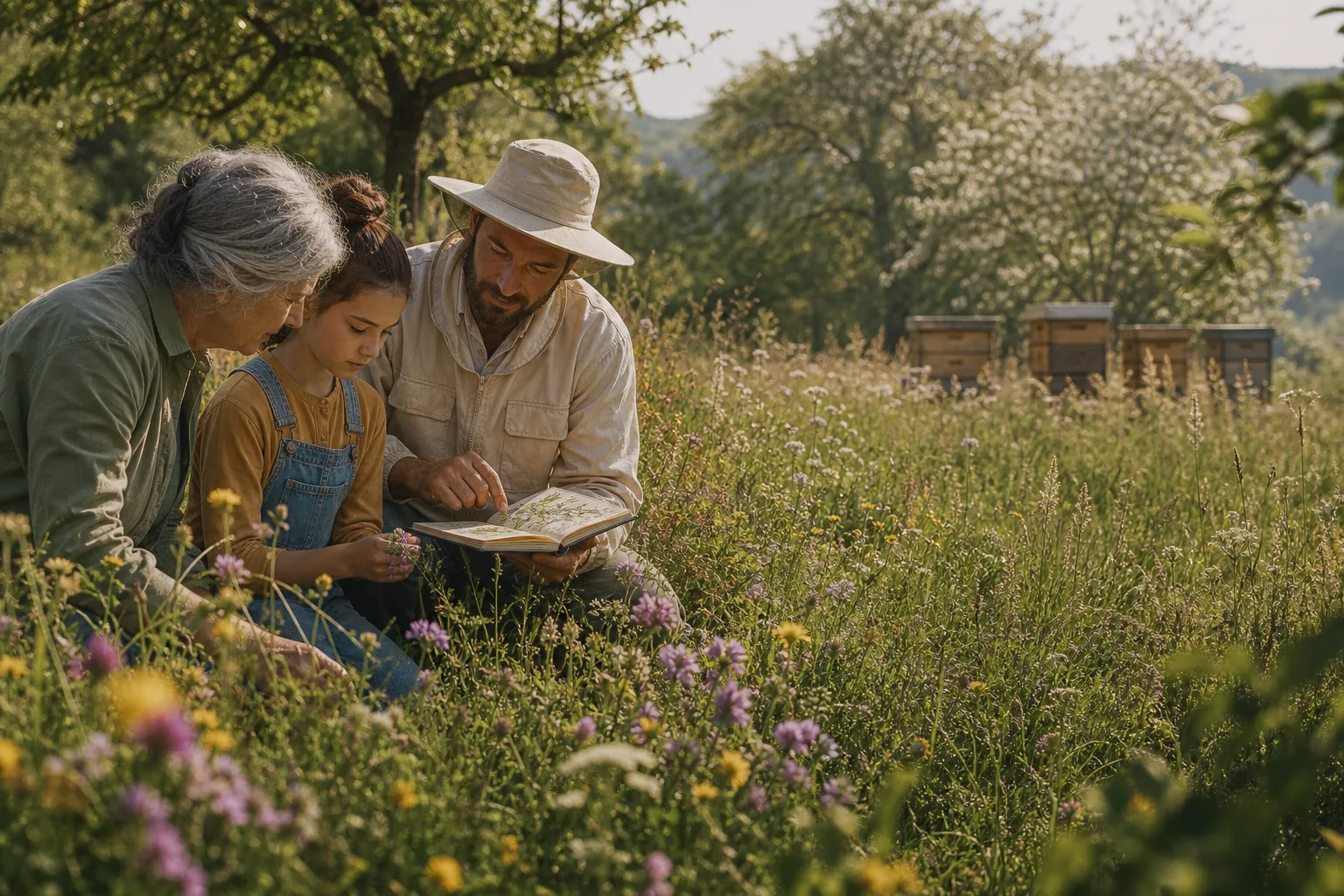
A ritual needs a clear beginning and ending. When approved new material appears, gather whoever is interested, open one photograph or observation and give everyone one turn to notice something. Ask one question the family can answer from the evidence and save one question that remains open. Then close the dashboard and choose one real-world thing to notice before the next visit.
Ten attentive minutes can be more valuable than an ambitious weekly lesson. If no new apiary material is available, look at an earlier entry and compare it with the current local season. The family is following a natural process, not consuming content on a fixed entertainment schedule.
- ●Notice: What can each person see, read or infer?
- ●Compare: What changed from the previous visit?
- ●Question: What remains uncertain?
- ●Connect: What can the family observe locally?
- ●Stop: End before the ritual becomes an obligation.
A four-season observation framework
Use seasons as broad chapters rather than a promise of exact dates or activities. Colony development, flowering and beekeeper work respond to local temperature, rainfall, forage and colony conditions. Tuscany will not match the family's home region, and one year at the apiary may differ from the next.
The comparison is the learning opportunity. Instead of asking what bees always do in spring, ask what evidence suggests is happening at Le Gusciane now and how local conditions may differ.
- ●Spring: look for flowering, increased activity, colony growth and changing beekeeper priorities.
- ●Summer: notice heat, available forage, water, food storage and the realities of harvest timing.
- ●Autumn: discuss reduced forage, preparation, honey fulfilment and what colonies need to retain.
- ●Winter: explore clustering, stored food, quieter observation and how living systems persist through rest.
The one-page family hive journal
Use one sheet for each family check-in. Record the date, source and what was directly observed before adding interpretation. Keeping observations separate from guesses teaches a useful habit without turning the page into schoolwork.
Drawings, dictated answers, a pressed local leaf or one printed photograph can all belong on the same page. The journal is a family memory first and a learning record second.
- ●Date and source: Which approved update, photograph or apiary note did we use?
- ●Three observations: What do we directly see or read?
- ●One change: What differs from the last entry?
- ●One hypothesis: What might explain the change?
- ●One local connection: What is flowering or happening outside our home?
- ●One open question: What would we need to know next?
Give each age a different way to participate
Preschool children can choose a hive symbol, point to colours, imitate movement and draw what they notice. Early readers can find the date, location and repeated words. Older children can compare entries, investigate flowering plants or distinguish observation from inference. Teenagers may be more interested in provenance, agriculture, climate variation or how environmental claims are evaluated.
Adults do not need to know every answer. Their useful role is to protect privacy, interpret uncertainty, connect the digital material to real life and model how to verify a claim. A child who loses interest should be allowed to return later without the gift becoming a failed project.
- ●Ages 3 to 5: point, name, move and draw with an adult.
- ●Ages 6 to 8: notice patterns, dictate questions and make simple comparisons.
- ●Ages 9 to 12: keep evidence-based notes and research one connected topic.
- ●Teenagers: examine systems, provenance, uncertainty and responsible environmental communication.
- ●Adults: facilitate, verify, preserve consent and keep participation voluntary.
Simple ways to extend the story
Read an update over breakfast, note local flowering plants on a walk, compare two seasons or print the certificate for a family space. When honey arrives, taste it together and discuss the path from flowering landscape to prepared jar.
These are invitations, not assignments. Families can choose the moments that suit them.
- ●Locate the chosen hive on the apiary map.
- ●Keep a shared seasonal observation page.
- ●Notice pollinators in a nearby garden.
- ●Discuss where food comes from.
- ●Compare the apiary’s season with local weather.
Use the dashboard as a meeting place
The Hive Room should not become another solitary screen habit. Open it together, let the active hive story guide the conversation and close it when the real-world question begins.
Conditional features such as video add context where available, but the relationship to place does not depend on constant streaming.
Adapt the ritual for access, technology and dietary needs
A family member can print an approved update or read it by phone for grandparents and relatives who do not use the Hive Room. Use large text, short descriptions and spoken observations where vision, reading or screen access differs. A shared ritual should not require every participant to manage an account.
Honey tasting is optional. Check age-appropriate food guidance, allergies, dietary preferences and medical advice relevant to the family. Someone who does not eat honey can still participate through photographs, provenance, flowering plants, family messages and the seasonal journal.
Why it works for grandparents and extended family
A grandparent, godparent, aunt, uncle or family friend can choose a hive that marks the relationship and give something the household can revisit. The certificate provides an immediate reveal while the season provides later chapters.
Gift messages should remain sincere and avoid defining the child. A phrase such as ‘I chose Bee Creative to celebrate all the things you love to imagine’ keeps the meaning personal and open.
Choosing a family educational gift
Consider travel distance, setup, recurring costs and who will participate. BeePatron suits families drawn to nature, science, food and place. A local membership may be better when frequent outings are the priority.
Sources and further reading
Primary and institutional references used to review the factual claims in this guide. Product details and prices are BeePatron information.
Frequently asked questions
What is a family educational gift?
It is an experience or resource adults and children can explore together, with value beyond a single use.
Do parents need to create the account?
A responsible adult should manage the customer account and guide a child’s use.
Can siblings share the experience?
Yes. A family can follow one hive or choose a multi-hive package, depending on the desired experience.
How often must families check the dashboard?
There is no need for daily use. The experience follows meaningful seasonal updates.
What should we write in a family hive journal?
Record the date and source, three direct observations, one change, one possible explanation, one local nature connection and one open question.
What if the child loses interest?
Pause without turning the experience into unfinished homework. A small seasonal ritual can be restarted when a new photograph, family occasion or local observation renews interest.
Can family members participate without using the Hive Room?
Yes. The account holder can share approved material through a printed page, a call or a family conversation, while respecting private content and account access.
Can grandparents give BeePatron?
Yes. The gift flow supports recipient details, a message and available deferred hive selection.
Begin a Family Story Rooted in the Seasons
Choose a named hive and create moments of observation, conversation and connection throughout the year.
Choose a Hive Give BeePatron as a GiftContinue exploring
Nature gifts for kids
Choose tools and experiences for outdoor curiosity.
Read nextScreen-balanced gifts
Connect digital access with real places.
Read nextBeehive adoption for kids
Understand the family journey step by step.
Read nextA year in the life of a beehive
Use the evergreen seasonal guide alongside family observations.
Read nextVisit the verified apiary journal
Find approved seasonal observations and original Le Gusciane context.
Read nextGive BeePatron as a family gift
Begin a gift journey for the whole family.
Read next