
Educational Gifts
Best Gifts for Curious Kids Who Never Stop Asking Questions
Choose discovery gifts for inquisitive children who want to know how animals live, seasons change, communities work and food reaches the table.
Quick answer
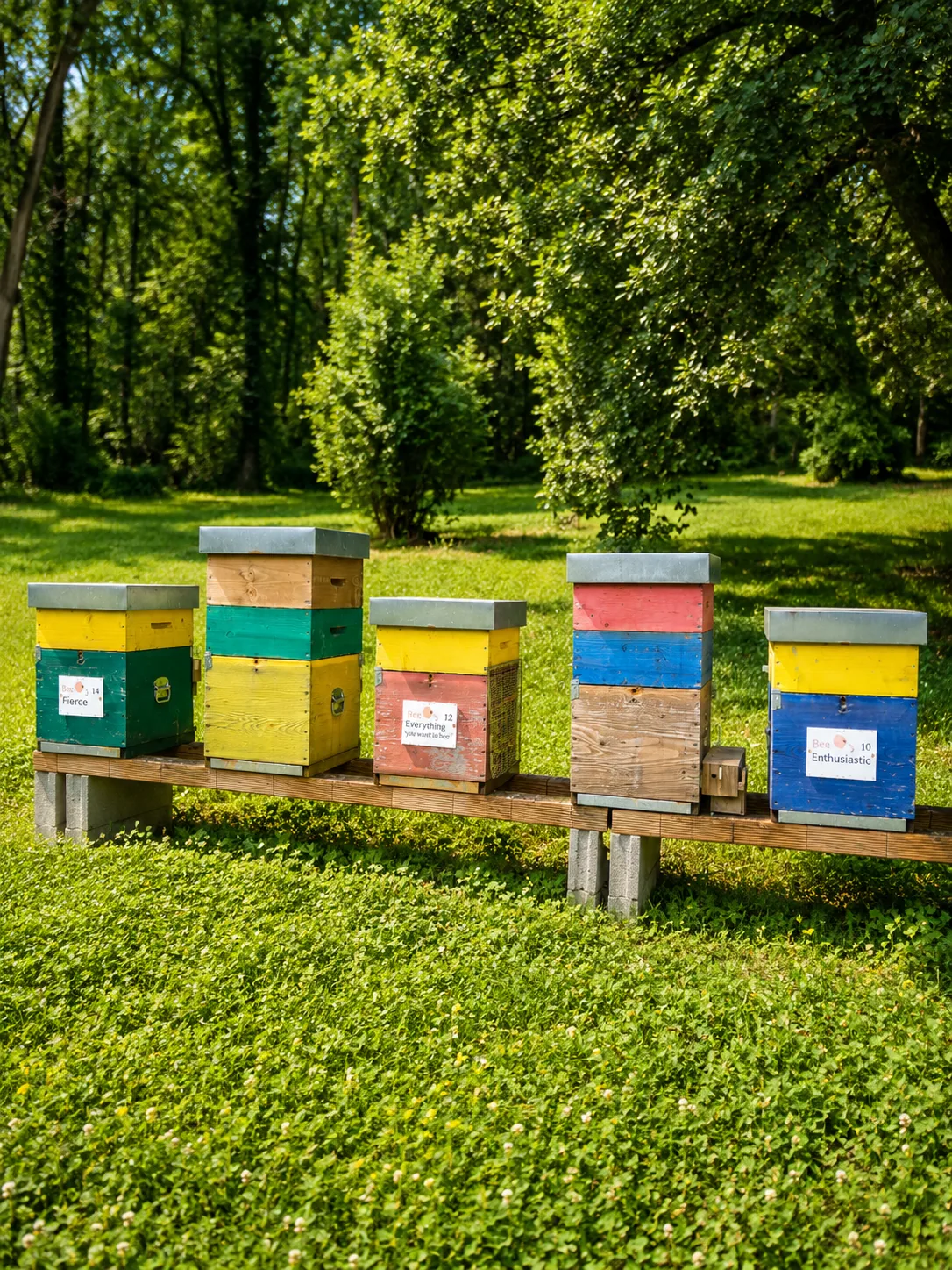
Curious children need gifts with more than one answer. Reference books, construction materials, microscopes and field tools all create productive questions. BeePatron is especially suited to children who enjoy following a process because a real hive changes through the season and every update can open a new line of inquiry.
Looking for an educational gift rooted in the real world?
Explore BeePatron’s named Tuscan hives and discover the meaning behind each one.
Explore the HivesChoose a gift that produces better questions
Curiosity is not one personality type. One child dismantles objects to understand mechanisms; another watches animals; another wants to know where dinner came from. Match the gift to the kind of question that already appears.
Avoid products that answer everything before the child can investigate. Useful gifts create evidence, choices and reasons to return.
For children who ask how things are made
Building sets, craft tools and cooking projects reveal sequence and transformation. A hive experience extends that interest into honey production: flowering plants, foraging, colony work, beekeeper judgment, harvest and preparation all belong to one connected system.
Honey fulfillment follows the supported apiary, package and season. It should not be described as a guaranteed output from one exact named hive.
For children who ask how animals live
Field guides and observation tools are immediate and local. BeePatron adds longitudinal observation of a social insect colony and the human care around it.
Families can ask what changed since the last update, why weather matters, which flowers may be available and what the beekeeper might be looking for.
- ●What changed since the last update?
- ●Which plants may be flowering now?
- ●How might rain or heat affect bee activity?
- ●What happens before honey is prepared?
For questions about communities and cooperation
A colony offers a compelling example of coordinated behavior, but adults should avoid forcing human moral lessons onto animal biology. Instead, notice roles, communication, resource needs and how the colony responds to conditions.
Bee Clever can celebrate a love of questions. Bee Thoughtful can mark careful observation. The name is a family symbol, not a scientific personality label.
Turn the Hive Room into family conversation
Open an update together, let the child lead with observations and save unanswered questions. A parent does not need to deliver a lecture. The dashboard works best as a prompt for shared attention.
A nature notebook can hold drawings, predictions and comparisons without becoming a formal lesson plan.
Buying guidance for inquisitive children
Choose a microscope when the child wants close visual detail, a building system when they want control and iteration, or BeePatron when they enjoy living processes that develop on their own timetable.
Sources and further reading
Primary and institutional references used to review the factual claims in this guide. Product details and prices are BeePatron information.
Frequently asked questions
What is a good gift for a child who asks many questions?
Choose an open-ended tool or experience connected to the subjects they already revisit.
Is BeePatron a lesson plan?
No. It provides curated real-world material families can discuss and explore.
Can children ask the beekeeper questions?
Do not assume direct access. Communication features depend on the current package and program.
Why choose Bee Clever?
It can be selected as a meaningful symbol celebrating inquiry without defining the child’s personality.
What age range is most suitable?
Many children ages 6 to 12 may engage well with adult participation, but interest and reading level matter more than a strict range.
Give Their Questions Somewhere Real to Go
Choose a named hive and follow a living natural system through the season.
Choose a Hive Give BeePatron as a Gift