
Educational Gifts
Best Science Gifts for Kids: From Experiments to Real-World Discovery
Compare chemistry sets, microscopes, robotics and ecology experiences to find a science gift that matches how a child likes to investigate.
Quick answer
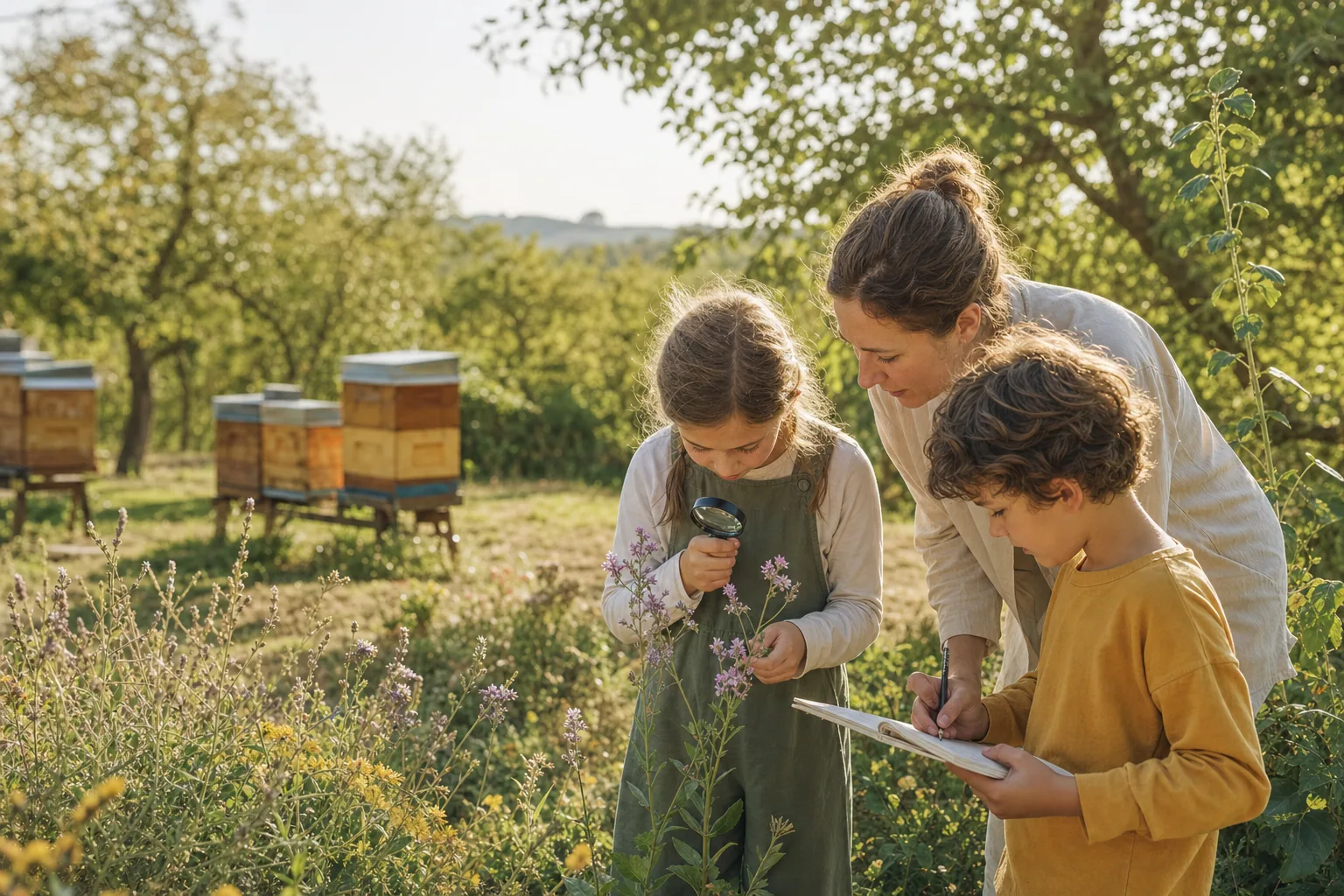
The best science gifts make inquiry possible. Kits are excellent for controlled experiments; microscopes and telescopes extend perception; robotics makes systems buildable. BeePatron is different. It offers observational learning through a living colony whose biology, environment and seasonal development cannot be reduced to a predetermined result.
Looking for an educational gift rooted in the real world?
Explore BeePatron’s named Tuscan hives and discover the meaning behind each one.
Explore the HivesDifferent gifts teach different modes of science
Chemistry kits emphasize procedure and visible reactions. Engineering sets reward iteration. Microscopes reveal structure and telescopes introduce scale. Coding and robotics make logic observable through behavior.
No category is universally superior. The right question is whether the child enjoys following instructions, building systems, examining specimens or watching change over time.
Where science kits are strongest
A well-designed kit defines materials, safety boundaries and a clear question. It can make an abstract principle visible within an afternoon. Its limitation is often duration: once the included experiments are complete, curiosity needs a new direction.
Parents should check age guidance, replacement supplies and supervision requirements rather than relying on a STEM label.
The scientific value of a living system
A colony is not a kit. Bees respond to temperature, forage, rainfall, colony condition and beekeeper decisions. Observation produces patterns and questions rather than guaranteed demonstrations.
That uncertainty encourages patience and evidence-minded language: What changed? What can we infer? What would we need to know before making a stronger claim?
- ●Insect biology and social organization.
- ●Pollination and plant reproduction.
- ●Weather and seasonality.
- ●Food systems and agricultural craft.
- ●Interdependence between organisms and place.
What BeePatron can and cannot show
The Hive Room provides curated seasonal updates, photographs and available video connected to the apiary experience. Exact measurements, live streams and advanced telemetry depend on package, equipment and operating conditions.
BeePatron is not a laboratory instrument and does not promise a constant data feed. Its strength is the coherent story of a real colony and the people caring for it.
Questions a hive can open
Why do flowers matter to bees? How does a colony organize work? Why might a beekeeper inspect one week and wait the next? What happens between nectar collection and prepared honey?
These questions connect biology with ecology, agriculture and human responsibility. Families can investigate further without turning every update into homework.
A scientific experience with emotional meaning
Bee Clever can celebrate a child who enjoys asking questions. Bee Creative can mark inventive thinking. Bee Brave may represent a milestone. The name personalizes the gift while the educational content remains grounded in real beekeeping.
Choosing the right science gift
Choose a kit for a child who wants immediate hands-on experiments. Choose a microscope for repeated close study. Choose robotics for building and debugging. Choose BeePatron for a family interested in biology, ecology and observation over a season.
Sources and further reading
Primary and institutional references used to review the factual claims in this guide. Product details and prices are BeePatron information.
Frequently asked questions
Is BeePatron a STEM kit?
No. It is an observational nature and beekeeping experience rather than a laboratory kit.
Does every plan include telemetry?
No. Measurements and live features depend on package and apiary equipment.
What science topics can families explore?
Insect biology, pollination, plant reproduction, seasonality, agriculture and food systems are natural starting points.
Does it guarantee learning outcomes?
No. It provides material and experiences that families can explore together.
Are science gifts suitable without adult help?
Suitability varies. BeePatron is intended to be shared with a parent or responsible adult for school-age children.
Turn Observation Into a Season of Discovery
Choose a named hive and connect biology, nature and food through a real Tuscan apiary.
Choose a Hive Give BeePatron as a GiftContinue exploring
The complete educational gift guide
Compare the leading educational gift categories for 2026.
Read nextEducational gifts for nature lovers
Follow curiosity into gardens and biodiversity.
Read nextScreen-balanced educational gifts
Use digital tools as windows into real subjects.
Read nextBeehive adoption for kids
See how the seasonal experience works.
Read nextTechnology in European beekeeping
Understand where digital tools can support real apiary observation.
Read next