
Educational Gifts
Best Educational Gifts for Kids Ages 4–12
Compare educational gifts for ages 4–7 and 8–12, including books, science kits, building sets, creative materials, nature tools and real-world experiences.
Quick answer
For ages 4–7, choose educational gifts built around stories, simple construction, art, sorting and supervised nature observation. For ages 8–12, look for deeper science experiments, robotics, microscopes, field tools and longer projects. At any age, the best gift fits the child’s interests, invites active participation and can be revisited after the first day.
| Criterion | Strong starting points | Adult role |
|---|---|---|
| Ages 4–7 | Illustrated books, simple building sets, art materials, puzzles and supervised garden or insect observation. | Read together, manage small parts and turn activities into short conversations. |
| Ages 8–12 | Science kits, robotics, microscopes, field guides, coding projects and seasonal nature experiences. | Help with safety and setup, then let the child form questions and record observations. |
| Mixed-age family | Museum memberships, shared building projects, nature journals and real-world experiences with several entry points. | Give each child an age-appropriate role without turning the gift into compulsory homework. |
Looking for an educational gift rooted in the real world?
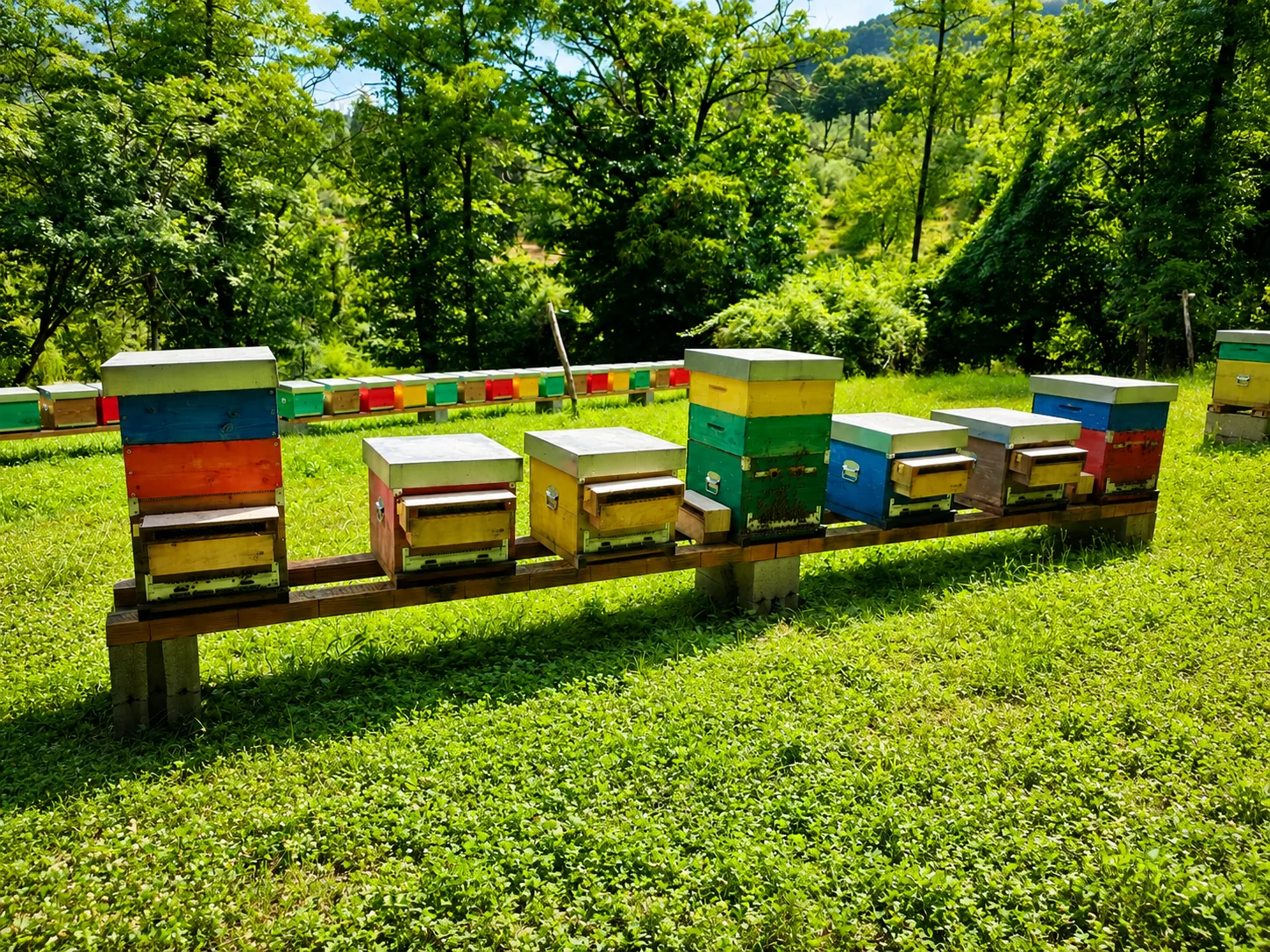
Explore BeePatron’s named Tuscan hives and discover the meaning behind each one.
Explore the HivesWhat makes an educational gift genuinely valuable?
A strong learning gift does more than display facts. It gives a child something to notice, test, make, revisit or discuss. The right choice depends on temperament, age, existing interests and how much an adult can participate.
Durability is not only physical. A book can last because it rewards rereading. A museum membership lasts because every visit is different. An experience can last because anticipation, observation and memory become part of the gift.
- ●It invites action rather than passive consumption.
- ●It can grow with the child’s questions.
- ●It respects the child’s interests without making promises about outcomes.
- ●It gives families a practical way to participate.
The strongest educational gift categories for 2026
Books offer depth and quiet concentration. Science kits make controlled experiments approachable. Building sets develop spatial reasoning and persistence. Art materials support expression, while binoculars, field guides and gardening tools move attention outdoors.
Museum and zoo memberships reward repeated visits. Coding products suit children drawn to systems and logic. Beehive patronage belongs to a different category: a living seasonal experience where not every change arrives on schedule.
- ●Books: best for independent exploration and shared reading.
- ●Science kits: best for clear experiments with a defined result.
- ●Building and art materials: best for making and iteration.
- ●Nature tools: best for direct outdoor observation.
- ●Memberships: best for families able to visit repeatedly.
- ●BeePatron: best for nature, biology, food systems and a story unfolding through time.
Match the gift to the child’s interests
A child fascinated by machines may value robotics more than a field guide. A devoted reader may prefer a beautifully illustrated reference book. Children who notice insects, gardens, weather or where food comes from may find a seasonal apiary story especially engaging.
Named hives add personal meaning without pretending to diagnose personality. Bee Adventurous can celebrate exploration, Bee Creative can mark imagination, Bee Kind can honor care for animals and Bee Brave can represent a new chapter.
Educational gifts by age: 4–7 and 8–12
For children ages 4–7, prioritize immediate, concrete activity: illustrated books, art materials, puzzles, simple construction and short observations of plants or insects. Avoid gifts whose educational value depends on long instructions, tiny components or independent online setup. A parent can make a seasonal apiary story accessible through photographs, hive names and simple questions about flowers, bees and food.
For children ages 8–12, gifts can support longer investigations. Science kits, microscopes, robotics, field guides and nature journals let children test, build and record. A hive experience can open deeper questions about pollination, colony organization, weather and responsible food systems, but it remains a shared experience rather than a formal curriculum.
- ●For ages 4–7, favor simple setup, visible activity and adult participation.
- ●For ages 8–12, favor depth, repeat use and room for independent questions.
- ●Treat manufacturer age guidance and safety requirements as minimum checks.
- ●Check whether the family wants a project, an object or an ongoing ritual.
Why experiences often create stronger memories
An object is encountered mostly at once. An experience develops through moments: choosing a hive, opening a certificate, checking a seasonal update, noticing spring flowers and eventually receiving honey prepared from the supported apiary.
That sequence gives families several opportunities to return to the gift. It also makes birthdays and Christmas feel less like a single exchange and more like the beginning of a story.
Why BeePatron stands apart
BeePatron connects a real named hive, a beekeeper, an apiary and a private Hive Room. Families can explore the interactive apiary map, follow curated updates and relate what they see to bees, biodiversity, agriculture and traditional Tuscan beekeeping.
Packages vary by the number of supported hives and included honey. Live video and advanced measurements depend on package, equipment and operating conditions. Honey is described as coming from the supported apiary unless exact-hive traceability is verified.
- ●A real place rather than a fictional learning world.
- ●A symbolic hive name chosen to celebrate a quality or occasion.
- ●Digital access that points back to nature.
- ●A personalized certificate and seasonal fulfillment.
Questions to ask before buying
Ask what the child already returns to voluntarily. Check whether the family has time to participate, whether the gift requires replacement supplies and whether its claims are clear. For experience gifts, confirm duration, account setup, shipping coverage and conditional features.
A credible beehive experience should explain that patronage is not legal ownership, seasonal timing can change and hive care decisions remain with the beekeeper.
- ●Will the child make, observe, read or solve?
- ●Can the gift be revisited after the first week?
- ●Does it create work the family does not want?
- ●Are limitations stated as clearly as benefits?
Final recommendation
Choose books, art materials or building sets when the child already loves those forms. Choose a focused science kit when a clear experiment is the main attraction. Choose BeePatron when the family wants a premium, real-world experience joining nature, science, food and personal meaning through a season.
The strongest choice is not the gift with the longest feature list. It is the one that gives this child and family a reason to keep noticing.
Sources and further reading
Primary and institutional references used to review the factual claims in this guide. Product details and prices are BeePatron information.
Frequently asked questions
What makes a gift educational?
It should invite active thinking, observation, making or discussion rather than relying only on an educational label.
Are experience gifts better than toys?
Not universally. Experiences are valuable when the family wants continuity and participation; a well-chosen toy or book may be better for another child.
What age is BeePatron suitable for?
It is ideal for many school-age children when shared with a parent or responsible adult.
What are good educational gifts for children ages 4–7?
Illustrated books, simple building sets, art supplies, puzzles and supervised nature activities provide concrete ways to make, sort, notice and ask questions.
What are good educational gifts for children ages 8–12?
Science kits, robotics, microscopes, field tools, coding projects and longer real-world experiences work well when matched to the child’s interests and safety needs.
Does BeePatron include honey?
Honey fulfillment depends on the selected package, destination and seasonal harvest conditions.
Can a child choose the hive?
A family can choose from currently available named hives or use the gift flow to let the recipient choose later.
Is the hive exclusively theirs?
No legal ownership or exclusive access is transferred. The chosen hive is the heart of the family’s BeePatron experience.
Give Them a Story That Continues Through the Seasons
Choose a real named hive and begin a BeePatron journey rooted in nature, learning and traditional Tuscan beekeeping.
Choose a Hive Give BeePatron as a GiftContinue exploring
Nature gifts for young explorers
Compare field tools, gardening and living nature experiences.
Read nextScience gifts and real-world discovery
Balance experiments with observation over time.
Read nextBeehive adoption for kids
Understand the complete BeePatron experience.
Read nextScreen-balanced learning gifts
Choose digital experiences rooted in the real world.
Read nextGifts for curious kids
Find gifts that reward questions and patient observation.
Read nextGifts for kids who have everything
Choose fewer objects and a deeper experience.
Read nextEducational gifts for families
Build a learning ritual that adults and children can share.
Read next