Family Apiary Guide
Apiary Visit With Kids: A Parent's Safety and Learning Guide
Plan a child-friendly apiary visit with realistic expectations about age limits, protective equipment, sting risk, attention span and hands-on learning.
Quick answer
Children can visit some apiaries when the host permits their age group, supplies correctly sized protective equipment and adapts the experience to the child's attention, comfort and ability to follow instructions. An apiary is never sting-free. Parents should disclose relevant sting-reaction history, seek medical guidance where appropriate, confirm terrain and toilet access, and be ready to end the live-apiary portion early without treating that as failure.
| Criterion | A strong family experience | A warning sign |
|---|---|---|
| Age policy | A stated minimum age or case-by-case conversation. | No questions about the children's ages. |
| Equipment | Child sizes are confirmed before booking. | Adult equipment will supposedly be made to fit on arrival. |
| Learning | Short observation, questions and an alternative activity. | A long hive opening is treated as the only worthwhile outcome. |
| Exit plan | A child can leave calmly with an adult at any time. | The group must remain together regardless of distress. |
Start with the host's age policy, not your child's enthusiasm
A child who loves bees may still be too young for a particular site, group format or piece of protective equipment. Minimum ages reflect terrain, supervision, insurance and the host's ability to manage a working apiary—not a judgment about the child.
Send the ages of every child before booking. Ask whether the format is designed for families or merely allows children to attend an adult visit.
Protective equipment must fit the actual child
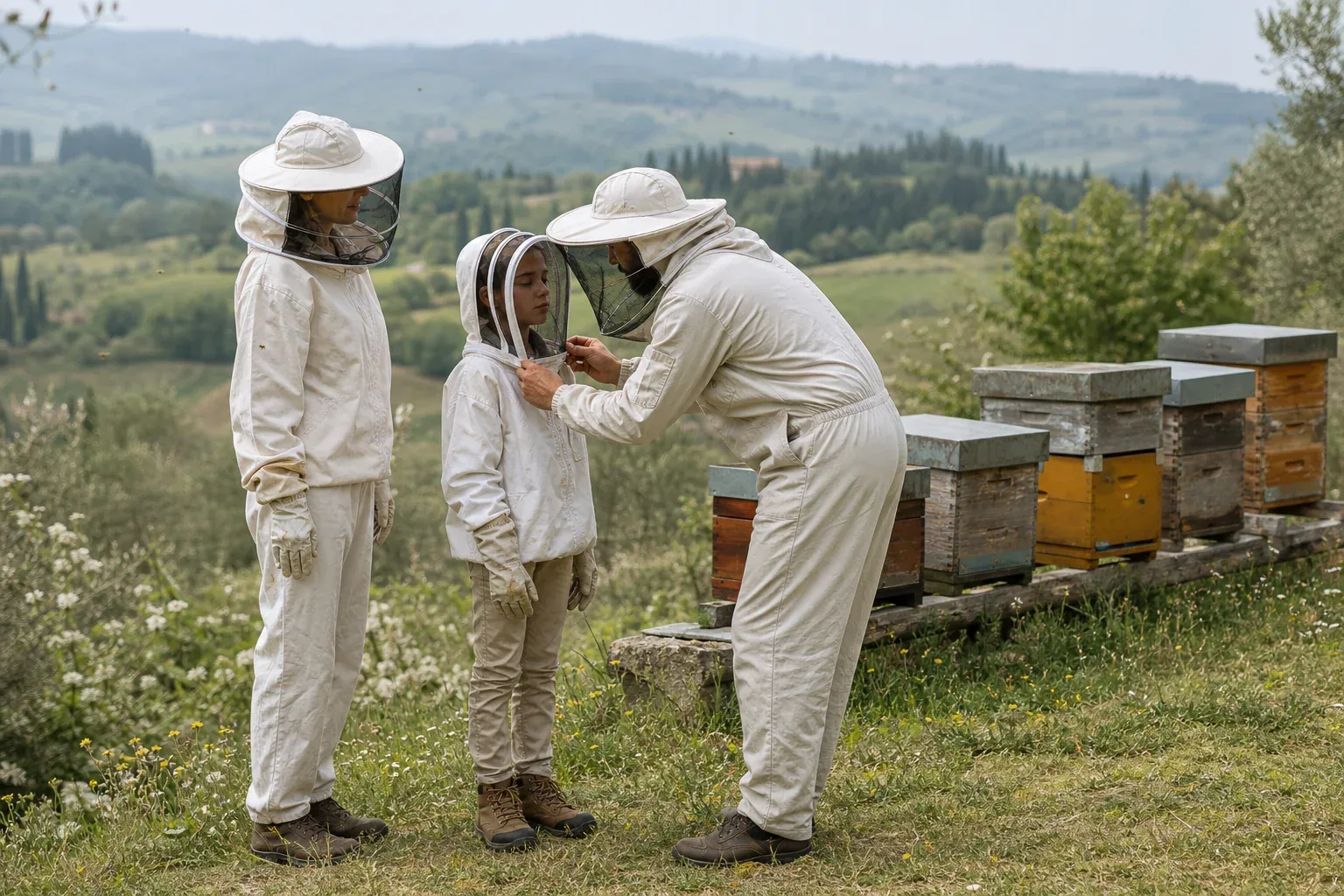
A veil that falls forward, gaps at the neck or restricts vision can make a child less safe and more anxious. Confirm sizes in advance and ask what clothing must be worn underneath. Closed sturdy footwear and long coverage may still be required even when a jacket or suit is supplied.
Let the beekeeper check closures before the group approaches the hives. Children should not remove gloves or lift a veil because they feel warm without first leaving the beeyard as instructed.
Be honest about stings and health information
Protective clothing reduces exposure; it does not eliminate sting risk. Tell the host about known reactions before booking and follow advice from a qualified healthcare professional for medical decisions. Bring prescribed emergency medication exactly as directed and know who will carry it.
The guide should explain what the group does after a sting or if several insects become defensive. Parents remain responsible for judging whether the experience is appropriate for their child.
Design for a short attention span
For children, ten focused minutes watching pollen arrive can be more memorable than a long technical inspection. Ask whether the visit includes a model hive, comb sample, drawing prompt, flower walk or honey lesson away from flying bees.
Build in water, shade and a calm transition out of protective clothing. A shorter live-apiary segment is not a lesser experience when it preserves curiosity and composure.
Practice the three rules before arrival
Children should know that they will stay with the guide, move slowly and speak up when uncomfortable. Practice standing still and listening to one instruction at a time. Avoid promising that there is nothing to fear; explain that the adults have a plan.
Parents set the pace. Swatting, crowding the entrance or rushing for a photograph sends the opposite message from the calm behavior children are being asked to show.
- ●Stay beside the assigned adult
- ●Walk and move hands slowly
- ●Tell an adult immediately if equipment feels wrong or anxiety rises
Turn visible details into child-sized questions
Ask what color pollen a bee is carrying, which flowers are open or how bees find the entrance. Observation questions keep the experience grounded in what the child can see. The guide can add complexity when interest and time allow.
Do not make finding the queen, holding a frame or tasting honey the test of a successful visit. Each may be unavailable or inappropriate on the day.
Check the ordinary family logistics
Ask about the walk from parking, steep or uneven ground, toilets, shade, drinking water and the total visit length. Families should also confirm food-allergy information if a tasting is included.
Bring a second supervising adult when the host recommends it. One adult can leave with a child who becomes uncomfortable while the rest of the family follows the guide's instructions.
Let the learning continue after the veil comes off
Invite the child to record three observations: something a bee carried, something the beekeeper checked and something the landscape provided. These details turn a dramatic first encounter into ecological understanding.
A BeePatron named-hive journey can connect that memory to later seasonal updates, but it should be described accurately as patronage of a managed hive experience—not personal ownership or permission to handle a colony.
Sources and further reading
Primary and institutional references used to review the factual claims in this guide. Product details and prices are BeePatron information.
Frequently asked questions
What age can a child visit an apiary?
There is no universal minimum age. Each host sets rules based on the site, equipment, supervision and insurance, so provide every child's age before booking.
Do children need a full bee suit?
The host decides the required equipment. Whatever is supplied must fit correctly, and families may still need long clothing and closed footwear.
Can a child with a bee-sting allergy visit?
An apiary cannot be made sting-free. Seek qualified medical advice and disclose the history to the host before making a booking decision.
What if my child becomes frightened during the visit?
Tell the guide and use the agreed exit plan. A child should be able to leave the live-apiary area calmly with a supervising adult.
Give Curiosity a Real Place to Return To
Explore a family-friendly named-hive story connected to the seasons of a Tuscan apiary.
Explore the Tuscany ExperienceContinue exploring
What Happens on an Apiary Visit?
Follow a first visit from orientation to supervised observation.
Read nextWhat to Wear to an Apiary Visit
Prepare clothing and footwear for a working beeyard.
Read nextBest Educational Gifts for Kids Who Love Nature
Choose observation-led experiences that respect a child's pace.
Read next