
Apiary Visit Guide
What Happens on an Apiary Visit? A First-Time Visitor's Guide
Learn how a guided apiary visit usually works, what you may observe, which questions to ask and how to prepare for a respectful first encounter with a working beeyard.
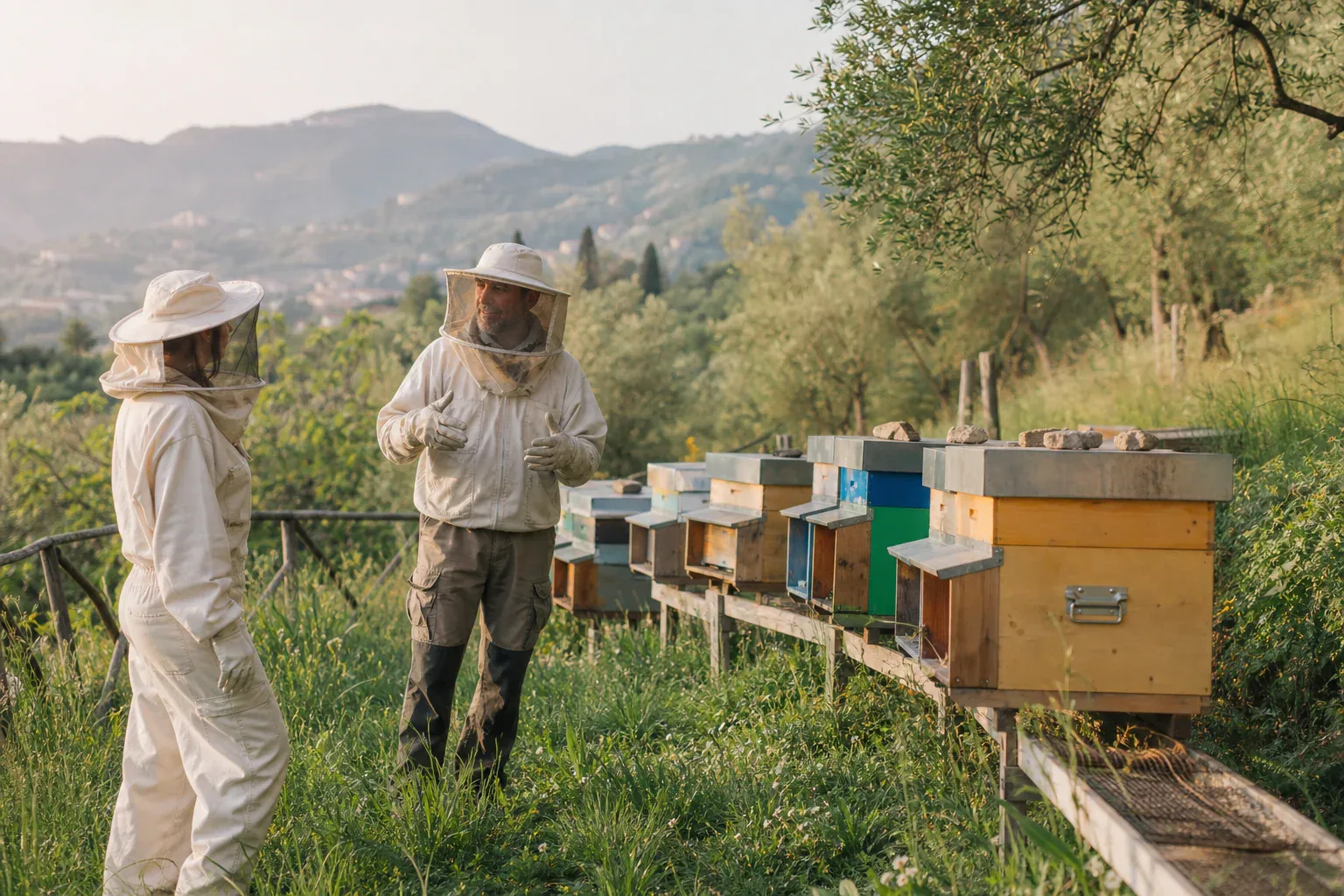
Quick answer
A well-run apiary visit normally begins with a safety briefing, protective-clothing check and explanation of how to move near honey bee colonies. Depending on weather, season, colony condition and the host's plan, visitors may observe hive entrances, beekeeping tools or a supervised inspection. Access to open hives is never guaranteed. Confirm age limits, accessibility, protective equipment, sting-allergy policies and exact inclusions before traveling.
| Criterion | What may happen | Why it can vary |
|---|---|---|
| Arrival | Welcome, site orientation and safety briefing. | Farm access, group size and local visitor procedures differ. |
| Protective equipment | A veil, jacket, suit or gloves may be supplied or requested. | Equipment and sizing must be confirmed with the host in advance. |
| Hive observation | Entrance activity, tools, hive parts or a supervised inspection. | Weather and colony welfare can make opening a hive inappropriate. |
| Tasting or products | Some experiences include honey education or tasting. | Never assume this is included unless the booking says so. |
The visit begins before you reach the hives
An apiary is a working agricultural environment, not a walk-in attraction. The host needs to know who is coming, when they will arrive and whether any visitor has a relevant allergy, mobility concern or other safety need. That is why reputable experiences use advance booking and may postpone when conditions change.
Read the confirmation carefully. Check the meeting point, parking instructions, footwear requirements, minimum age, accessibility, equipment provided and cancellation policy. Ask rather than infer. A listing for another Tuscan apiary does not establish what your host includes.
Expect a safety briefing before entering the beeyard
Your guide may explain where to stand, how to approach a hive, why flight paths should remain clear and what to do if a bee comes close. Listen even if you have visited bees before. Colonies, sites and local conditions differ, and the beekeeper is responsible for judging what is appropriate that day.
Move calmly, keep your voice measured and follow instructions promptly. Do not tap boxes, block entrances, open equipment, remove protective clothing or wander between colonies without permission. Photography may be welcome, but ask before using flash, approaching a hive or stepping away from the group.
What you may see around a working apiary
Even without opening a hive, an entrance reveals a great deal. You may see foragers returning, guard bees near the opening, pollen carried on hind legs and different traffic levels between colonies. The beekeeper can connect those observations to forage, temperature, time of day and the stage of the season.
You may also learn the purpose of boxes, frames, smokers, hive tools, feeders and protective equipment. A visit is most rewarding when it makes ordinary details legible. The goal is not simply to stand close to many bees, but to understand how professional care responds to a living colony and its landscape.
- ●Hive entrances and bee flight paths
- ●Pollen colors and returning foragers
- ●The parts of a managed hive
- ●Tools used during inspection and care
- ●How flowers, weather and season affect activity
Will the beekeeper open a hive? It depends
Opening a colony is an intervention. Temperature, wind, rain, nectar flow, colony temperament and the work already completed that day all matter. A beekeeper may decide that entrance observation or a demonstration away from live colonies is the better experience.
If a hive is opened, remain where directed and let the beekeeper handle frames unless explicitly invited otherwise. You might see comb, stored food, brood patterns or worker bees, but no individual sighting is guaranteed. Finding the queen is not necessary for a meaningful inspection and should not become pressure to prolong disturbance.
Questions that turn a tour into a real learning experience
Ask questions tied to what is visible. Which plants are flowering now? What tells the beekeeper that a colony needs more space? How does rainfall change forage? What work belongs to this month rather than another? These invite grounded answers instead of a rehearsed list of bee facts.
You can also ask how the beekeeper balances inspection with minimal disturbance, what visitors often misunderstand and how honey availability changes between seasons. Avoid asking for certainty where nature does not provide it. Responsible beekeeping involves observation, judgment and adaptation.
Sting allergies, children and accessibility need advance discussion
A protective suit reduces exposure but does not make an apiary risk-free. Anyone with a history of serious reactions to insect stings should consult a qualified healthcare professional and disclose the issue to the host before booking. Follow personal medical guidance, including guidance about prescribed emergency medication.
Families should confirm age rules and whether child-sized equipment is available. Visitors with limited mobility, sensory sensitivities or heat concerns should ask about terrain, walking distance, shade, seating and time spent in protective clothing. A modified visit may be possible, but it must be agreed in advance.
Visiting the place behind a BeePatron hive journey
BeePatron connects a named-hive journey with Le Gusciane in the hills of Camaiore. A visit can add physical context to the private Hive Room by placing the apiary within the meadows, woodland and changing conditions that shape the season.
Visits to Le Gusciane must be booked in advance and remain subject to seasonal, weather and apiary conditions. A named hive is part of the BeePatron experience, not a transfer of legal ownership or operational control. Confirm the format and inclusions of the proposed visit directly before making travel plans.
Sources and further reading
Primary and institutional references used to review the factual claims in this guide. Product details and prices are BeePatron information.
Frequently asked questions
How long does an apiary visit last?
There is no standard duration. Confirm the scheduled length with the host because briefing, walking, protective equipment and weather contingencies can all affect timing.
Will I get stung during an apiary visit?
Protective equipment and calm supervision reduce risk, but no host can guarantee that a sting will not occur. Disclose known allergies before booking and follow medical advice.
Can visitors open or handle a hive?
Only when the beekeeper explicitly permits and supervises it. Weather, colony condition and visitor experience may mean observation is the responsible option.
Are apiary visits suitable for children?
Some are, but age limits, equipment sizes and formats differ. Parents should confirm suitability and disclose relevant health or sensory needs before booking.
Can BeePatron customers visit Le Gusciane?
Visits can be requested but must be booked in advance. Availability and format are subject to seasonal, weather and apiary conditions, so confirmation is required before travel.
Discover the Place Behind Your Hive Journey
Explore BeePatron at Le Gusciane and learn how a named hive connects the digital experience with a real Tuscan landscape.
Explore the Tuscany ExperienceContinue exploring
What to Wear to an Apiary Visit
Prepare clothing, footwear and a practical day-of checklist.
Read nextBeekeeping Experience in Tuscany
Plan a countryside bee experience without relying on assumptions.
Read nextA Year in the Life of a Beehive
Understand what the beekeeper may be managing in each season.
Read next