
Apiary Clothing Guide
What to Wear to an Apiary Visit: A Practical Safety Checklist
Choose comfortable clothing, closed footwear and sensible layers for a guided beekeeping experience, then confirm the host's protective-equipment policy before you arrive.
Quick answer
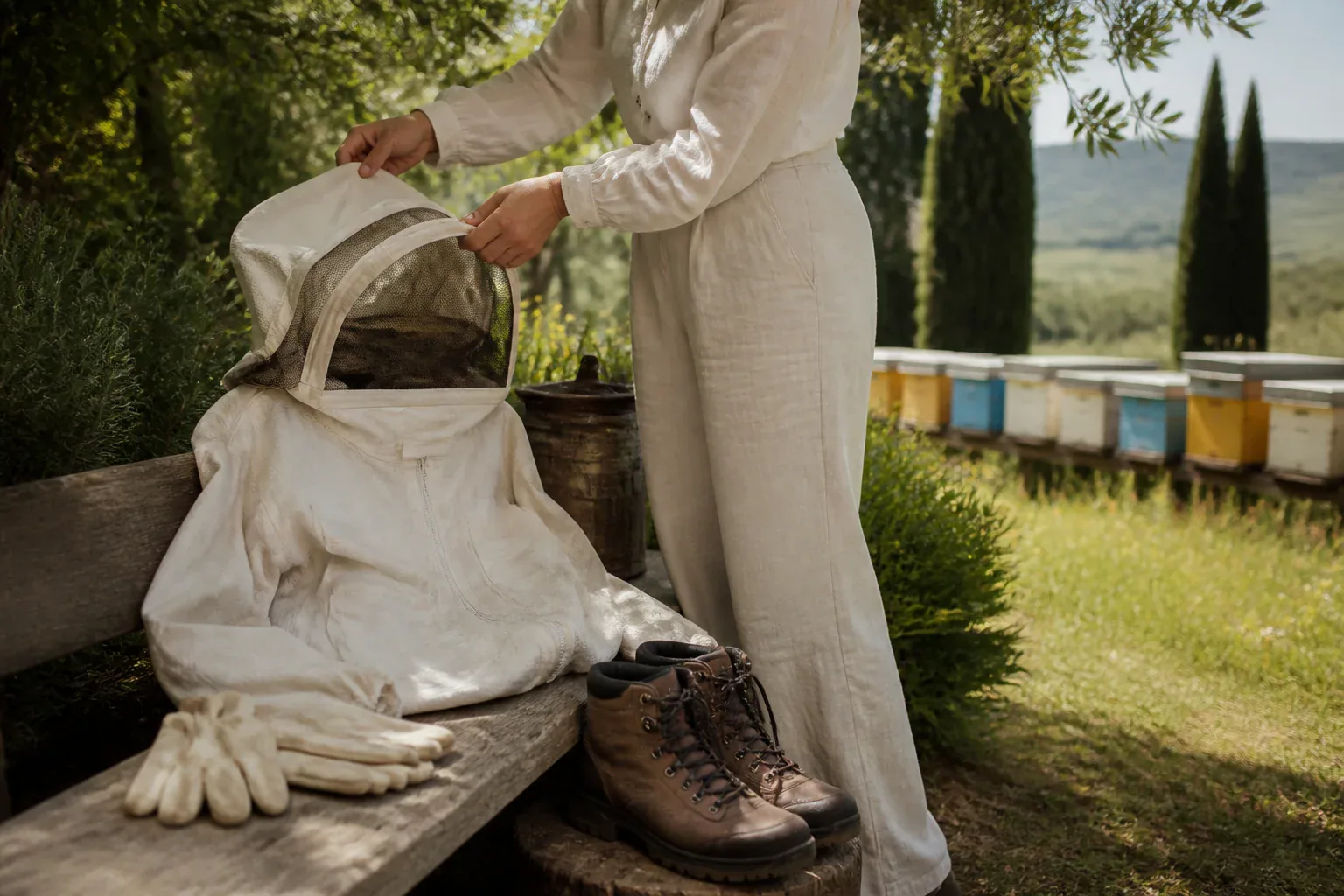
For most guided apiary visits, wear clean, comfortable long trousers, a long-sleeved top and fully closed, sturdy shoes. Light-colored, smooth fabrics are commonly preferred. Avoid strong fragrance and loose jewelry, tie back long hair and bring weather-appropriate layers. Do not buy specialist equipment until the host confirms what is provided and required. The beekeeper's instructions always take priority over a generic checklist.
| Criterion | Better choice | Avoid or confirm first |
|---|---|---|
| Shoes | Closed, sturdy footwear suitable for uneven ground. | Sandals, open shoes, heels or footwear with exposed ankles. |
| Clothing | Long coverage in smooth, breathable, light-colored fabric. | Dark, fuzzy, torn or very loose garments. |
| Scent | Clean clothing with minimal fragrance. | Perfume, cologne or strongly scented personal products. |
| Protective equipment | Equipment approved or supplied by the host. | An unverified suit that fits poorly or cannot close securely. |
Start with the host's instructions, not a universal packing list
Apiary clothing depends on the visit format, climate, terrain and equipment available. Some hosts provide full suits, while others provide a jacket and veil or ask visitors to bring specific items. Sizes, footwear and child equipment need advance confirmation.
Ask for the written requirements before traveling. If the forecast changes, check again. A beekeeper may postpone a visit rather than compensate for unsuitable conditions with more clothing.
Wear long, comfortable coverage beneath protective equipment
Long trousers and a long-sleeved top provide a sensible base layer and help protect against sun, vegetation and insects as well as incidental bee contact. Choose fabric that lets you move comfortably and will not become unbearable beneath a bee jacket or suit.
Light colors and smooth finishes are widely recommended in beekeeping safety guidance. Avoid fuzzy fabrics that can entangle insects and very loose cuffs or tears that create openings. Clothing alone is not sting-proof, so it does not replace properly fitted protective equipment.
- ●Long trousers that allow easy walking
- ●A long-sleeved, breathable top
- ●Clean, smooth fabric in a light or neutral color
- ●Minimal loose cords, jewelry and dangling accessories
- ●Hair tied back before putting on a veil
Closed footwear matters on the path and near the hives
An apiary may sit on grass, soil, slopes or uneven agricultural ground. Wear fully closed shoes or boots with stable soles. Open footwear and heels are unsuitable because they expose skin and make careful movement more difficult.
Ask whether trousers need to overlap boots or whether the supplied suit has ankle closures. Do not improvise a tight seal that restricts circulation or creates a trip hazard. The host should demonstrate how all protective layers fit together.
A veil or suit must fit and close correctly
Protective equipment works only when zips, cuffs and closures are secure and the veil stays away from the face. Tell the guide immediately if something feels open, damaged or too small. Do not remove a veil in the apiary because of heat or discomfort without being escorted to the designated safe area.
Glove policies vary. Gloves add a barrier but can reduce dexterity, and visitors should never handle live frames unless invited and supervised. Use only the equipment and procedure approved for that visit.
Keep fragrance and personal accessories restrained
CDC and apiary visitor guidance commonly advise avoiding perfume, cologne and strongly scented personal products around stinging insects. Arrive in clean clothing, but choose low-scent products where practical. Do not carry open sweet drinks or food into the beeyard unless the host has included a designated activity.
Tie back long hair and remove dangling earrings, scarves or accessories that interfere with a veil. Keep phones and cameras secured so you can walk without sudden movements or dropping objects near a colony.
Prepare for Tuscan sun, changing weather and heat inside a suit
Protective clothing can feel much warmer than ordinary outdoor wear. Bring water and sun protection for use in the areas the host designates, and choose base layers that manage heat without leaving skin exposed. Never assume that a hot forecast makes shorts appropriate inside the apiary.
Rain, wind and temperature affect bees as well as visitors. The host may change or cancel the live-apiary portion when conditions are unsuitable. Pack a light layer for the wider countryside, but confirm whether it can be worn beneath the supplied equipment.
A final checklist for the evening before your visit
Lay out the clothing specified by the host and check every practical detail before departure. The best outfit is unremarkable: secure, comfortable and easy to move in. The experience should keep your attention on the beekeeper, colonies and landscape rather than on an avoidable wardrobe problem.
- ●Confirm which suit, veil and gloves are provided
- ●Wear long trousers, long sleeves and closed sturdy shoes
- ●Choose clean, smooth, light-colored clothing
- ●Avoid fragrance and dangling accessories
- ●Tie back long hair
- ●Bring water and weather layers for approved areas
- ●Disclose sting allergies and other relevant needs in advance
- ●Save the host's contact and meeting-point instructions
Sources and further reading
Primary and institutional references used to review the factual claims in this guide. Product details and prices are BeePatron information.
Frequently asked questions
Can I wear jeans to an apiary visit?
Jeans may be acceptable as a base layer if the host agrees, but everyday fabric is not sting-proof. Confirm the required protective equipment and how it should close over your clothing.
What shoes should I wear to a beekeeping experience?
Wear fully closed, sturdy shoes or boots suitable for uneven outdoor ground. Confirm any boot-height or ankle-closure requirement with the host.
Why should apiary visitors avoid perfume?
Public-health and visitor guidance commonly recommend avoiding strong fragrances around stinging insects. Choose low-scent products and follow the beekeeper's specific instructions.
Do I need to buy a bee suit?
Usually not before speaking with the host. Many guided experiences provide some equipment, but inclusions and sizes vary. Buy nothing until requirements are confirmed.
Can I wear shorts under a bee suit?
Do not assume so. Long coverage provides a more protective and practical base layer, and the host may require it even when a full suit is supplied.
Prepare for a Real Tuscan Apiary Experience
Discover Le Gusciane, the BeePatron hive journey and the advance-planning principles behind a responsible visit.
Explore the Tuscany ExperienceContinue exploring
What Happens on an Apiary Visit?
Prepare for the briefing, observation and seasonal uncertainty.
Read nextBeekeeping Experience in Tuscany
Build a thoughtful bee experience into a Tuscany itinerary.
Read nextBeekeeping Seasons in Tuscany
Learn why apiary activity and access change through the year.
Read next