Corporate program comparison
Beehive Sponsorship vs Tree Planting for Companies
A balanced comparison of recipient engagement, ecological scope, evidence, timescale, claims and operational fit—without pretending either program is automatically sustainable.
Quick answer
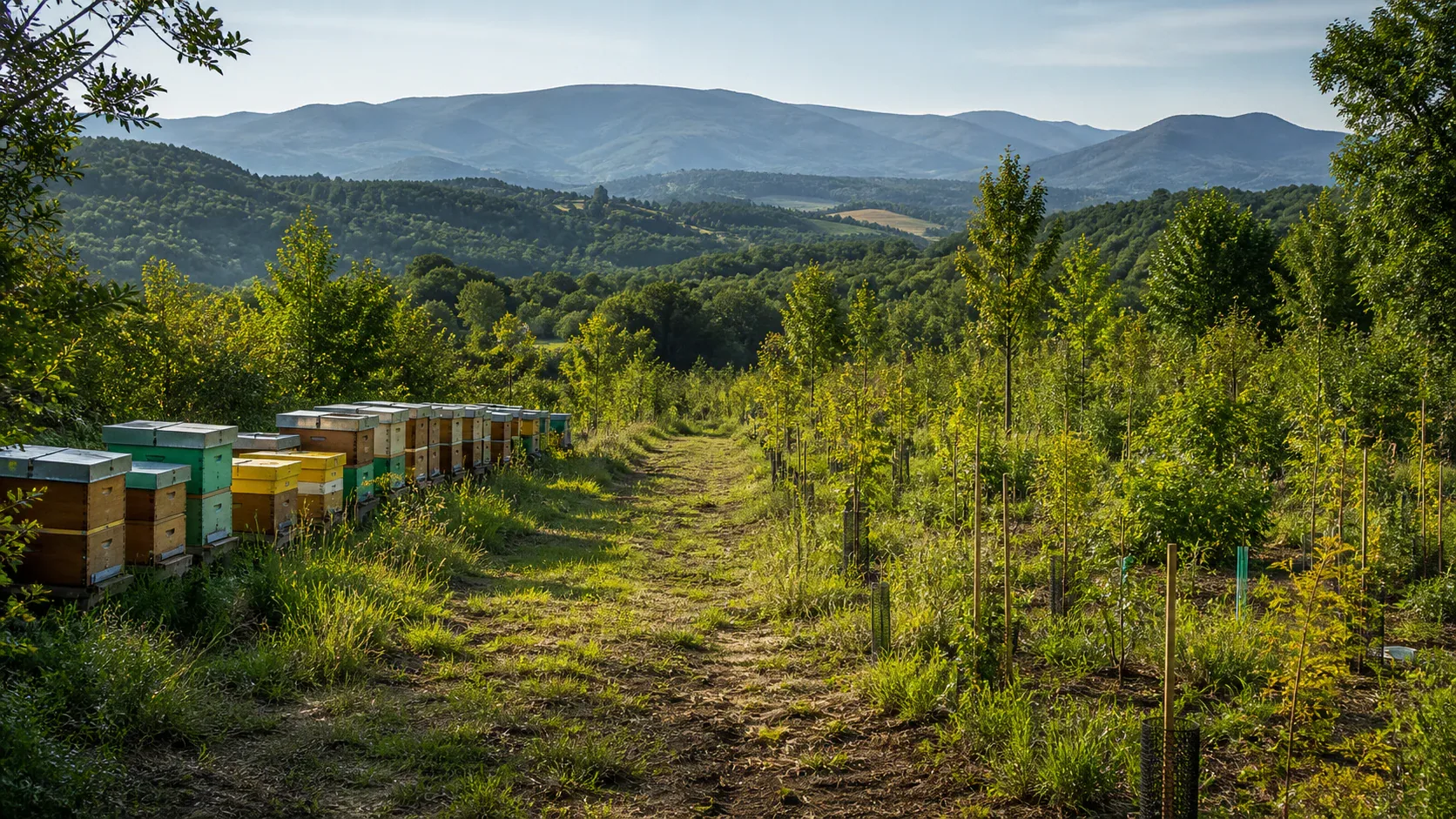
Choose beehive sponsorship when the primary objective is a personal apiary, food-provenance or gifting experience. Choose a credible tree-restoration program when the objective is long-term landscape restoration with appropriate land, species, stewardship and monitoring. Neither option should be treated as a generic carbon offset or complete biodiversity strategy without project-specific evidence.
| Criterion | Beehive sponsorship | Tree planting or restoration |
|---|---|---|
| Primary connection | A managed apiary, beekeeper, seasonal story and possible honey experience. | A landscape-restoration or tree-establishment project over a longer ecological timescale. |
| Recipient engagement | Can include named-hive choice, certificates, updates and food provenance. | Often uses project updates, maps, field stories or volunteering; individual-tree tracking varies. |
| Ecological scope | Managed honeybees and an apiary context; not a complete wild-pollinator strategy. | Potential habitat, soil, climate and livelihood benefits when restoration is well designed. |
| Key dependency | Responsible beekeeping, forage, apiary management and accurate claims. | Right place, species, provenance, survival, protection and long-term stewardship. |
| Typical physical element | Certificate and honey or presentation where included. | Usually no physical product; participation or reporting depends on the provider. |
| Main claim risk | Equating managed honeybee support with saving all bees or measured biodiversity improvement. | Counting seedlings as durable carbon or restoration outcomes without survival and monitoring. |
These programs solve different problems
Beehive sponsorship and tree planting are often placed in the same corporate sustainability catalogue, but they create different relationships. A hive program can connect recipients to beekeeping, agricultural seasonality and honey provenance. A restoration program can address degraded land, tree cover, habitat and livelihoods when it is designed for the site and maintained over time.
The decision should begin with the business and environmental objective. Selecting whichever option produces the simplest certificate or largest headline number invites weak procurement and exaggerated communication.
Where beehive sponsorship is strongest
A well-designed sponsorship can create a tangible connection to a working apiary. Named-hive choice, a certificate, beekeeper context, seasonal material and honey where included make it suitable for client or employee gifting and food-provenance education.
Its environmental scope must remain precise. Managed honeybees are not interchangeable with Europe's diverse wild pollinators, which include wild bees, butterflies, hoverflies and moths. Supporting an apiary does not by itself demonstrate recovery of wild-pollinator abundance or diversity.
Where tree restoration is strongest
Well-designed forest and landscape restoration can support biodiversity recovery, carbon sequestration, ecosystem function and livelihoods. But tree planting is not complete when a seedling enters the ground. FAO guidance emphasizes suitable sites and species, resilience, stakeholder involvement, natural regeneration where appropriate and long-term management.
A credible provider should explain land rights, ecological baseline, species selection, planting or regeneration method, survival monitoring, permanence risks and community participation. A count of trees purchased is an input, not proof of a lasting outcome.
- ●Protect existing forests and ecosystems first
- ●Use appropriate land and locally suitable species
- ●Prefer diverse restoration over simplistic monoculture claims
- ●Plan maintenance, replacement and fire or grazing protection
- ●Report survival and ecological progress over time
Compare the recipient experience separately from ecology
A program can be ecologically credible but poorly suited to gifting, or highly engaging without producing a measured ecological outcome. Keep these dimensions separate. Hive sponsorship often has a direct narrative and physical food connection. Tree programs may offer a longer landscape story, field participation or location reporting.
Test the actual recipient journey: what is revealed immediately, what updates will exist, whether the content is project-specific and what happens after the first year. Avoid designing the environmental claim around the engagement feature.
The most common claims to avoid
For beehive programs, avoid claiming that a sponsored managed colony saves all bees, reverses pollinator decline or guarantees biodiversity gains. For tree programs, avoid treating every purchased seedling as a permanent tree, a fixed carbon removal or restored forest without monitoring and a relevant accounting method.
Neither program makes unrelated operations sustainable. Describe the activity, location, term, provider, documented outputs and limitations. If carbon, biodiversity or restoration outcomes are central to the purchase, obtain specialist evidence and use the applicable reporting framework.
- ●Good: We funded a one-year named-hive experience at a managed Tuscan apiary.
- ●Weak: We saved the world's pollinators.
- ●Good: The project planted specified native species and will report survival under its monitoring plan.
- ●Weak: Every purchased seedling permanently offsets a fixed amount of our emissions.
A procurement checklist for either option
Ask who controls the project, what the payment funds, which outputs and outcomes are distinguished, how risks are managed and what evidence will be available. Review the contract and public language together so marketing cannot outrun delivery.
- ●Named operator, location and project term
- ●Baseline, objective and theory of change where relevant
- ●Exact purchased inputs and promised outputs
- ●Monitoring method, frequency and responsible party
- ●Failure, replacement and early-termination process
- ●Recipient inclusions and data requirements
- ●Approved environmental statements and limitations
How to choose—or use both without double counting
Choose hive sponsorship for a personal apiary, gifting or provenance story. Choose a credible restoration program for a long-term landscape objective. A company can support both when each has its own purpose, budget, evidence and communication.
Do not merge unlike outputs into one impact number or imply that engagement features prove ecological outcomes. Report each activity separately and explain how it fits into the wider environmental strategy rather than presenting either as a substitute for reducing the company's own impacts.
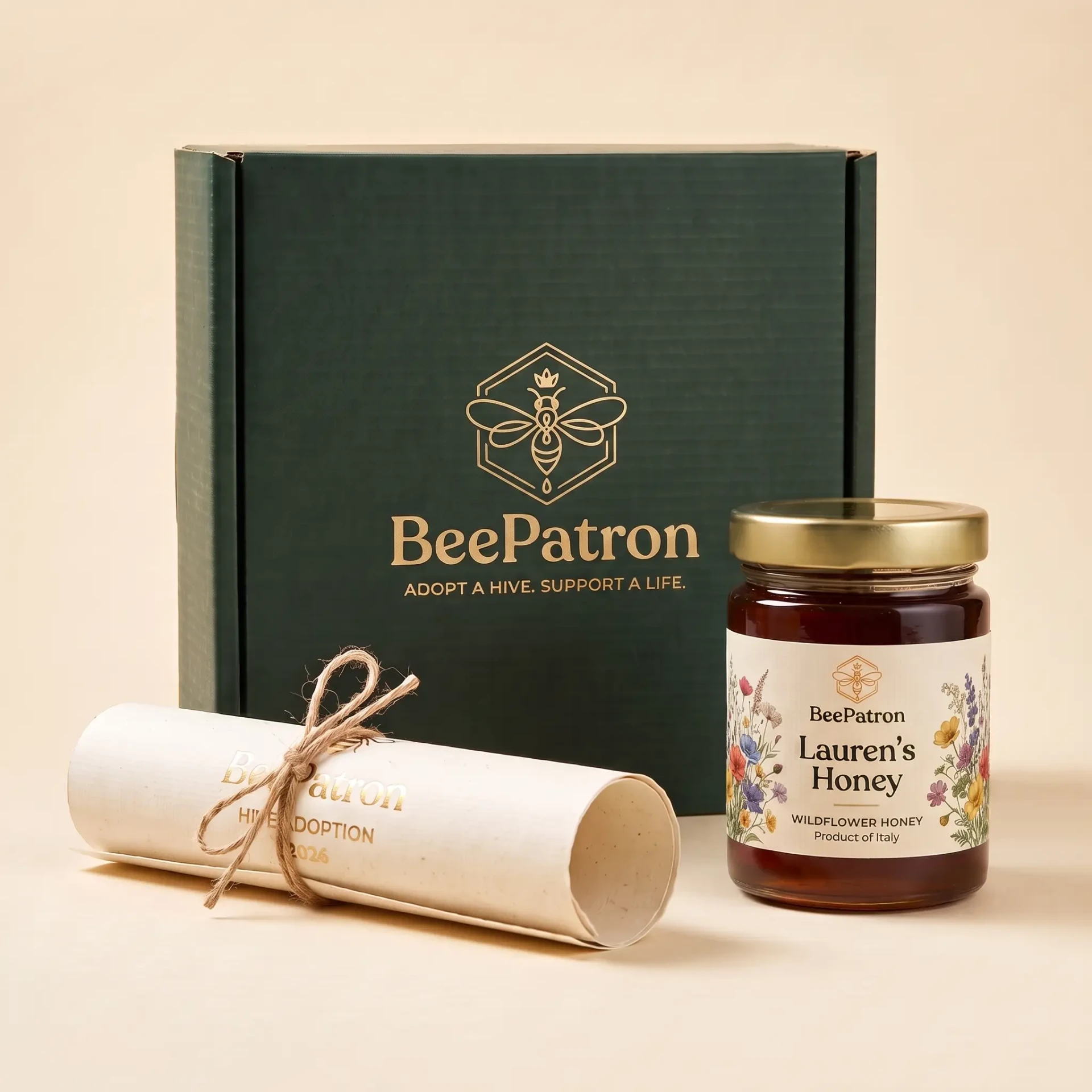
BeePatron presentation
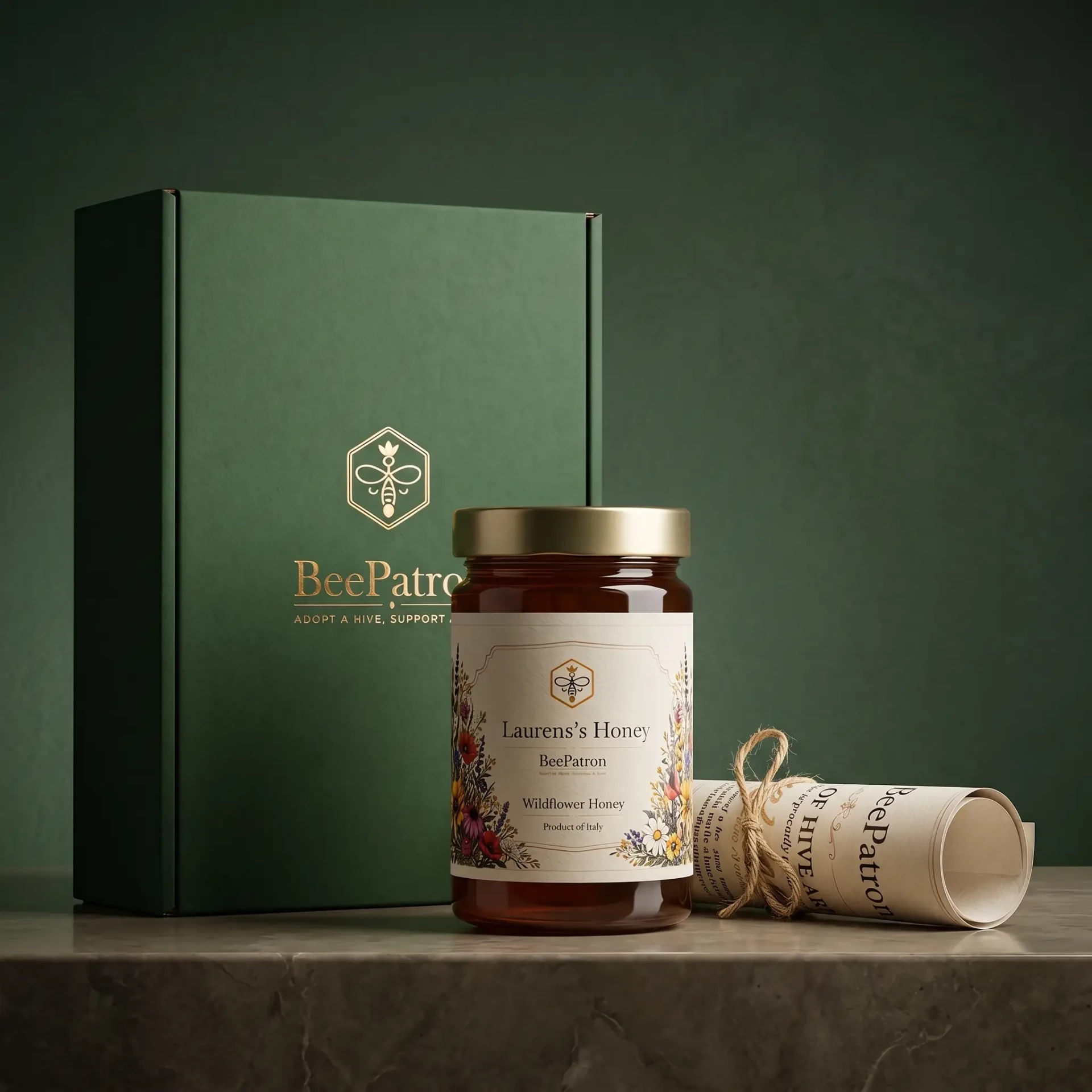
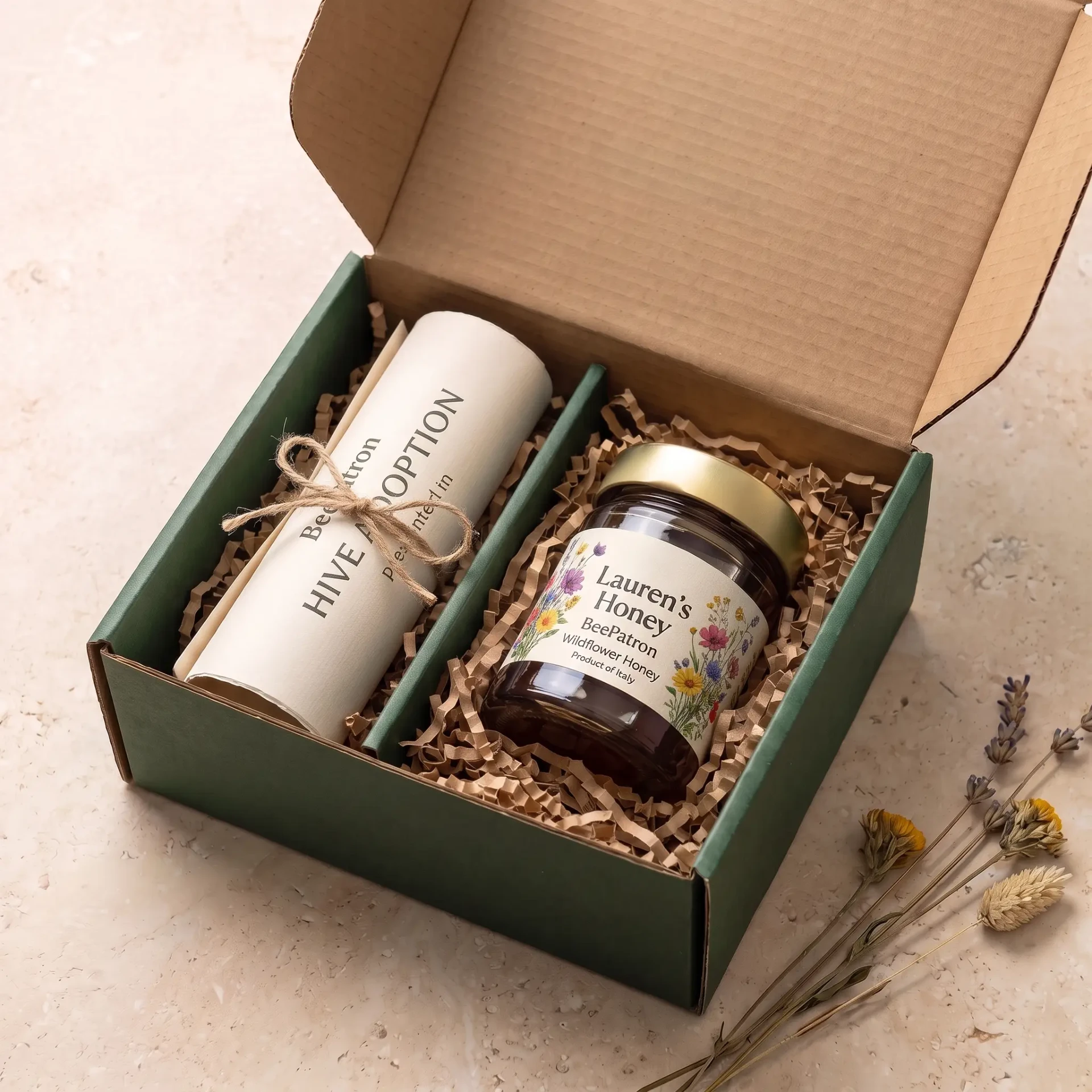
See the BeePatron corporate gift presentation
A considered presentation built around personalized Tuscan honey, a hive adoption certificate and a story recipients can continue following.
Sources and further reading
Primary and institutional references used to review the factual claims in this guide. Product details and prices are BeePatron information.
Frequently asked questions
Is beehive sponsorship better than tree planting?
Not universally. Hive sponsorship is often stronger as a personal apiary and provenance experience; credible restoration is better suited to long-term landscape objectives. Quality depends on project design and evidence.
Does sponsoring a beehive improve biodiversity?
A managed apiary program may support beekeeping and engagement, but it does not automatically demonstrate an increase in wild-pollinator abundance or biodiversity. Project-specific evidence is required for that claim.
Does planting one tree offset a fixed amount of carbon?
Not automatically. Carbon outcomes depend on species, site, growth, survival, baseline, leakage, permanence and the accounting method. A purchased seedling is not the same as verified long-term removal.
Can a company support both programs?
Yes, when each has a distinct purpose and reporting scope. Avoid double counting or combining unlike outputs into one unsupported impact figure.
Which option is better for employee or client gifts?
Hive sponsorship can offer a more immediate named experience, certificate and food-provenance story. The best choice still depends on recipient fit and the actual provider package.
Choose the program that matches the real objective
If a personal apiary and provenance experience fits your audience, explore BeePatron's tailored corporate sponsorship.
Explore corporate sponsorship