Corporate sponsorship guide
Corporate Beehive Sponsorship: Benefits, Costs and How It Works
A practical buyer's guide to remote beehive sponsorship, program costs, employee and client use cases, supplier questions and responsible environmental claims.
Quick answer
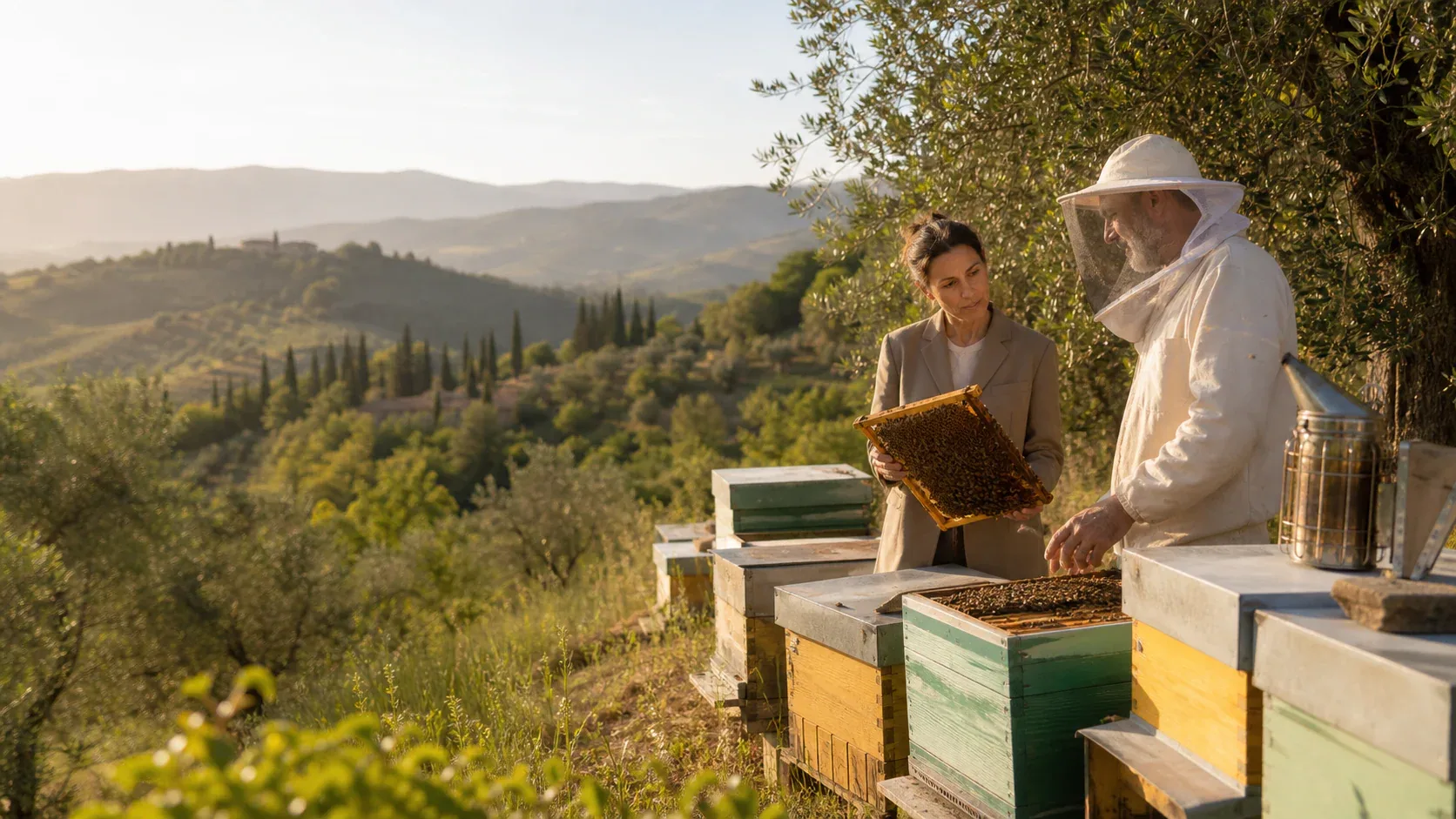
Corporate beehive sponsorship is a managed program in which a company supports an apiary experience without owning or operating the colonies. Depending on the provider, it may include named hives, certificates, updates, visits, honey or recipient gifts. Buyers should compare the real apiary relationship, fulfilment, evidence, claims and total program cost—not just the word sponsorship.
What corporate beehive sponsorship actually means
Corporate beehive sponsorship is an agreement with a beekeeper, apiary or experience provider. The company funds an agreed program while trained beekeepers continue to own, inspect and care for the colonies. Sponsorship is not the same as purchasing livestock, operating a hive at the office or receiving exclusive honey from one colony.
Programs vary substantially. Some place a company plaque on a hive. Others focus on employee education, client gifts, apiary visits, seasonal media or branded honey. Remote programs can connect recipients to an existing apiary without requiring suitable premises, insurance arrangements or on-site hive management.
Hosting a hive versus sponsoring one remotely
An on-site hive places managed colonies at company premises. It can create a visible local program, but it requires an appropriate site, professional inspections, safety planning and clear expectations about employee access.
Remote sponsorship supports hives at the provider's apiary. It is usually more suitable for distributed teams, international recipients and organizations without appropriate outdoor space. The trade-off is that engagement happens through certificates, updates, digital access, honey, visits where offered or other planned touchpoints.
- ●Choose on-site hosting when place-based employee engagement is central and the premises are suitable.
- ●Choose remote sponsorship when recipient reach, gifting and simpler operations matter more.
- ●Do not describe remote sponsorship as a hive located at your office or as legal ownership.
Where sponsorship fits in a business program
The strongest program starts with one defined audience and outcome. Client appreciation needs restrained presentation and dependable fulfilment. Employee recognition benefits from a personal choice and a clear activation journey. Events need an immediate reveal that remains meaningful after attendees leave.
Beehive sponsorship can also provide a subject for internal storytelling about agriculture, provenance and seasonality. That does not make it proof of company-wide sustainability performance. Treat communication as part of the recipient experience rather than an excuse for a broad green claim.
- ●Client and partner appreciation
- ●Employee milestones and retirement
- ●Leadership or executive gifts
- ●Conference and private-event follow-up
- ●Team learning around food provenance and seasonal agriculture
What a credible package may include
A buyer should receive a precise list of inclusions rather than a vague promise to save bees. Relevant elements can include the term, number or type of supported hives, certificate format, recipient access, frequency and source of updates, honey quantity and provenance, personalization, shipping and renewal terms.
Natural and agricultural limits belong in the proposal. Harvests vary. One named hive may be part of a wider apiary, and honey may be prepared at apiary level rather than isolated colony by colony. Live video, telemetry and fixed update schedules should only be promised when the provider can operate them reliably.
What determines corporate sponsorship cost
There is no universal market price because offers combine different products and services. A plaque-only sponsorship is not comparable with a multi-recipient program containing personalized certificates, digital access, honey, custom presentation and international delivery.
Ask for the total cost of the agreed experience. Volume can reduce some production costs, but personalization, address handling, international shipping and accelerated timelines add operational work.
- ●Number of recipients or sponsored hives
- ●Program term and update scope
- ●Certificate and personalization requirements
- ●Honey quantity, packaging and presentation
- ●Single-location or individual-address fulfilment
- ●Destination countries, duties and delivery timing
- ●Creative, reporting or account-management requirements
Questions procurement should ask the provider
Procurement should establish who operates the apiary, what the company is buying and how recipient data and fulfilment will be handled. Ask for evidence that matches the claims you intend to publish.
Food gifting also creates practical questions. Confirm destination restrictions, ingredient and origin information, address deadlines, damage handling and whether recipients can decline or redirect a physical delivery.
- ●Where is the apiary and who manages the colonies?
- ●Does the company own anything or receive exclusive access?
- ●What exactly will each recipient receive, and when?
- ●Where does the honey come from and is quantity harvest-dependent?
- ●Which customization is confirmed rather than illustrative?
- ●How are recipient names, emails and addresses handled?
- ●What happens when delivery fails or timing changes?
- ●Which environmental statements can the provider substantiate?
How to communicate the program responsibly
Describe the activity literally: your company funded or purchased a named-hive patronage program at a specified managed apiary. State the term, audience and included experience. If the provider supplies documented outputs, report those outputs with their scope and date.
Avoid saying the program offsets emissions, reverses biodiversity loss, saves a quantified number of bees or makes the company sustainable unless a separate, credible methodology supports that exact statement. Honeybees are managed livestock and only one part of the wider pollinator community, so honeybee support should not be presented as a complete biodiversity strategy.
- ●Good: We provided 50 employees with a one-year named-hive experience connected to a managed Tuscan apiary.
- ●Weak: This gift made our company carbon neutral.
- ●Good: The program included certificates, private access, seasonal material and honey under the agreed terms.
- ●Weak: Every jar came exclusively from one sponsored colony, unless that provenance is genuinely verified.
A practical implementation sequence
Begin with audience, purpose, quantity, geography and occasion. Then request a written proposal, test the recipient journey, approve exact claims and collect addresses only when required. Leave enough time for personalization and delivery rather than treating an agricultural experience like instant promotional merchandise.
After launch, measure delivery completion, activation, recipient feedback and any planned follow-up. Renew only if the continuing experience supports the original objective; renewal should be a deliberate new term, not an assumed automatic charge.
- ●Define the business objective and recipient group.
- ●Confirm scope, budget, geography and timing.
- ●Review a sample certificate and activation journey.
- ●Approve precise communications and disclaimers.
- ●Collect only the recipient data needed for fulfilment.
- ●Measure completion and feedback against the original objective.
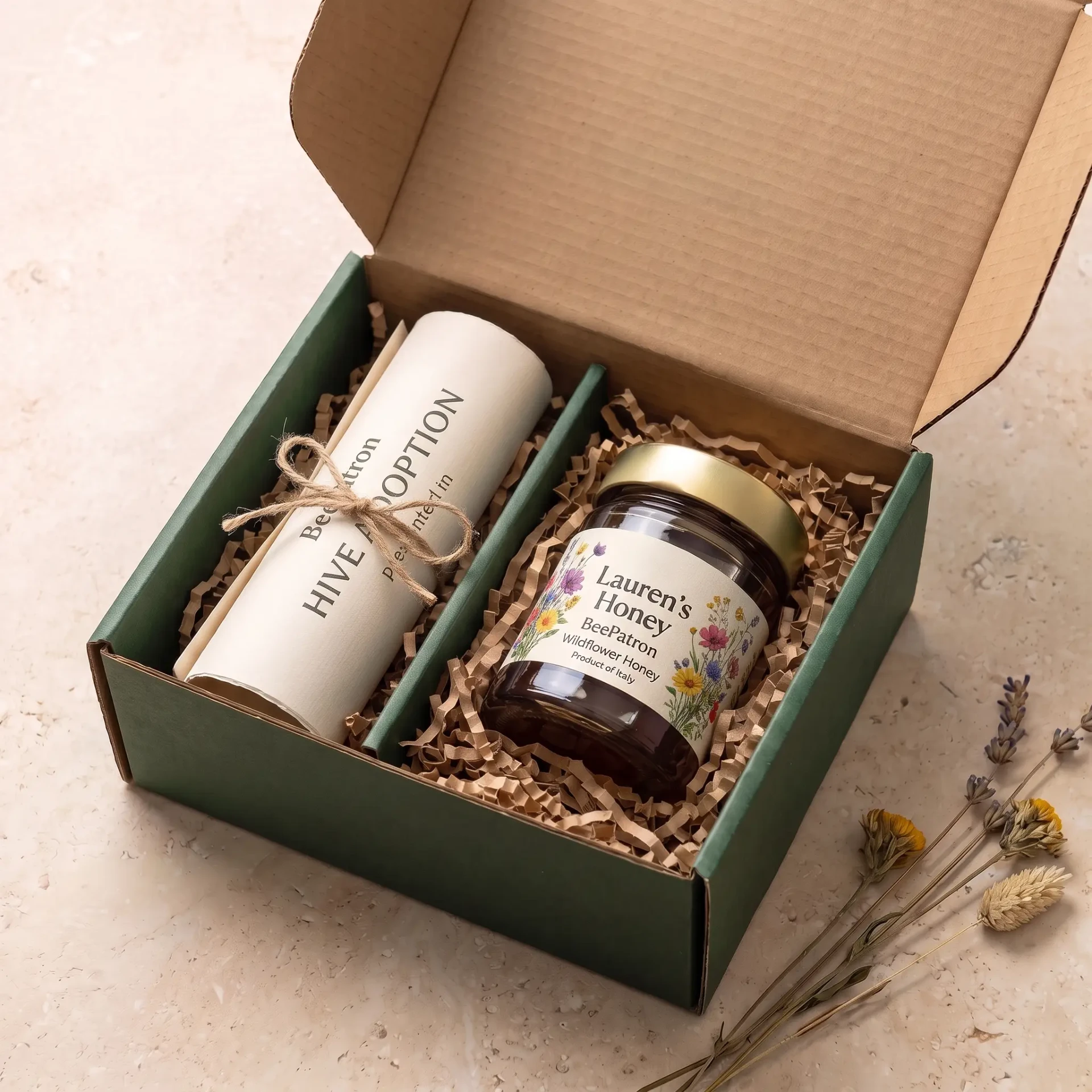
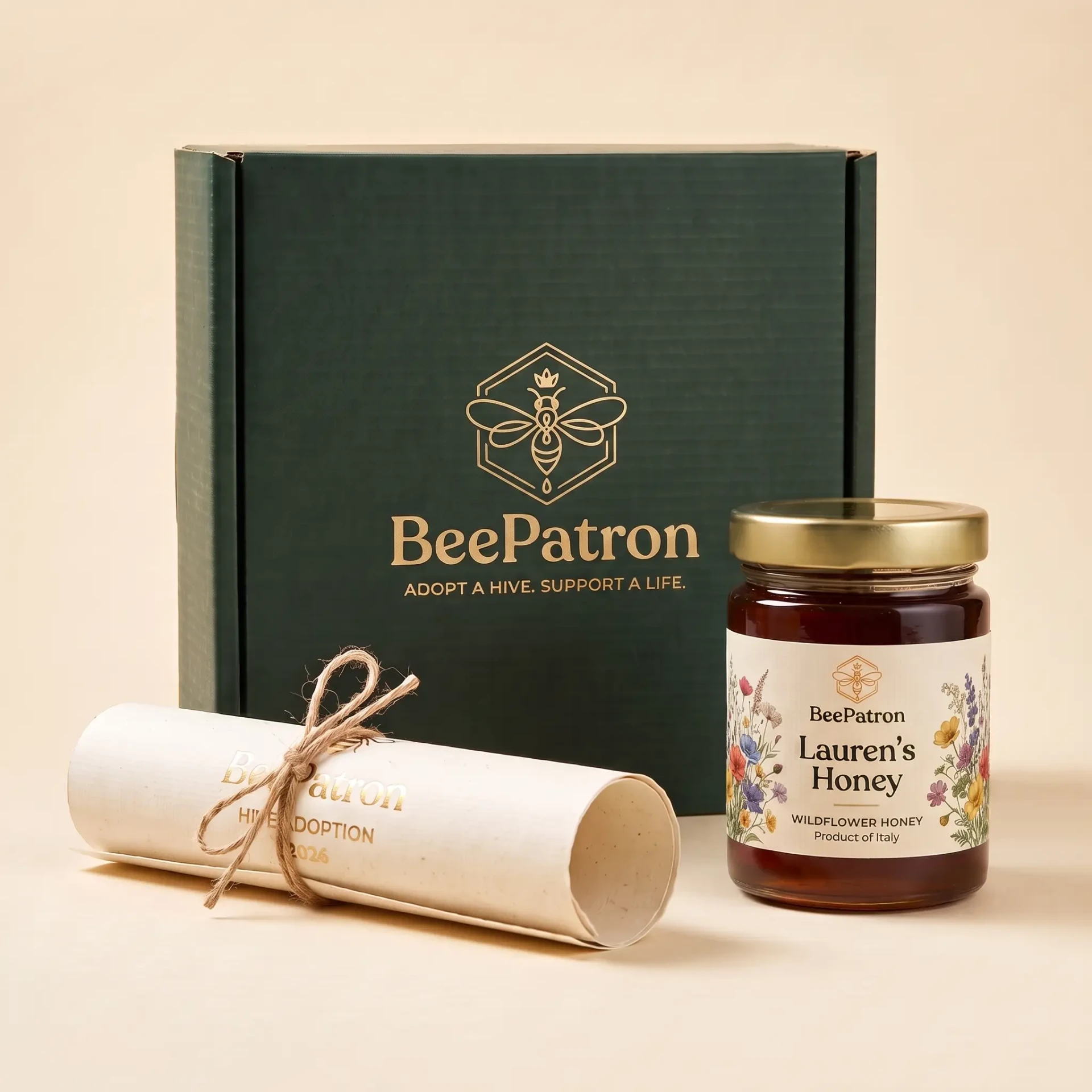
BeePatron presentation
See the BeePatron corporate gift presentation
A considered presentation built around personalized Tuscan honey, a hive adoption certificate and a story recipients can continue following.

Sources and further reading
Primary and institutional references used to review the factual claims in this guide. Product details and prices are BeePatron information.
Frequently asked questions
How much does corporate beehive sponsorship cost?
Cost depends on the program scope: recipient volume, sponsorship term, certificates, digital access, honey, personalization, shipping and account management. Request a total proposal rather than comparing unlike offers by headline price.
Can a company sponsor a hive without keeping bees on-site?
Yes. Remote sponsorship supports a managed apiary and avoids the premises, safety and operating requirements of hosting colonies at the office.
Is beehive sponsorship an ESG investment?
It may form one small, clearly described activity within a wider program, but it does not by itself prove ESG performance, biodiversity improvement or emissions reduction.
Can sponsored-hive honey carry a company logo?
Some providers offer branded or personalized presentation at certain volumes. Confirm artwork, food-label compliance, provenance, lead time and minimum quantities before promising it.
Does the sponsor own the hive?
Usually no. In a credible managed program, the beekeeper retains ownership and operational responsibility unless a contract explicitly states otherwise.
Build a corporate hive program around your audience
Explore the BeePatron sponsorship experience, then tell us the audience, timing and fulfilment requirements for a tailored proposal.
Explore corporate sponsorshipContinue exploring
Corporate Beehive Sponsorship
Explore BeePatron's tailored Tuscany program.
Read nextCorporate Gifting ROI
Build an objective, measurement and claims framework.
Read nextThe Tuscany Experience
See the real apiary context behind the recipient journey.
Read nextBranded Honey Gifts
Plan provenance, personalization and corporate food fulfilment.
Read nextSustainable Client Gifts
Choose premium gifts with a complete evidence-led framework.
Read nextEmployee Appreciation Gifts
Build inclusive recognition around a real employee moment.
Read nextSponsorship vs Tree Planting
Compare ecological scope, engagement and evidence requirements.
Read nextResponsible ESG Communication
Build environmental language from documented scope and evidence.
Read nextCorporate Gift Buying Guide
Plan policy, budget, recipient data and fulfilment before launch.
Read nextLuxury VIP Client Gifts
Create a premium relationship gift with provenance and restraint.
Read nextUnique Executive Gifts
Recognize leadership with specific meaning, not generic merchandise.
Read nextCorporate Anniversary Gifts
Build a milestone experience for clients, employees and partners.
Read nextLuxury Corporate Holiday Gifts
Build an inclusive year-end program with provenance and choice.
Read nextUnique Business Partner Gifts
Recognize shared work with a distinctive, policy-aware gift.
Read nextLuxury Corporate Welcome Gifts
Create a premium first chapter for new employees and clients.
Read nextLuxury Real Estate Closing Gifts
Celebrate a new home with a personal, referral-rule-aware gift.
Read nextClient Gifts for Law Firms
Combine premium discretion with confidentiality and ethics review.
Read nextClient Gifts for Financial Advisors
Recognize milestones with stewardship and recipient-level controls.
Read next