
Honey Tasting Guide
How to Taste Honey: A Beginner's Sensory Guide
Learn how to taste honey side by side, describe aroma, flavor and texture, avoid palate fatigue and record useful observations without pretending preference is proof of quality.
Quick answer
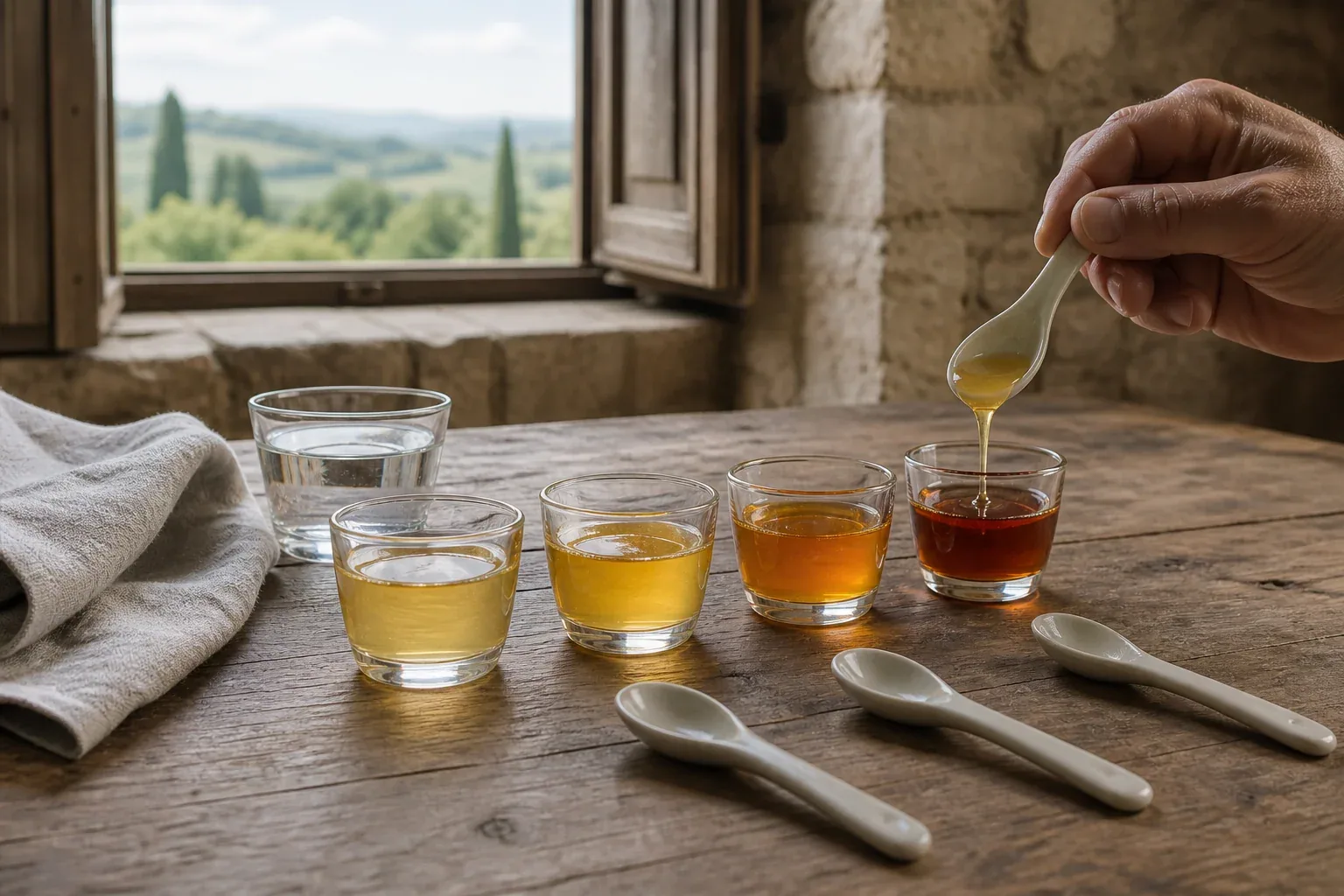
To taste honey, compare two to four samples at room temperature in plain, odor-free containers. Observe appearance without using color as a purity test, smell each sample before tasting, take a small amount, let it spread across the palate and notice sweetness, acidity, aroma, texture and finish. Move from delicate to intense, use water and plain food between samples, and record impressions in your own words before reading the producer's tasting notes.
| Criterion | What to notice | What it cannot prove |
|---|---|---|
| Appearance | Color, clarity, viscosity and crystal form. | Purity, botanical origin or processing history by sight alone. |
| Aroma | Floral, fruit, warm, plant, woody or other associations. | The exact flower without traceability and appropriate analysis. |
| Taste and flavor | Sweetness, acidity, bitterness, intensity and retronasal aroma. | A universal quality ranking based on personal preference. |
| Texture and finish | Fluidity, creaminess, crystal size and persistence. | Whether crystallized honey is fake or spoiled. |
Taste to notice differences, not to pass an exam
A beginner tasting is successful when it makes one jar more legible beside another. You do not need to identify a flower blind or produce poetic vocabulary. Begin with concrete contrasts: paler or darker, quieter or more aromatic, fluid or set, short or persistent.
Preference and quality are different questions. You may prefer a mild honey while recognizing that a darker, bitter-edged sample is sound and distinctive. Sensory experience can describe a product; it cannot authenticate origin on its own.
Set up a small, fair tasting flight
Choose two to four honeys so concentration does not collapse into sweetness fatigue. Bring them to the same comfortable room temperature and place equal small portions in clean, neutral containers. Strong room fragrance, scented soap, coffee, smoke and cooking aromas can compete with the samples.
Use a fresh spoon for each honey. Provide still water and a plain, low-aroma food such as simple bread or an unsalted cracker if desired. Keep packaging out of sight during the first pass when you want to reduce expectations created by names and design.
- ●Two to four honey samples
- ●Plain glass or ceramic containers
- ●One clean spoon per sample
- ●Room-temperature still water
- ●A simple observation sheet and pen
Taste from delicate to intense
A strongly aromatic or bitter honey can make the next delicate sample harder to perceive. A useful order is pale and restrained first, rounded multifloral styles next, then darker or more persistent samples. The label may suggest an order, but the actual batch should guide you.
If one sample dominates, pause longer, drink water and return later. Reversing the order on a second pass can reveal how sequence influenced the first impression.
Step 1: look without turning appearance into a test
Record color in ordinary terms and note whether the honey is fluid, creamy or visibly crystallized. Tilt the container gently to observe movement. These are useful sensory details, but they are not shortcuts to purity or geographical origin.
Crystallization is common and highly dependent on botanical composition, moisture, temperature and time. A set honey may be excellent; a liquid honey is not automatically processed or adulterated.
Step 2: smell before sweetness takes over
Bring the container close and take two or three short, gentle sniffs. If the aroma seems quiet, cover the container briefly with your hand and allow warmth to release volatile compounds without heating the honey aggressively.
Use associations you genuinely recognize: fresh flowers, dried fruit, herbs, warm sugar, wood, malt or something more animal or fermented. Your word does not need to match a published flavor wheel to be useful.
Step 3: separate sweetness from the rest of flavor
Take a small amount and let it spread before swallowing. Notice the first impact, then acidity, bitterness, aroma in the mouth and any cooling, warming or throat sensation. Ask what appears after the initial sweetness rather than stopping at sweet or not sweet.
Taste each sample twice. The first encounter gives impact; the second often reveals structure. Avoid medical or nutritional conclusions based on intensity, darkness or a physical sensation in the throat.
Step 4: notice texture and finish
Texture includes thickness, smoothness, creaminess and crystal size. Fine crystals can feel spreadable; larger crystals can produce a more distinct granular sensation. Neither texture alone establishes better handling.
After swallowing, count how long recognizable flavor remains and whether it changes. A long finish can be enjoyable, but persistence is not automatically superior to a clean, short finish suited to delicate food.
Use a five-line tasting note
Write before discussing the samples. Group conversation can be useful, but it also makes people borrow vocabulary and revise honest first impressions. A short repeatable format is more valuable than a paragraph built to sound expert.
- ●Appearance: color and physical state
- ●Aroma: two or three associations
- ●Palate: sweetness, acidity, bitterness and flavor
- ●Texture and finish: mouthfeel and persistence
- ●Preference and use: where you would enjoy it
Taste Tuscany as variation, not a fixed flavor
Tuscan acacia, chestnut, wildflower and honeydew honeys can provide a useful contrasting flight, but the names describe botanical relationships rather than immutable recipes. Weather, harvest period, apiary location, handling and storage all shape the jar.
A BeePatron honey moment connects tasting with an apiary story when the relevant harvest and provenance are available. Honey remains seasonal agricultural produce; a named hive does not mean one jar can be attributed exclusively to one colony unless that claim is specifically verified.
Sources and further reading
Primary and institutional references used to review the factual claims in this guide. Product details and prices are BeePatron information.
Frequently asked questions
Should honey be tasted warm or cold?
Use a comfortable room temperature and keep every sample comparable. Cold can reduce aroma, while deliberate heating may change the sample.
How many honeys should beginners taste at once?
Two to four is a practical flight. More samples can increase sweetness and aroma fatigue.
What cleanses the palate between honeys?
Still water and a plain, low-aroma food can help. Pause longer after an especially intense sample.
Can tasting reveal whether honey is pure?
No. Sensory observations can identify unusual characteristics, but purity and origin require traceability and, where needed, validated analysis.
Why does crystallized honey feel different?
Sugar composition, moisture, temperature, time and microscopic particles influence crystallization and crystal texture. Crystallization is usually not spoilage.
Taste the Landscape Behind the Jar
Explore Tuscan honey through botanical origin, seasonal variation and traceable apiary context.
Explore Tuscan Honey