Beehive Rental Guide
Rent a Beehive: Costs, Uses & Rental vs Adoption
Learn what beehive rental means, who it suits, typical cost factors and how managed hive rental differs from symbolic beehive adoption or sponsorship.
Quick answer
Renting a beehive usually means paying a beekeeper to place and manage a live colony on a farm, business property or suitable private site. The beekeeper normally retains ownership and handles inspections, health decisions, equipment and removal. Costs depend on location, access, purpose, colony count, season and included services. Beehive adoption is different: the hive generally stays at the provider's apiary while the customer receives a symbolic connection, updates, certificates or honey without hosting bees.
| Criterion | Beehive rental | Beehive adoption |
|---|---|---|
| Hive location | Often placed on the customer's eligible property. | Usually remains at the beekeeper's established apiary. |
| Main purpose | Pollination, education, workplace engagement or local harvest. | Patronage, gifting, learning and connection to an apiary story. |
| Customer responsibility | Site access, safety coordination and contract compliance. | Usually hands-off, with no land or bee handling required. |
| Price drivers | Travel, inspections, colony count, equipment, risk and duration. | Experience length, hive allocation, digital access, gifts and honey. |
Looking for an educational gift rooted in the real world?
Explore BeePatron’s named Tuscan hives and discover the meaning behind each one.
Explore the HivesWhat does it mean to rent a beehive?
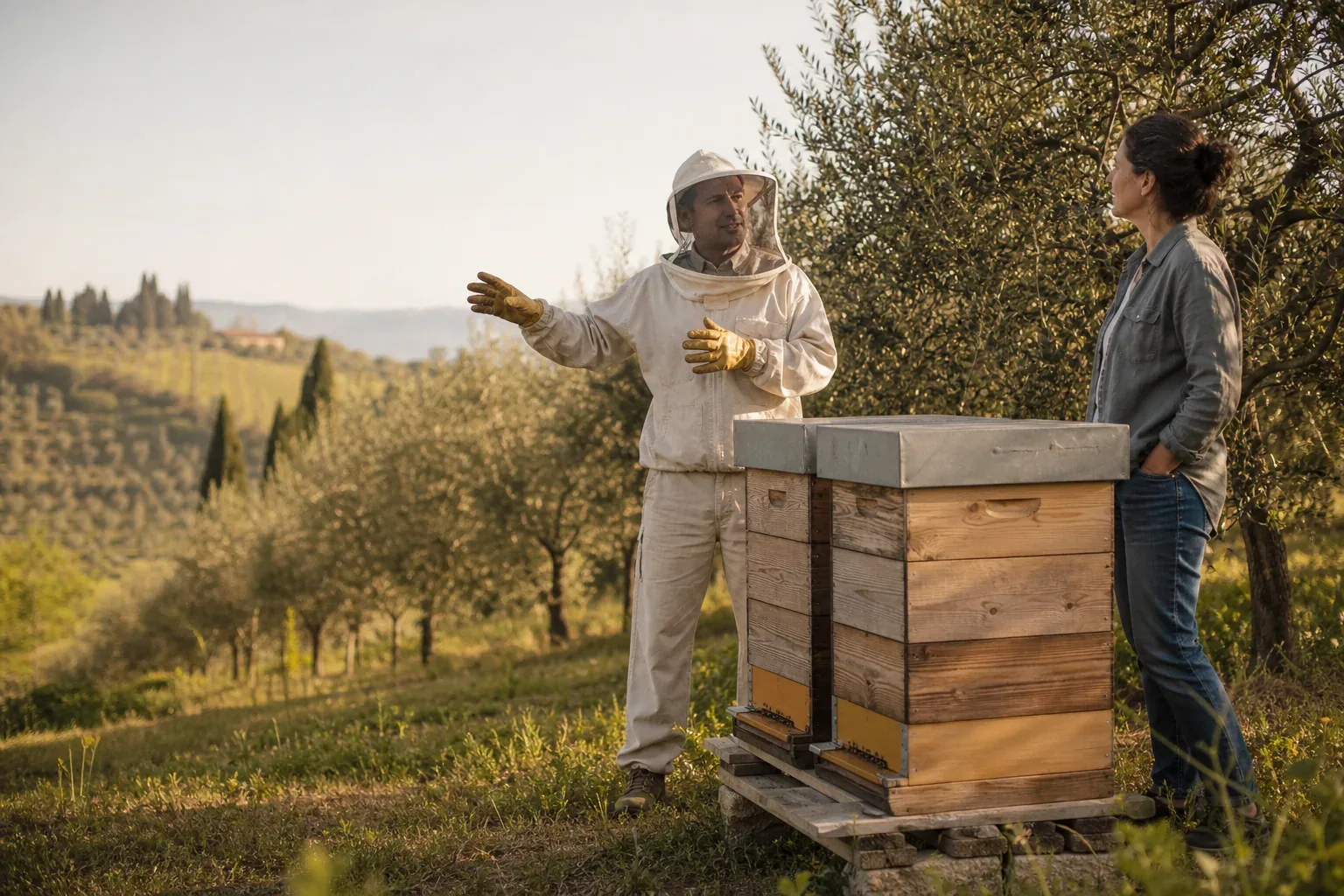
A beehive rental is normally a managed service agreement. A beekeeper supplies a colony and equipment, transports the hive to an approved location, inspects it on a schedule and makes husbandry decisions. The customer pays for professional management and access to the experience, not for unrestricted control of the bees.
Arrangements vary widely. A farm may rent colonies for crop pollination during bloom. A hotel or office may host a small number of hives for education and staff engagement. A homeowner may want a local hive experience but lack the expertise to manage it safely. The contract should say who owns the colony, who may open the hive and when it will be removed.
How much does beehive rental cost?
There is no universal rental price. A quotation may cover delivery, hive equipment, a managed colony, scheduled inspections, routine treatments, swarm response, winter preparation, removal and a defined share of harvest. Other providers price transport, honey extraction, workshops or branded reporting separately.
Distance is especially important because the beekeeper must revisit the site throughout the agreement. A low advertised rate can become expensive when travel, difficult access, fencing, water, permits or emergency calls are added. Ask for the total seasonal or annual cost and the circumstances that can create extra charges.
- ●Number and strength of colonies
- ●Distance from the beekeeper's normal route
- ●Inspection frequency and agreement length
- ●Site preparation, barriers and water access
- ●Honey extraction, jars, labels or workshops
- ●Replacement, cancellation and poor-season terms
What to send when asking for a beehive rental quote
Give each local beekeeper the same brief so you can compare the replies: your location, the purpose of the hive, proposed dates, site photographs and any access restrictions. For crop pollination, describe the crop and area; for a workplace or garden, explain how people use the space.
Ask for one itemized total covering installation, scheduled visits and removal, with optional workshops or honey listed separately. Request the inspection schedule, emergency contact arrangements and cancellation terms alongside the price. A quote without those details is difficult to compare with a fully managed service.
Who should consider renting a hive?
Rental can suit farms with a defined pollination need, organizations with a safe and useful site, schools working with qualified providers and property owners who want a managed local experience. It is most credible when the goal is explicit and the location can support it without creating avoidable conflict.
A hive should not be added merely because bees make appealing sustainability imagery. Managed honey bees interact with local forage, wild pollinators and neighbors. The provider should assess forage, water, flight paths, pesticide exposure, density of existing colonies and whether another hive is appropriate for that landscape.
Check the site, rules and safety before signing
Local rules can affect hive registration, setbacks, barriers, water and nuisance management. Building owners, landlords, insurers, schools and workplaces may impose additional requirements. A provider should inspect or meaningfully evaluate the location rather than approving it from a postal code alone.
Plan for normal bee behavior. Colonies can become defensive, swarm or need treatment and feeding. Access must remain available when the beekeeper needs to act. The agreement should identify an emergency contact, explain incident handling and state who can authorize relocation or removal.
- ●Who owns the bees and equipment?
- ●Who carries insurance and operational responsibility?
- ●How often will inspections occur?
- ●What happens after a swarm, colony loss or complaint?
- ●Who receives honey, and how is its origin described?
- ●When and how can either party end the agreement?
Renting, adopting and sponsoring are different choices
Choose rental when the physical presence of a professionally managed colony serves a legitimate purpose at a suitable site. Choose adoption when you want a hands-off relationship with an apiary but do not need bees placed near you. Sponsorship is often designed for organizations and may include communication, gifting or reporting, but its exact meaning depends on the provider.
None of these labels automatically proves a biodiversity benefit. Ask what is physically happening, where it happens, who is responsible and what evidence supports any environmental claim. Clear operational language is more valuable than an impressive program name.
Does BeePatron place a rented hive on your property?
BeePatron is a named-hive patronage experience at Le Gusciane in Tuscany. The hive stays at the apiary; you follow its story through your private Hive Room. It is a fit for someone seeking an apiary connection or a gift without arranging a site for live bees.
If you need bees delivered to a farm, garden or workplace, ask a local managed-hive provider for a site assessment. If you want the Tuscan experience, compare BeePatron's current plans for the term, honey and other inclusions before choosing.
A simple decision rule
If you need crop pollination or a locally hosted colony and have an appropriate site, request an assessment from insured local beekeepers. Compare the complete service scope, not only colony price. If your goal is a gift, education or connection with beekeeping and you do not need bees on-site, adoption is usually simpler.
Avoid searching only for the cheapest provider. The colony's welfare, reliable access and the beekeeper's ability to respond matter throughout the season. A responsible provider may decline a location or recommend fewer colonies; that judgment is a positive signal.
Sources and further reading
Primary and institutional references used to review the factual claims in this guide. Product details and prices are BeePatron information.
Frequently asked questions
Can I rent a beehive for my backyard?
Possibly, but suitability depends on local rules, property permission, forage, water, access, flight paths and the provider's service area. A professional should evaluate the site before placement.
Do I own the bees when I rent a hive?
Usually not. The beekeeper commonly owns the colony and equipment and retains responsibility for management. Confirm this in the written agreement.
Do rental customers receive honey?
Some agreements include a share of suitable surplus honey; others do not. Quantity and timing depend on the contract, colony needs and harvest conditions.
Is renting a hive better than adopting one?
Neither is universally better. Rental suits an appropriate site that needs a managed physical colony. Adoption suits people who want a hands-off apiary connection without hosting bees.
Want the experience without hosting live bees?
Compare named-hive patronage plans connected with a real Tuscan apiary, private Hive Room and plan-specific honey.
Choose a Hive Give BeePatron as a Gift