Honey Provenance Guide
What Is Honey Terroir? How Place and Season Shape a Jar
Understand how forage, weather, soil, elevation, beekeeper decisions and harvest timing contribute to honey's sense of place—and why flavor alone cannot authenticate origin.
Quick answer
Honey terroir is a useful way to describe how a particular place and season influence a batch through available nectar or honeydew sources, flowering sequence, weather, elevation, surrounding land use and beekeeper decisions about apiary location and harvest. The term does not mean every jar from one region tastes the same, nor can flavor or color prove geographical origin. Reliable provenance begins with the producer, apiary and batch records, supported by appropriate analysis when formal claims require it.
| Criterion | Can shape the batch | Cannot establish by itself |
|---|---|---|
| Forage | Which nectar and honeydew sources are available and when. | That bees visited only one plant. |
| Weather | Flowering, bee flight, nectar flow and harvest conditions. | A repeatable flavor every year. |
| Landscape | Elevation, exposure and surrounding land use. | Geographical origin from a pastoral image. |
| Human decisions | Apiary placement, harvest timing, extraction and storage. | That terroir exists without skilled handling and traceability. |
Terroir is a relationship, not a flavor slogan
Borrowed from the language of place-led foods, terroir helps explain why honey from different landscapes or harvests can express different sensory character. Bees forage within a living mosaic, not from an abstract regional recipe. Flowers, trees, weather and land management change what is available to them.
Human judgment also belongs in the story. Apiary placement, hive management, harvest timing, extraction and storage influence which seasonal material becomes the finished batch.
Forage supplies the botanical foundation
A monofloral name such as acacia or chestnut is appropriate only when honey comes wholly or mainly from that source and possesses the expected characteristics under applicable rules. Wildflower honey embraces several nectar sources, while honeydew honey begins from sweet substances found on living plant parts.
The plants surrounding an apiary influence aroma, color, sugar balance and crystallization tendencies, but bees forage freely. A botanical description is a batch claim, not evidence that every forager visited the same species.
Weather edits the landscape before harvest
A tree can flower abundantly while rain, cold or wind limits bee flight. Heat and drought can shorten bloom or change nectar availability. The sequence of warm and wet periods can allow one plant to dominate in one year and recede into a mixed harvest the next.
This is why terroir includes time as well as coordinates. The same apiary does not owe buyers the same color, volume or sensory profile every season.
Elevation, exposure and land use create local mosaics
A coastal plain, chestnut slope, cultivated valley and upland meadow offer different flowering calendars and microclimates. Sun exposure, water availability and elevation influence when plants bloom, while woodland, farms, roads and gardens alter the surrounding forage pattern.
Regional identity is therefore layered. Tuscany can be a meaningful geographical frame without implying that every Tuscan honey shares one taste.
The beekeeper helps translate place into a batch
Beekeepers choose sites, monitor colonies and decide when a super is ready to remove. They may separate harvest periods when conditions and records support it or keep a multifloral batch that honestly reflects overlapping forage.
Clean extraction, moisture control, storage temperature and packaging protect the character produced in the apiary. Romantic origin cannot compensate for poor handling.
What terroir can feel like in a tasting
One batch may be pale and quiet, another woody and persistent, another floral with fine crystals. Side-by-side tasting makes these differences perceptible and can connect a sensory note to documented botanical and seasonal context.
The direction of evidence matters. Traceability helps explain what you taste; tasting alone does not prove the producer, region or flower. Color charts and kitchen tests cannot authenticate geography.
Read the label before reading the landscape story
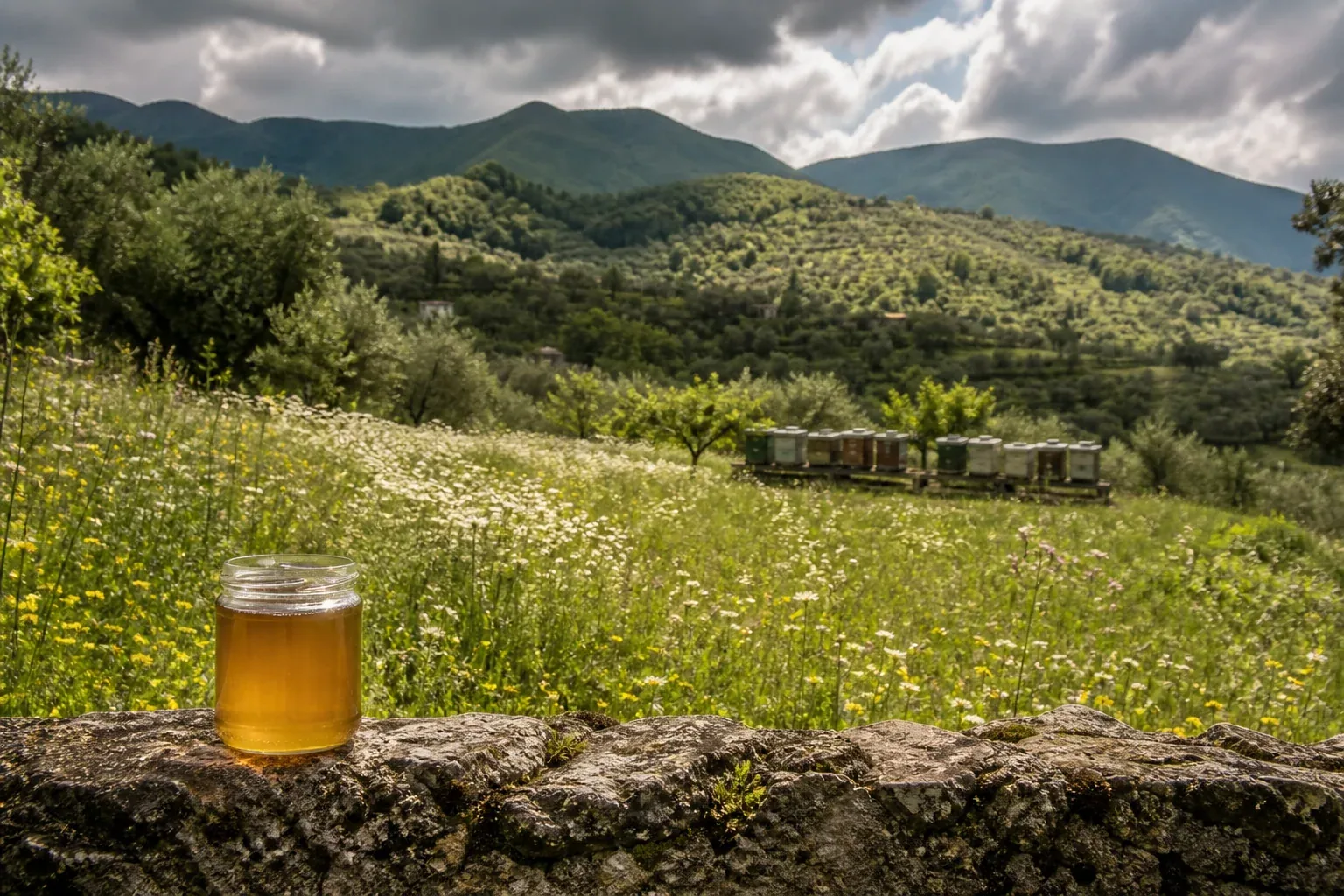
Check the legal name, country of origin, producer or packer, lot and any botanical or regional statement. Look for specific apiary and harvest context where supplied. A photograph of rolling hills is not provenance.
Protected names have defined geographical and production requirements. Honey made elsewhere in Tuscany is not automatically entitled to a protected Lunigiana designation, even when it is authentic and excellent.
- ●Producer or responsible food-business operator
- ●Country and any substantiated regional origin
- ●Lot or batch identifier
- ●Botanical description where applicable
- ●Harvest or apiary context when the producer supplies it
Why Tuscany produces a family of honeys, not one honey
Tuscan acacia, chestnut, wildflower and honeydew styles emerge from different botanical relationships and parts of a varied region. Even within one category, harvest date, altitude and annual weather can shift the sensory result.
That diversity is more credible than a fixed luxury profile. A traceable jar should be allowed to describe its own season rather than imitate the last one.
A named hive gives terroir a place to begin
BeePatron situates its named-hive experience at Le Gusciane near Camaiore, giving seasonal observations and available honey a real landscape context. The private Hive Room can make weather, flowering and beekeeper work easier to understand over time.
The named connection is patronage, not legal colony ownership or automatic proof that a jar came exclusively from one hive. Batch provenance and harvest reality must remain more precise than the symbolism of the gift.
Sources and further reading
Primary and institutional references used to review the factual claims in this guide. Product details and prices are BeePatron information.
- Council Directive 2001/110/EC relating to honey : EUR-Lex
- Miele Toscano product and historical profile : Regione Toscana
- Honey, biodiversity and the many forms of Italian wildflower honey : CREA — Council for Agricultural Research and Economics
- Honey: quality, labelling and the EU apiculture sector : European Commission
Frequently asked questions
What does terroir mean in honey?
It describes how forage, weather, terrain, surrounding land use, season and beekeeper decisions contribute to the character of a traceable batch.
Does all honey from one region taste the same?
No. Apiary location, harvest period, botanical sources, weather, handling and storage can all produce variation within one region.
Can you identify honey terroir by taste?
Taste can reveal sensory character, but it cannot prove geographical or botanical origin by itself. Traceability and appropriate analysis provide stronger evidence.
Is wildflower honey the clearest expression of terroir?
Wildflower honey can express a local mixture especially vividly, but monofloral and honeydew honeys also reflect place and season. No category owns terroir exclusively.
Is Tuscan honey a single flavor style?
No. Tuscany produces varied acacia, chestnut, wildflower, honeydew and other honeys, with further variation between locations and years.
Meet the Place Before the Tasting Note
Explore the Tuscan landscape, botanical variety and traceable beekeeping context behind BeePatron.
Explore Tuscan Honey