Tuscan Wildflower Honey
Tuscan Wildflower Honey: Why Every Harvest Tastes Different
Millefiori is not a recipe. Learn how place, overlapping flowers, weather and harvest timing give each Tuscan wildflower honey its own color, aroma and texture.
Quick answer
Tuscan wildflower honey, or miele millefiori toscano, is made from the nectar of multiple flowering species rather than one predominant botanical source. Its identity is therefore seasonal and place-specific: color, aroma, sweetness and crystallization can change between apiaries, harvest periods and years. Variation is not a defect. The most useful evidence is a traceable origin and honest batch context, not an expectation that every jar will taste the same.
Wildflower honey is a category, not a fixed recipe
The Italian word millefiori literally suggests a thousand flowers, but it does not promise a particular number or predetermined blend. It describes multifloral honey produced from several botanical sources when no single source defines the batch as a monofloral honey.
That makes wildflower honey fundamentally different from a standardized flavor. The bees forage across what is available within their landscape and flying conditions. The beekeeper harvests the result of that period; the beekeeper does not formulate it by combining nectars to a recipe.
Regione Toscana recognizes Tuscan wildflower honey as a traditional product made throughout the region and emphasizes that different geographical areas possess distinctive nectar-producing plants. CREA similarly describes multifloral honeys as especially connected to territory because they reflect many small samples from the flora surrounding an apiary.
Why two Tuscan wildflower honeys can look and taste different
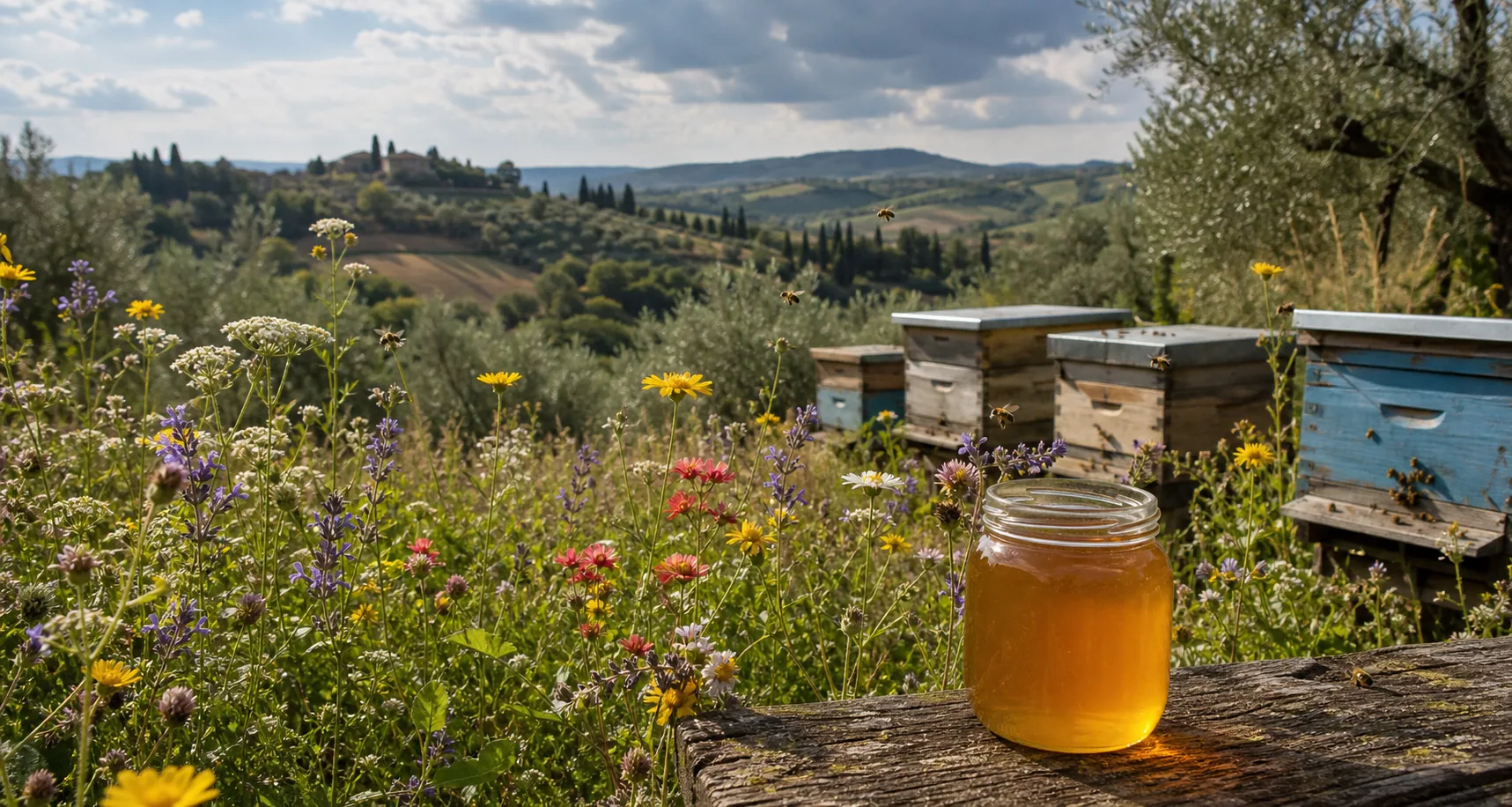
Tuscany includes coastal vegetation, cultivated land, woodland, hills and mountain environments. Even nearby apiaries can offer bees different forage. A spring harvest influenced by delicate blossoms may be pale and softly aromatic, while a later or woodland-influenced batch may be darker and more persistent.
The floral mix also changes from year to year. Temperature affects when plants flower. Rain can support vegetation but prevent bee flight during a short bloom. Heat and drought can reduce nectar availability. Colony strength and the beekeeper's harvest decisions determine which period is represented in the finished honey.
Color and flavor therefore provide an enjoyable record of a season, but they cannot identify every flower or authenticate Tuscany on their own. Formal work on botanical and geographical origin can include sensory, physicochemical and pollen analysis interpreted by qualified specialists.
What Tuscan wildflower honey tastes like
There is no single correct tasting note for Tuscan millefiori. Regione Toscana's traditional-product description allows for a broad range of color and texture, reflecting the diverse nectars from which the honey may derive. A credible seller should describe the actual batch instead of recycling one permanent flavor profile.
Some jars may taste primarily sweet and floral. Others can carry herbal, warm, fruity or gently bitter impressions. Texture can range from fluid to finely or more visibly crystallized. None of these traits is automatically better; they express different forage and storage histories.
For food pairing, begin with intensity. A mild batch can sweeten yogurt, fruit or tea without dominating them. A darker, more aromatic batch may suit aged cheese, toasted bread or savory glazes. Pairing language remains subjective and should not be confused with laboratory evidence.
Crystallization depends on the season's floral mixture
Because wildflower honey contains nectar from multiple plants, its natural sugar balance varies. A batch with more glucose-rich sources may crystallize relatively quickly; another floral mixture may remain liquid longer. Storage temperature and fine particles in the honey also influence the process.
Crystallization is a normal physical change and does not mean that honey has spoiled. It also cannot prove that a jar is raw, pure or local. If a fluid texture is preferred, gently warm the closed jar in warm water rather than applying high heat.
How to read the story of a wildflower jar responsibly
Start with facts that can be checked: the country of origin, producer or packer, lot, harvest area when supplied and any batch-specific notes. “Wildflower” explains the multifloral character; “Tuscan” is a geographical claim. Neither should be inferred from rustic packaging or an image of the countryside.
Then look for seasonal context. Useful information might describe the broad harvest period, the apiary landscape and weather that materially affected flowering. It should avoid claiming that every flower pictured contributed nectar or that honey can be traced to one exact hive unless the production and separation process supports that statement.
At BeePatron, plan-specific honey is connected to the supported apiary and season. Named-hive patronage creates a personal relationship with the apiary experience, but the public language should not imply that a jar necessarily comes exclusively from one selected hive.
- ●Check origin, producer or packer and lot information.
- ●Expect sensory variation between locations, harvest periods and years.
- ●Treat color and texture as characteristics, not authenticity tests.
- ●Look for batch-specific context instead of permanent tasting promises.
- ●Distinguish support for a named hive from exclusive single-hive honey.
Tuscan wildflower honey vs acacia honey
Choose wildflower honey when seasonal variation and a broader expression of the landscape appeal to you. Choose acacia when you prefer a generally pale, delicate honey that often remains liquid longer. These are useful tendencies rather than guarantees about an individual jar.
The labels describe different botanical relationships. Acacia is a monofloral claim that requires the honey to come wholly or mainly from the indicated source and possess its characteristics. Wildflower honey embraces multiple floral sources. One is not inherently purer, more natural or more Tuscan than the other.
Sources and further reading
Primary and institutional references used to review the factual claims in this guide. Product details and prices are BeePatron information.
Frequently asked questions
What is Tuscan wildflower honey?
It is multifloral honey harvested in Tuscany from the nectar of multiple flowering species rather than one predominant source. In Italian it is called miele millefiori toscano.
Why does wildflower honey taste different every year?
The available flowers, their timing, rainfall, temperature, bee flight, colony condition and harvest period all vary. Those changes alter the nectar mixture represented in a batch.
Is darker wildflower honey better?
No. Color reflects botanical and seasonal influences but does not rank purity or quality by itself. Traceability, sound handling and the actual condition of the batch matter more.
Does Tuscan wildflower honey crystallize?
It commonly can, but the timing varies with the floral mixture, natural sugar balance, temperature and storage. Crystallization is normal and is not proof of spoilage.
Is wildflower honey mixed by the beekeeper?
The multifloral character normally results from bees collecting nectar from several available plants during the represented harvest period. It is not a fixed recipe assembled to taste the same every year.
Taste the Season, Not a Standardized Recipe
Follow a named-hive experience connected to the changing landscape and honest harvest conditions at Le Gusciane.
Compare adoption plans