
Honey Bee Defense
Why Do Honey Bees Sting? Defense, Warning Signs and Safety
Honey bees sting mainly to defend themselves or their colony. Learn what triggers defensive behavior, what makes their sting unusual and how to respond safely.
Quick answer
Honey bees sting primarily to defend their own lives or protect the colony, especially near the nest. Worker honey bees have barbed stingers and usually die after stinging a person because the stinger and attached tissues remain in elastic skin. They can sometimes sting other insects without losing the stinger. Drones cannot sting, and queens rarely sting people. Calm distance from a hive or swarm is safer than swatting or disturbing the bees.
Looking for an educational gift rooted in the real world?
Explore BeePatron’s named Tuscan hives and discover the meaning behind each one.
Explore the HivesA sting is defense, not a hunt
Honey bees forage for nectar, pollen, water and plant resins; they do not pursue people as prey. Stinging is a defensive behavior used when an individual is trapped or handled, or when workers perceive a threat to the colony and its brood, comb and food stores.
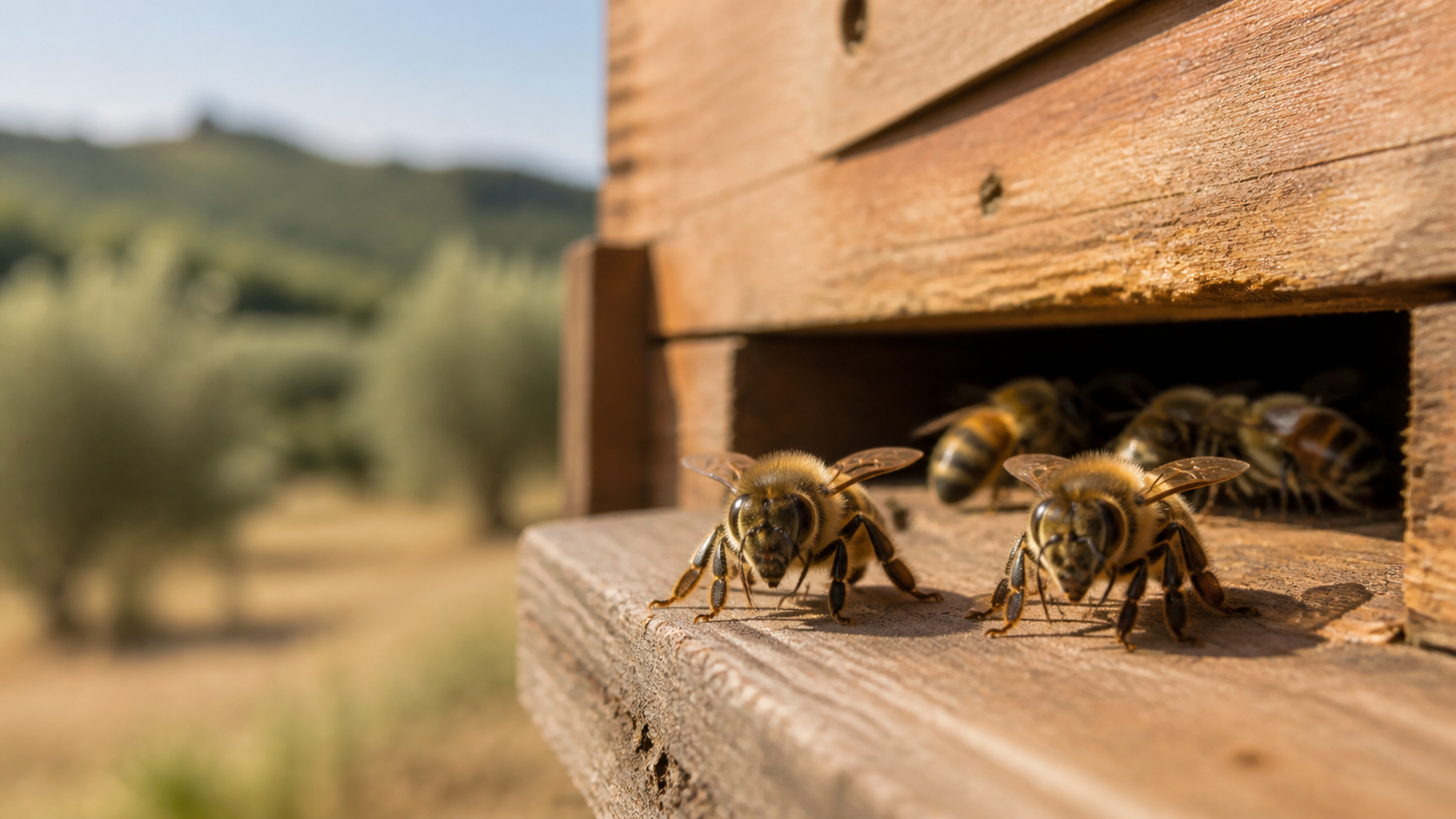
Context changes risk. A bee visiting flowers away from its nest usually has little to defend beyond itself. At the hive entrance, guard bees inspect arrivals and respond to disturbance. Defensive intensity also varies with genetics, colony condition, weather and the nature and duration of a threat.
Which honey bees can sting?
Worker honey bees are female and carry the familiar barbed stinger. The stinger evolved from an egg-laying structure, which is why male drones do not have one. A queen has a smoother stinger used mainly in conflict with rival queens and is not the bee a visitor normally encounters in a defensive event.
This is specific to honey bees. Bumble bees, many wasps and hornets have different stinger anatomy and may sting more than once. Accurate identification matters; yellowjackets at food or drink are often casually called bees even though they are wasps.
Why a worker honey bee often dies after stinging
A worker's stinger is barbed. In elastic mammal skin, it can lodge while the bee pulls away, leaving the stinger apparatus and venom sac behind. That severe injury is fatal to the worker. The detached apparatus can continue delivering venom briefly, so prompt removal matters more than debating a perfect removal technique.
The one-sting rule needs a qualification. A worker may withdraw her stinger from some thinner-skinned insect targets and sting again. The familiar fatal outcome is especially associated with a sting into mammalian skin.
How one defensive response can recruit others
A honey bee sting is associated with an alarm odor that helps focus nestmates on a threat. Near an active colony, continued disturbance can therefore escalate the response. Move away calmly and steadily rather than remaining at the entrance, waving arms or crushing bees.
Beekeepers manage this risk through placement, timing, protective equipment, deliberate movements and colony observation. A smoker can interrupt alarm communication and encourage bees to focus on honey, but it is a skilled management tool rather than a guarantee that bees cannot sting.
Behavior that says give the colony more space
A bee repeatedly bumping or closely circling a person near the hive can be a warning. A growing number of bees focused on the face or clothing is a clearer reason to withdraw. Do not wait beside the entrance to see whether the behavior intensifies.
A settled swarm is different from an established nest: it has no stored honey or brood at that temporary location and is often less defensive. It should still be left alone. Keep people and animals back and contact an experienced local beekeeper when relocation is necessary.
- ●Stay out of the direct flight path in front of a hive entrance.
- ●Avoid striking, opening or vibrating hive equipment.
- ●Do not swat at bees around the face.
- ●Give swarms and unknown nests generous space.
What to do after a sting
Move away from the colony, remove the stinger promptly if it remains, wash the area and use a cold pack for local discomfort. Avoid squeezing an attached venom sac while spending extra time on technique; speed is useful.
A sting can cause a life-threatening allergic reaction. Trouble breathing, swelling of the tongue or throat, faintness, widespread hives or other severe symptoms require emergency help. Follow the person's prescribed emergency plan and local emergency guidance. This article is general education, not individual medical advice.
Reduce conflict without fearing every bee
Most encounters with bees on flowers end without a sting. Wear shoes where bees may be feeding close to the ground, check open sweet drinks outdoors and teach children to watch without grabbing. If bees are entering a building cavity, use a professional familiar with honey bee removal and construction rather than blocking the entrance.
Respect works better than either panic or overconfidence. Honey bees are defensive animals with a valuable colony to protect. Clear space and calm observation allow people and bees to share landscapes more safely.
Sources and further reading
Primary and institutional references used to review the factual claims in this guide. Product details and prices are BeePatron information.
Frequently asked questions
Why do honey bees sting people?
They usually sting because they are trapped, handled or defending their colony from a perceived threat.
Do honey bees die after they sting?
Worker honey bees usually die after stinging a person because their barbed stinger lodges in elastic skin. They may withdraw it from some insect targets.
Can male honey bees sting?
No. Male honey bees, called drones, do not have stingers.
Are honey bee swarms aggressive?
A temporary swarm is generally less defensive than an established colony because it has no brood or food stores at that location, but people and animals should still keep their distance.
When is a bee sting an emergency?
Breathing difficulty, tongue or throat swelling, faintness, widespread hives or other severe symptoms require immediate emergency help.
See Colony Life Beyond the Sting
Follow a managed named hive in Tuscany and discover the seasonal behaviors that keep a colony working.
Choose a Hive Give BeePatron as a Gift