Seasonal Apiary Guide
Best Time to Visit an Apiary in Tuscany: A Season-by-Season Guide
Compare spring, summer, autumn and winter apiary visits in Tuscany, including likely conditions, seasonal limits and the questions to ask before choosing a date.
Quick answer
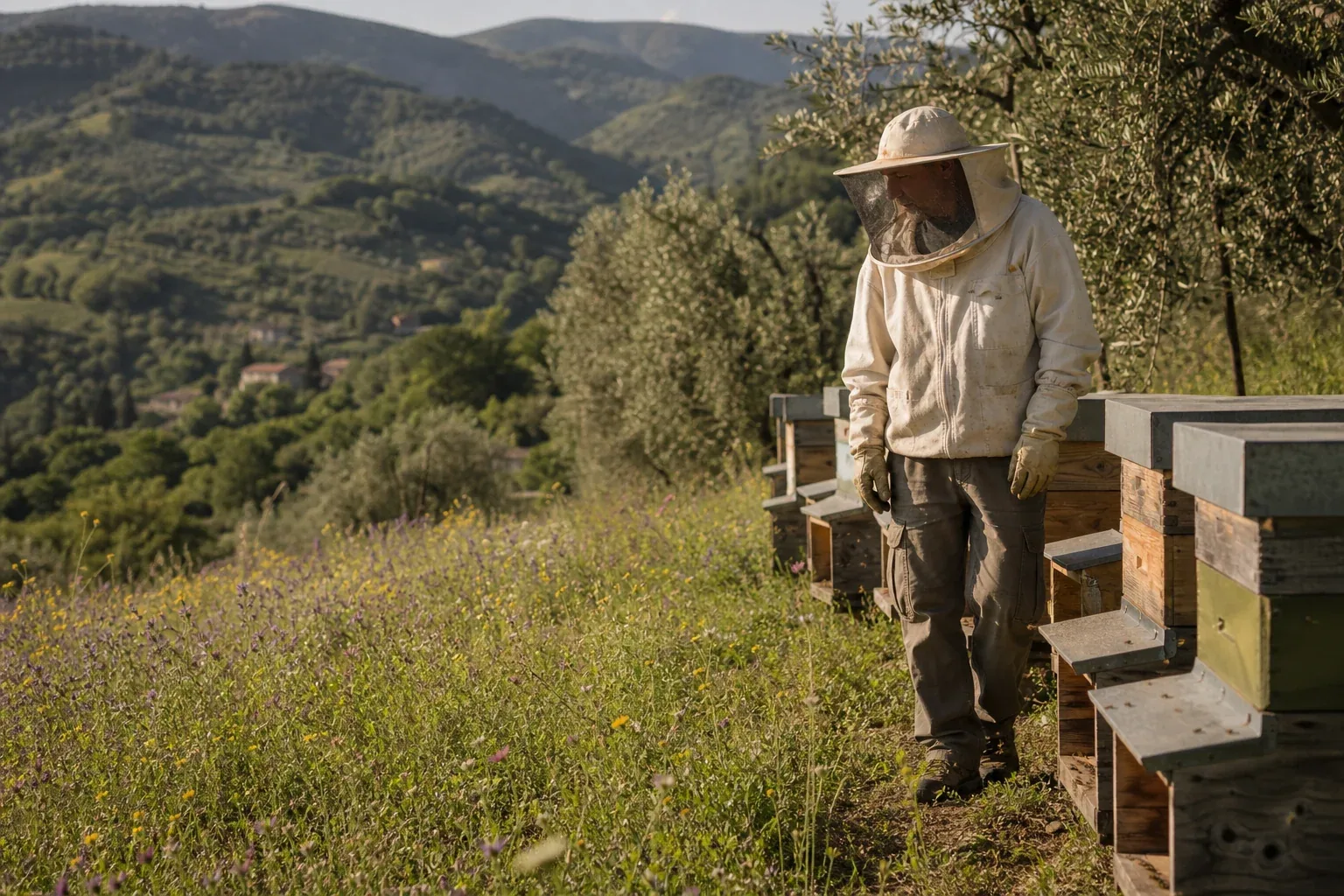
Late spring through early summer often offers active colonies, flowering landscapes and comfortable outdoor conditions, but there is no universally best month for an apiary visit in Tuscany. Weather, elevation, local forage and colony welfare can change what is safe or visible on any date. Choose the season for the wider experience you want, then confirm current conditions, planned activities and the host's rescheduling policy before booking.
| Criterion | What the season may offer | What to confirm |
|---|---|---|
| Spring | Fresh growth, rising activity and a rapidly changing colony season. | Temperature, rain, ground conditions and whether inspection is appropriate. |
| Summer | Strong outdoor activity, long days and established visitor schedules. | Heat, shade, protective-clothing comfort and drought or fire restrictions. |
| Autumn | A quieter landscape and insight into preparation for colder months. | Reduced visitor availability and whether live-hive access is planned. |
| Winter | A management, landscape or honey-focused visit away from peak travel. | Whether the experience includes an apiary at all or remains indoors. |
Why there is no single perfect month
A colony follows flowers, temperature, rainfall and its own condition rather than a tourism calendar. Two apiaries an hour apart can have different forage and exposure, while two visits in the same week can be changed by wind or rain. A responsible host protects the colonies even when that means replacing a hive opening with entrance observation or an indoor explanation.
Treat seasonal descriptions as planning guidance, not promises. The best date is one the beekeeper confirms for your group, with a useful alternative if conditions make close access inappropriate.
Spring: growth, flowers and fast-changing conditions
Spring can make the relationship between landscape and colony activity especially legible. As temperatures rise and flowering expands, visitors may notice returning foragers, different pollen colors and increasing traffic at hive entrances. Colony populations and beekeeper workload can also change quickly.
The tradeoff is volatility. Rain, cool spells and saturated paths may affect access. Ask about terrain, supplied equipment and the alternative format if the apiary cannot be entered safely.
Summer: active apiaries, longer days and heat planning
Summer is often convenient for travelers and may coincide with strong foraging activity or honey work, depending on the place and year. It is also the season when a protective jacket, long trousers and closed footwear can feel hottest.
Favor an appropriate morning time when offered, hydrate before arrival and ask about shade, walking distance and duration in protective clothing. Never assume that harvest, extraction or tasting is included simply because the visit occurs in summer.
- ●Confirm the start time and expected temperature
- ●Ask how long protective clothing is worn
- ●Bring water if the host permits it
- ●Check whether tasting or extraction is actually listed
Autumn: preparation, restraint and a quieter landscape
Autumn can reveal how beekeeping changes when forage declines and colonies prepare for colder weather. The educational focus may move from abundance toward food stores, colony health and the decisions that support overwintering.
Visitor programs may become less frequent, and opening a hive may be less appropriate. For travelers interested in stewardship rather than spectacle, that restraint can be part of the lesson.
Winter: ask what the word visit means
In winter, a host may offer a farm conversation, honey education, equipment demonstration or landscape walk rather than entry among open colonies. That can still be valuable, but the format should be explicit before you travel.
Ask whether the experience is outdoors, indoors or mixed; whether the apiary is viewed from a distance; and what happens in poor weather. Do not expect a hive to be opened for the sake of a booking.
Match the date to your real travel goal
A family seeking an accessible introduction may value a shorter spring or early-summer morning. A honey enthusiast may prefer a format that explicitly includes guided tasting. A BeePatron guest may care most about seeing the landscape that gives seasonal updates their context.
Write down the one thing that would make the visit meaningful, then ask whether it is realistically offered during your dates. This is more useful than choosing a month from a generic best-time list.
A clear weather policy matters more than a perfect forecast
Forecasts change; good visitor care plans for that uncertainty. Confirm how and when a postponement decision is made, whether an indoor alternative is available, and what happens if your onward travel prevents rescheduling.
Do not pressure a host to proceed because accommodation or transport is already paid. Keep the apiary visit as one meaningful part of the itinerary rather than the only reason the day can succeed.
Six questions to ask for your chosen season
A short written confirmation protects both expectations and travel plans.
- ●What is usually observable at this time of year?
- ●Which parts of the experience depend on weather or colony condition?
- ●What is the heat, rain or cancellation plan?
- ●How much walking and time in protective clothing should we expect?
- ●Are tasting, extraction or products included?
- ●When should we reconfirm before arrival?
Sources and further reading
Primary and institutional references used to review the factual claims in this guide. Product details and prices are BeePatron information.
Frequently asked questions
What month is best for an apiary visit in Tuscany?
Late spring and early summer are often appealing, but no month guarantees hive access or a particular activity. Ask the host about current local conditions and the planned format.
Can you visit a Tuscan apiary in winter?
Possibly, but the experience may emphasize the farm, equipment, honey or landscape rather than opening colonies. Confirm the exact winter format.
Are summer apiary visits too hot?
They can be warm in protective clothing. Ask about morning scheduling, shade, duration, water and the host's heat policy.
Will a spring apiary visit be canceled if it rains?
It may be postponed or adapted. The host should explain the weather threshold, alternative activity and rescheduling terms.
Follow Tuscany's Apiary Through the Seasons
Discover the landscape, named-hive journey and seasonal context behind BeePatron.
Explore the Tuscany Experience