
Tuscany Travel Guide
Beekeeping Experience in Tuscany: How to Plan an Apiary Visit
Plan a Tuscany beekeeping experience around season, location, safety and honest inclusions, with guidance for connecting an apiary visit to the landscape behind the honey.
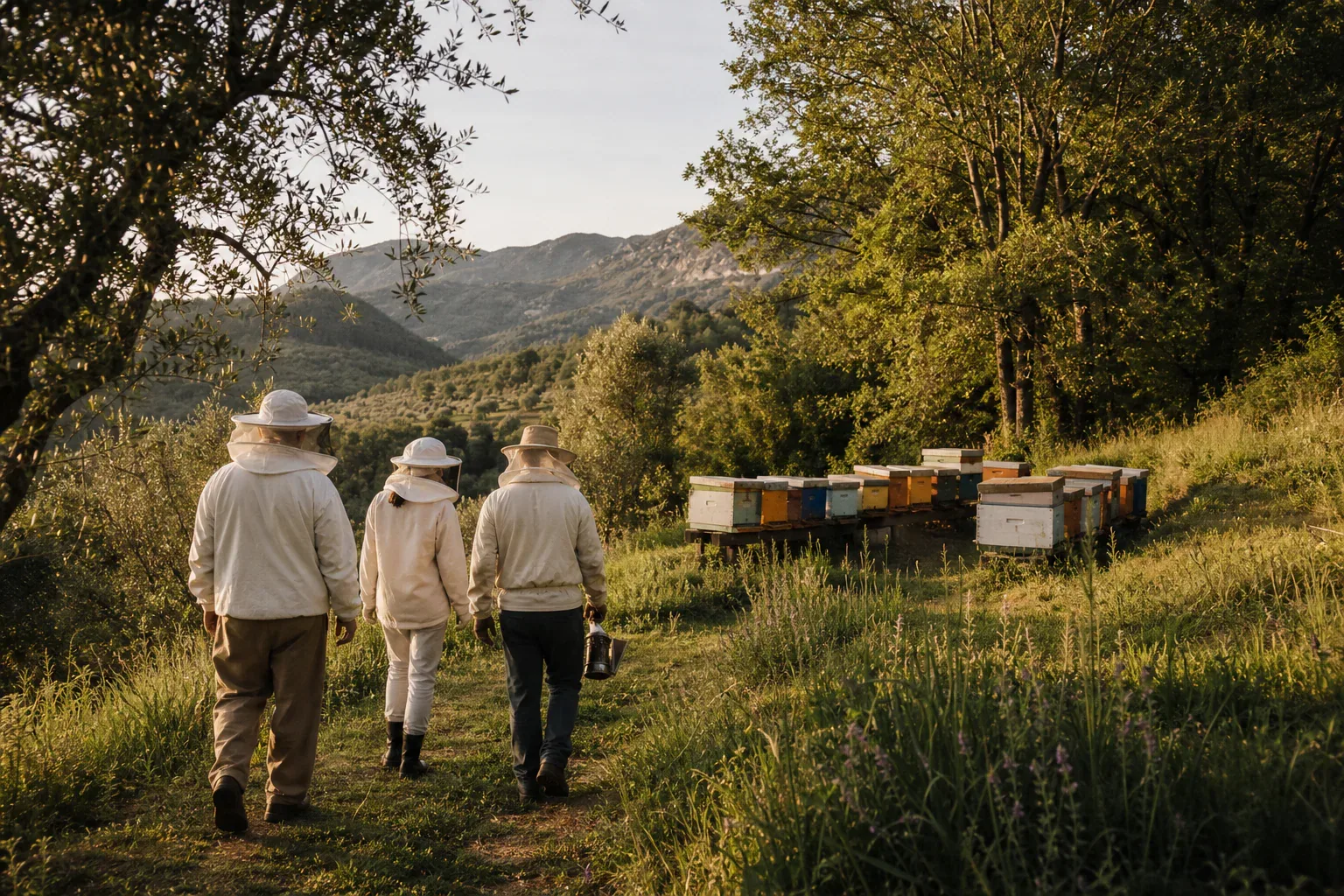
Quick answer
A Tuscany beekeeping experience should be booked directly with a host and evaluated like a working-farm visit, not a guaranteed performance. Confirm the exact location, season, duration, language, age and mobility rules, protective equipment, sting-allergy policy and whether the format includes live-hive access, honey education or tasting. Weather and colony welfare may require changes. BeePatron visits to Le Gusciane require advance booking and are subject to seasonal, weather and apiary conditions.
| Criterion | Ask before booking | Why it matters |
|---|---|---|
| Location | Exact meeting point, drive time, parking and terrain. | A countryside address may differ from a public attraction entrance. |
| Format | Live apiary, demonstration, honey room, tasting or combination. | The phrase 'bee experience' does not guarantee every activity. |
| Season | Available dates and weather contingency. | Colony activity and responsible access change through the year. |
| Visitors | Age, language, mobility and allergy policies. | Equipment, terrain and risk management differ by host. |
Why beekeeping belongs in a Tuscany itinerary
Tuscany is often experienced through landscape and food, yet an apiary connects the two unusually well. Bees respond to flowering plants, rainfall, temperature and land use, while honey reflects a particular season of forage and beekeeper decisions. A guided visit makes those relationships visible.
The value is not a staged encounter with a single hive. It is the chance to understand a working place: how colonies sit within woodland, meadows, orchards or cultivated land, and why a beekeeper's calendar cannot be separated from the countryside around it.
Choose the format before comparing prices
Tuscan listings may describe an apiary tour, beekeeper-for-a-day activity, honey-room visit, tasting, workshop or farm experience. These are not interchangeable. One may involve protective equipment and live colonies; another may focus on extraction, products or interpretation away from open hives.
Write down what matters most: close observation, family education, honey provenance, photography or simply meeting a local producer. Then ask the host which parts are actually included. This prevents an evocative title from becoming an inaccurate expectation.
- ●Is entry to the working apiary included?
- ●Is protective equipment supplied in every required size?
- ●Is tasting included, optional or unavailable?
- ●Which language will the guide use?
- ●What happens if weather prevents live-hive access?
Season shapes both the bees and the visitor experience
Bee activity is not constant across the year. Spring buildup, major flowering periods, summer heat, harvest work and winter preparation create different questions and constraints. The most photogenic date is not automatically the most responsible date to open a colony.
Ask the host what can usually be observed in your travel window, but treat the answer as context rather than a promise. Rain, wind, unusual temperatures and colony condition can change the plan. A thoughtful indoor or entrance-observation alternative may reveal more than an unnecessary inspection.
Plan rural logistics with more margin than a city museum
Confirm the exact meeting point rather than navigating only to a property name. Ask about road conditions, parking, walking distance, uneven ground and the nearest suitable arrival point. Build time around the experience so a late departure or rural drive does not force the host to rush a safety briefing.
Keep the rest of the day flexible. Protective clothing and sun can be tiring, and weather delays happen. If you plan lunch, another farm visit or a transfer afterward, allow time to change, hydrate and travel without pressure.
Families and accessibility require specific confirmation
Some Tuscan bee experiences welcome children and supply appropriate equipment; others have minimum ages or different family formats. Never transfer the rules from one listing to another. Ask about child sizing, supervision ratios, attention demands and whether a young visitor can opt out of the live-apiary portion.
For accessibility, ask about slopes, surfaces, steps, standing time, toilet access, shade and heat inside protective clothing. Describe the need rather than asking only whether a venue is 'accessible.' The host can then explain the actual route and propose an appropriate format if available.
A responsible visitor leaves control with the beekeeper
The beekeeper decides whether colonies can be approached or opened. Follow directions, stay with the group and keep entrances clear. Do not ask to hold a frame, locate a queen or identify a particular colony when doing so would prolong disturbance.
Responsible travel also means representing the experience accurately afterward. A visit to one apiary does not describe all Tuscan beekeeping, and one honey does not define an entire region. Credit the host, distinguish observation from inference and avoid turning normal seasonal variation into a dramatic claim.
Le Gusciane connects the BeePatron journey to a real place
Le Gusciane lies in the hills of Camaiore, where the BeePatron experience connects named hives with a private digital Hive Room and the seasonal setting of a working apiary. For customers, visiting can turn a place followed remotely into part of a wider Tuscan journey.
Every visit must be arranged in advance and remains subject to seasonal, weather and apiary conditions. Confirm availability and the precise format before booking transport or accommodation. The named-hive experience is symbolic patronage and does not confer legal ownership, unrestricted access or operational control of a colony.
The ten-question Tuscany booking checklist
Send one concise message with the questions that affect your decision. Clear answers are a better quality signal than romantic language alone. Save the confirmation and check again shortly before the visit if weather or personal circumstances change.
- ●What is the exact date, start time and meeting point?
- ●How long is the experience?
- ●Which activities are included?
- ●Is live-apiary access planned but weather-dependent?
- ●What protective equipment is supplied?
- ●What clothing and footwear must visitors bring?
- ●What are the age, allergy and accessibility policies?
- ●Which language is used?
- ●What is the weather cancellation or rescheduling policy?
- ●What should we expect to pay, and when is payment due?
Sources and further reading
Primary and institutional references used to review the factual claims in this guide. Product details and prices are BeePatron information.
Frequently asked questions
Can you visit a beehive in Tuscany?
Yes, some farms and beekeepers offer guided experiences, but formats and seasons vary. Book directly, confirm exact inclusions and never arrive at a working apiary without permission.
When is the best time for a Tuscany beekeeping experience?
There is no guaranteed best month. Availability, flowering, weather and colony needs vary. Ask the host what is normally observable during your travel dates.
Do Tuscany apiary tours include honey tasting?
Some do and some do not. A tasting must be listed or confirmed directly; it should never be inferred from the words apiary tour or bee experience.
Are beekeeping experiences safe for people with bee-sting allergies?
An apiary cannot be made sting-free. Anyone with a history of serious reactions should seek qualified medical advice and discuss the host's policy before booking.
How do I arrange a BeePatron visit to Le Gusciane?
Use the visit information linked from BeePatron to request arrangements in advance. Confirmation depends on seasonal, weather and apiary conditions, so do not make travel assumptions before receiving it.
Meet the Tuscany Behind the Named Hive
Explore the Le Gusciane landscape, private Hive Room and seasonal principles that make BeePatron a place-based experience.
Explore the Tuscany ExperienceContinue exploring
What Happens on an Apiary Visit?
Understand the usual flow from briefing to supervised observation.
Read nextWhat to Wear to an Apiary Visit
Prepare safe, comfortable clothing for the countryside and beeyard.
Read nextTuscan Honey Varieties Guide
Learn how floral source, place and season shape Tuscan honey.
Read next