
Solitary Bee Habitat Guide
Do Bee Hotels Actually Work? Benefits, Risks and Maintenance
A practical, evidence-aware guide to which bees use hotels, what poor designs get wrong, how maintenance works and when natural nesting habitat is the better choice.
Quick answer
Bee hotels can provide nesting cavities for some mason bees, leafcutter bees and solitary wasps, and they can be excellent observation and education tools. They are not proven as a universal bee-conservation solution, they help only a subset of cavity-nesting species, and poorly designed or neglected hotels can concentrate parasites, pathogens or introduced species. Install one only if regional experts recommend it and you can use suitable replaceable materials, keep it dry, identify occupants and follow a local annual maintenance plan.
| Criterion | Likely value | Main limitation |
|---|---|---|
| Nesting habitat | Adds cavities for certain aboveground-nesting solitary bees and wasps. | Does nothing directly for the many species that nest in soil or other habitats. |
| Education | Makes nesting behavior, brood-cell caps and seasonal emergence observable. | Occupancy is not proof of conservation success or native-species benefit. |
| Maintenance | Replaceable tubes can be inspected and renewed under a regional protocol. | Permanent drilled blocks and neglected tubes may accumulate pests, mold and debris. |
| Natural habitat | A small hotel can complement flowers, stems, wood and bare ground. | It cannot substitute for diverse forage and naturally distributed nesting sites. |
A bee hotel is a bundle of artificial nest cavities
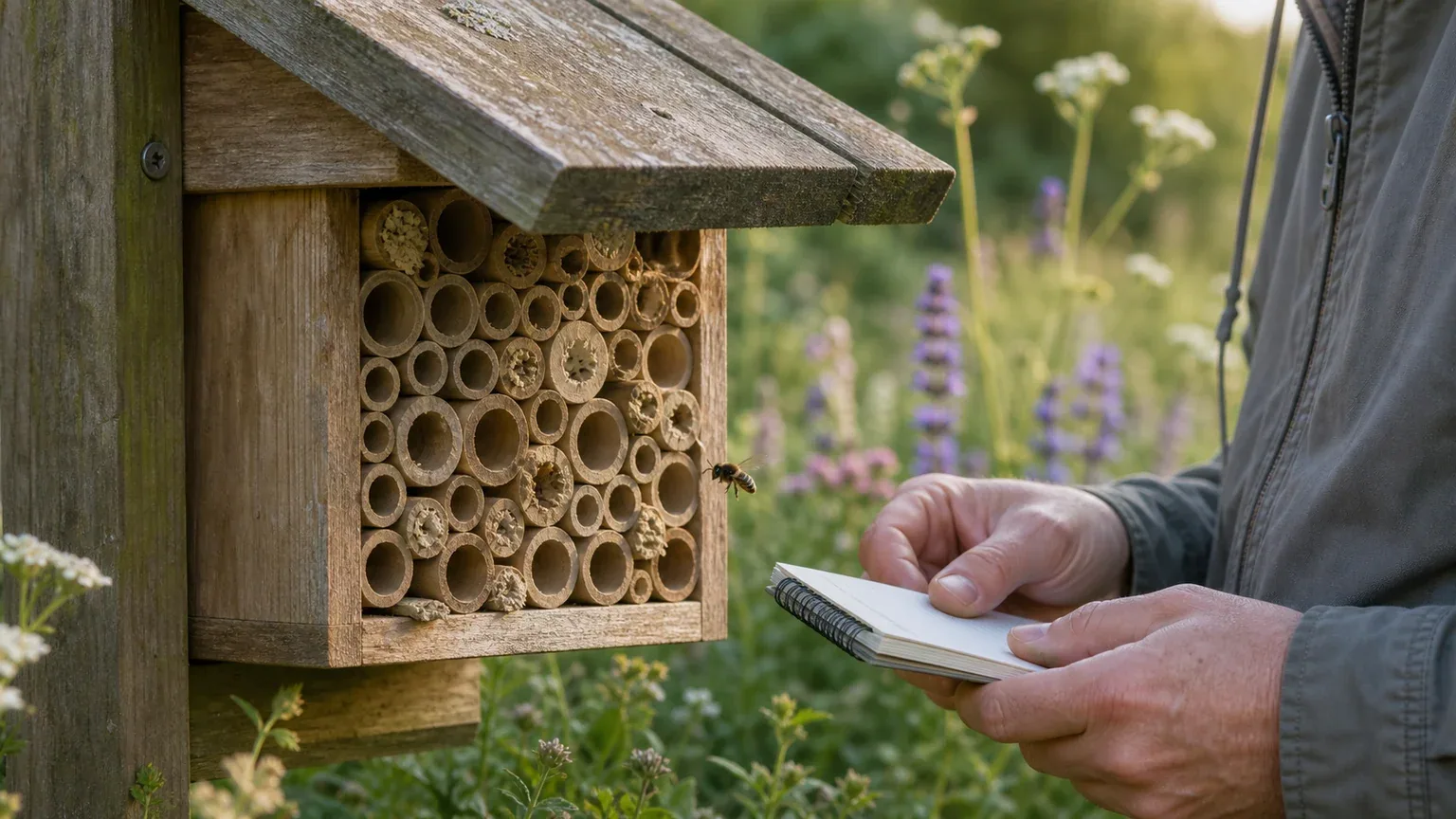
A conventional bee hotel offers tubes or tunnels that imitate hollow stems and holes left in wood by beetles. Female cavity-nesting bees may divide a tunnel into brood cells, add pollen and nectar provisions, lay an egg in each cell and close the entrance with mud, chewed leaves, resin or other species-specific material.
It is not a beehive. It has no shared queen, worker force, wax comb or honey harvest. Each female generally manages her own nest even when many nests sit beside one another. Solitary wasps may use the same structure and can be beneficial predators of garden pests; their presence does not mean the hotel has failed.
So, do bee hotels work? Define ‘work’ first
If ‘work’ means that an appropriate local cavity-nesting bee may occupy a well-positioned structure, the answer can be yes. If it means that any store-bought hotel will increase native bee populations or reverse pollinator decline, the evidence does not support that promise.
Long-term population effects are difficult to measure because natural nests are hard to find and bee abundance changes from year to year. NC State Extension concludes that evidence is not strong enough for a broad verdict, while supporting thoughtful design and maintenance as habitat enhancement and a way to appreciate insects. Other recent regional projects have found high occupation by introduced species and recommend caution or temporarily advise against new installations.
The responsible answer is therefore regional and conditional. Ask who is likely to use the structure, what conservation goal it serves, how success will be assessed and who will maintain it after the first season.
Which bees use bee hotels?
Mason bees in the genus Osmia and leafcutter bees in the genus Megachile are familiar occupants, but local users vary. Small carpenter bees, resin bees and solitary wasps may also nest in cavities. Bumblebee queens generally seek larger sheltered spaces such as underground cavities, while honey bee colonies need a much larger cavity and do not belong in hotel tubes.
Only a portion of solitary bee species nests above ground in pre-existing cavities. Many nest in soil, and others excavate pith or wood. A hotel designed for one tunnel-nesting group will not provide the bare ground, plant stems, dead wood, tussocks and forage needed by the wider bee community.
- ●Likely users: some mason, leafcutter, resin and small carpenter bees.
- ●Possible users: solitary wasps and other beneficial insects.
- ●Not typical users: honey bee colonies and bumblebee colonies.
- ●Not helped directly: ground-nesting bees that require suitable soil.
Why poorly managed hotels can create risks
Natural cavity nests are often dispersed. A hotel places many brood cells close together, which can make them easier for parasites and predators to locate. Mites, parasitic wasps, flies, beetles, birds and other natural enemies may exploit the concentration. Fungal growth and pathogens are concerns where materials remain damp, dirty or repeatedly occupied.
Artificial nests can also favor adaptable introduced species in some regions. That does not mean every non-native occupant causes the same harm, but it means the structure should not automatically be advertised as native-bee conservation. Observation and identification are part of responsible management.
Oversized installations amplify concentration. Several small, distributed nesting units may better resemble scattered natural cavities than one decorative wall containing hundreds of tubes, though local expert guidance should govern the final design.
What a responsible design should provide
A good structure is small, firmly mounted and protected from rain by a roof with an adequate overhang. Nest tunnels should be closed at the back, smooth inside and deep enough for the intended local species. Materials should be untreated, dry and replaceable or openable under an appropriate maintenance system.
Tube diameter and depth affect which species and sexes can develop, but universal measurements are risky because target species differ by region. Use specifications from a local university extension service, conservation group or entomologist rather than copying a global infographic.
- ●Small enough to inspect rather than an ornamental insect high-rise.
- ●A solid back and overhanging roof that keep tunnels dry.
- ●Smooth entrances without splinters or crushed stems.
- ●Replaceable or inspectable nesting materials.
- ●A stable mounting that does not swing in wind.
- ●No paint, preservative or treated wood inside nesting cavities.
Designs to avoid
Avoid cracked bamboo with sharp fibers, tubes open at both ends, shallow holes, damp shaded boxes and blocks that cannot be opened, cleaned or replaced. Random pinecones, bark and straw may shelter various arthropods but do not turn a decorative insect house into an evidence-based bee nest.
Do not buy occupied cocoons or bees from an unknown source and release them as a generic conservation action. Species, genetics, parasites and legal rules vary. Moving managed solitary bees can be appropriate in specialist agricultural programs, but it is different from supporting naturally present local populations.
Where to place a bee hotel
Placement guidance depends on climate and target species, but dryness and stability are consistent priorities. Mount the structure securely rather than hanging it from a branch. Protect it from driving rain and irrigation, keep tunnel entrances unobstructed and ensure nearby plants provide suitable pollen and nectar through the occupants' active period.
Morning sun is commonly recommended in cooler climates, while excessive heat may become dangerous in hotter regions or exposed urban settings. Follow regional guidance instead of treating a south-facing wall as a universal rule. Do not place a hotel where maintenance requires disturbing occupied nests or where people with severe sting allergies must pass closely.
Maintenance is the non-negotiable part
There is no single global cleaning calendar. Mason bees, leafcutter bees and other occupants emerge at different times, and moving or opening nests too early can kill developing insects. Climate also changes overwintering needs. Before installation, obtain a full local protocol covering inspection, storage, emergence and material replacement.
At minimum, record which tunnels are capped, watch for damage or abnormal moisture, keep the roof and mounting sound, and replace nesting materials on the recommended schedule. Do not drill fresh holes into an old contaminated block and call it renewed. If you cannot identify capped nests or commit to maintenance, choose natural habitat instead.
When inheriting a neglected hotel, do not immediately discard occupied tubes. Seek local expert advice about allowing emergence while preventing reuse of unsafe material. The goal is to avoid trapping healthy occupants or spreading problems into a new structure.
How to tell who moved in
The entrance cap offers clues. Some mason bees use mud-like partitions, while leafcutter bees use pieces of leaves. Resin, plant fibers and mixtures may indicate other species. Cap material alone rarely confirms species, so photograph adult visitors, dates and nesting behavior without opening active cells.
Track occupancy by tunnel rather than celebrating a single total. Note whether the same type dominates, whether holes appear in caps, whether moisture or webbing develops and whether adults emerge. A local naturalist, extension office or moderated recording platform may help identify residents and flag introduced species.
Natural nesting habitat may be the better first choice
Leaving selected hollow or pithy stems standing can provide distributed cavities without concentrating every nest in one box. Retaining dead wood with beetle holes, sunny patches of suitable bare soil and varied garden structure can support more nesting strategies. Safety, fire risk and local land-management rules still apply.
Habitat must include food as well as nest sites. Plant locally appropriate flowers across the season, reduce pesticide exposure and avoid sealing every surface with paving, fabric or thick mulch. A hotel surrounded by poor forage is an attractive address without a functioning neighborhood.
Should you install one? Use this checklist
Install a bee hotel only when local guidance supports it, target cavity-nesting species are present, forage is available and someone accepts responsibility for maintenance. Treat the project as observation and managed habitat—not as a guaranteed biodiversity intervention.
Skip it when the product is sealed and unserviceable, the location stays damp or overheats, you cannot follow an annual protocol, or regional evidence suggests introduced occupants are the likely beneficiaries. Choosing stems, soil and flowers instead is not doing less; it may support a wider range of species with less concentration risk.
- ●Can the nesting materials be safely replaced or inspected?
- ●Is there credible regional guidance for design and timing?
- ●Are suitable flowers and natural habitat already present?
- ●Can you identify or document the occupants?
- ●Will someone maintain the structure every year?
- ●Do local experts currently recommend hotels in your region?
Sources and further reading
Primary and institutional references used to review the factual claims in this guide. Product details and prices are BeePatron information.
- How to Manage a Successful Bee Hotel : NC State Extension
- Making and Managing Wild Bee Hotels : Utah State University Extension
- Bee Hotel Project : University of Illinois Extension
- To Bee Hotel or Not to Bee Hotel : University of Georgia Extension
- Bee Hotels as Tools for Native Pollinator Conservation: A Premature Verdict? : PLOS ONE
Frequently asked questions
Do bee hotels really help bees?
They can provide nest cavities for some species and support observation, but evidence for broad population-level conservation benefit is limited. Outcomes depend on region, design, maintenance and which species occupy them.
Do honey bees live in bee hotels?
No. Honey bees live in large social colonies that need a substantial cavity and build wax comb. Hotel tubes are intended for individual cavity-nesting solitary bees and wasps.
Do bumblebees use bee hotels?
Not conventional tube-style hotels. Bumblebee queens generally choose larger sheltered nest spaces, often underground or in other cavities depending on species.
Do bee hotels need to be cleaned?
They require a regional maintenance and replacement protocol. Timing and technique depend on occupants and climate; cleaning or moving nests at the wrong time can harm developing bees.
Where should a bee hotel face?
It should be firmly mounted and protected from rain. Sun and orientation recommendations vary with climate and target species, so use local expert guidance rather than one universal direction.
What is better than a bee hotel?
For many gardens, locally appropriate flowers, reduced pesticide exposure, standing stems, dead wood and suitable bare soil support a broader range of pollinators and may be easier to maintain responsibly.
Prefer to Follow Bees Without Managing a Nest?
Join a professionally managed Tuscan apiary experience while leaving colony care to experienced beekeepers.
Compare adoption plansContinue exploring
Honey Bee vs Bumblebee vs Solitary Bee
Identify which bees can use a nesting tube and which live in colonies.
Read nextHow to Help Bees Without Becoming a Beekeeper
Compare habitat, purchasing and community actions beyond a bee hotel.
Read nextWhat Is Beehive Adoption?
Understand the very different role of a professionally managed honey bee hive.
Read nextA Year in the Life of a Beehive
Follow how a social honey bee colony changes through the seasons.
Read next