
Honey Pairing Guide
Honey and Cheese Pairing Guide: From Acacia to Chestnut
Pair delicate, aromatic and dark honeys with fresh, soft, aged and blue cheeses using intensity, contrast and regional context rather than rigid rules.
Quick answer
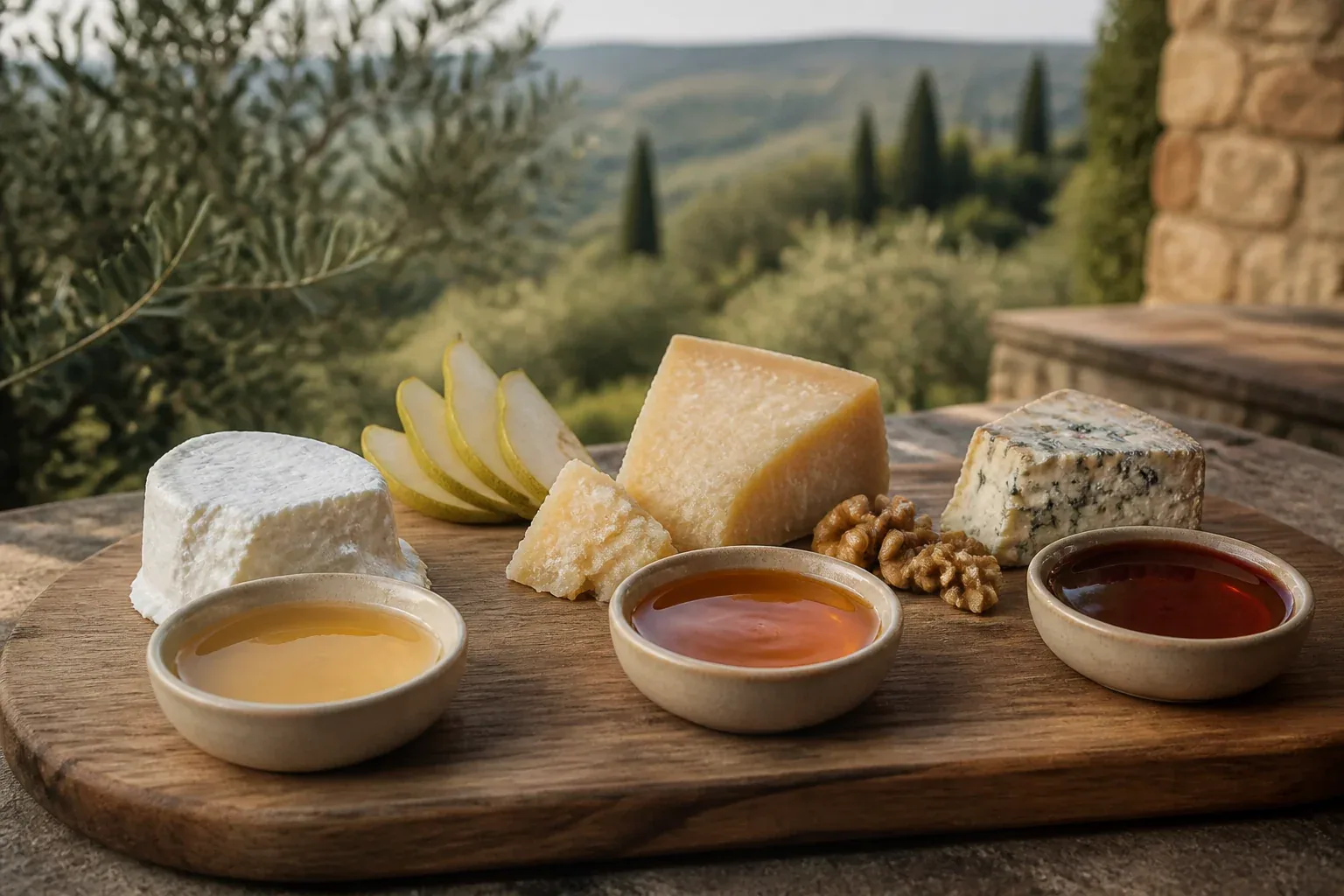
Pair honey and cheese by matching or contrasting intensity. Delicate acacia-style honey can accompany fresh ricotta, mild goat cheese or young soft cheese without covering it. Aromatic wildflower honey can meet semi-aged pecorino or washed-rind styles. Assertive chestnut or dark honeydew honey can stand beside mature hard cheese or blue cheese. Taste both elements separately first, use only a small amount of honey and treat every pairing as a starting point because batches and preferences vary.
| Criterion | Useful starting honey | Why the pairing may work |
|---|---|---|
| Fresh, mild cheese | Pale, delicate acacia-style honey. | Sweetness without overwhelming milk and gentle acidity. |
| Soft-ripened cheese | Mild to medium wildflower honey. | Floral lift against creamy, earthy character. |
| Aged hard cheese | Chestnut or aromatic wildflower honey. | Enough intensity for salt, nuttiness and long maturation. |
| Blue cheese | Dark, persistent chestnut or honeydew honey. | Sweetness and depth against salt and pungency. |
Begin with intensity, then choose contrast or harmony
A delicate honey can disappear beside a forceful cheese, while an assertive honey can flatten a fresh one. Matching overall intensity gives both ingredients space. From there, decide whether you want harmony—similar aromatic weight—or contrast between sweetness, salt, acidity and bitterness.
This is a tasting framework, not a law. Honey and cheese vary by producer, season, maturation and serving condition. Personal preference has the final word.
Serve less honey than you think
Let cheese reach an appropriate serving temperature and present honey at room temperature. Offer a separate small spoon for each honey and enough space to taste the cheese alone first. A thin accent usually reveals more than a heavy coating.
Arrange the board from mild to intense. Plain bread or an unsalted cracker, sliced pear and water can support comparison without turning the board into a crowded dessert.
Acacia honey with fresh and gentle cheeses
Acacia honey is generally pale, fluid and restrained, making it a useful starting point for ricotta, robiola, fresh goat cheese or a young soft cheese. Its role is often to add clean sweetness while preserving the cheese's milky or lightly tangy character.
A particular acacia batch may be more aromatic than expected, and another pale honey can perform similarly. Color alone does not establish botanical origin or predict the whole pairing.
Wildflower honey is the flexible middle of the board
Millefiori can range from mild and floral to dark and herbal because it reflects multiple plants in a particular place and period. A lighter batch may work with soft-ripened cheese; a more aromatic one can accompany semi-aged pecorino or a fuller washed-rind cheese.
Taste before assigning it a position. Wildflower is not one standardized flavor, and that variation is precisely why it can make an interesting regional pairing.
Chestnut honey belongs with cheeses that can answer back
Chestnut honey is often described as assertive, woody, persistent and sometimes bitter-edged. Those tendencies can complement mature pecorino, Parmigiano Reggiano or other aged hard cheeses whose salt and depth would dominate a quieter honey.
Use a small amount and taste the finish. The goal is not to erase bitterness or salt but to let sweetness, savoriness and aromatic persistence form a balanced sequence.
Dark honeydew honey and blue cheese
Honeydew honey begins from sweet substances found on living plant parts rather than floral nectar. It is often dark and less conventionally floral, with enough depth to stand beside blue-veined cheese or an intensely matured style.
This can be the final pairing in a flight. Both components are forceful, so start with a very small amount and keep a milder honey available for guests who prefer contrast without maximum intensity.
Build a three-pair Tuscany tasting board
A coherent board does not require ten varieties. Choose one fresh cheese, one aged Tuscan sheep's-milk cheese and one stronger or blue style. Add a pale honey, a seasonal wildflower and a darker chestnut or honeydew honey when those products are genuinely available and correctly labelled.
- ●Delicate: fresh cheese with pale acacia-style honey
- ●Middle: semi-aged pecorino with the actual wildflower batch
- ●Intense: mature or blue cheese with chestnut or honeydew honey
Host the tasting without telling guests what to find
Invite everyone to taste cheese, honey and then the combination. Ask whether each element became clearer, quieter or more intense. Avoid announcing the correct answer before the first bite.
Keep food-allergy, dietary, pasteurization and alcohol considerations separate and explicit. A beautiful board still needs accurate ingredient information and suitable utensils.
Regional pairing is a story, not proof
Pairing Tuscan honey with Tuscan cheese can create meaningful geographical context, but proximity does not guarantee sensory harmony. Taste remains the test for enjoyment; labels and traceability remain the evidence for origin.
BeePatron connects honey with the Le Gusciane apiary story when a relevant harvest is available. It does not guarantee an exclusive jar from one named colony or a fixed honey type every season.
Sources and further reading
Primary and institutional references used to review the factual claims in this guide. Product details and prices are BeePatron information.
Frequently asked questions
What cheese goes best with honey?
Fresh, soft, aged and blue cheeses can all work. Match the honey's intensity to the cheese, then adjust according to the actual products and your preference.
What cheese pairs with acacia honey?
Its typically delicate profile is a useful match for ricotta, fresh goat cheese and mild soft cheeses.
What cheese pairs with chestnut honey?
Mature pecorino and other aged hard cheeses can meet its typically assertive, persistent and sometimes bitter-edged character.
Can honey be served with blue cheese?
Yes. A dark, persistent honey can balance salt and pungency, but begin with a small amount so both remain perceptible.
How much honey belongs on a cheese board?
Use small tasting portions and separate spoons. Guests can add more after tasting each cheese and honey alone.
Bring Tuscany to the Tasting Table
Explore traceable Tuscan honey, botanical variety and the apiary story behind each seasonal batch.
Explore Tuscan Honey