
Client gifting guide
Sustainable Client Gifts That Feel Premium, Not Promotional
A decision framework for choosing memorable client gifts with credible provenance, useful personalization, responsible claims and dependable delivery.

Quick answer
The best sustainable client gift is appropriate for the relationship, useful or experiential, traceable to a credible maker, restrained in branding and realistic to deliver. Evaluate the whole program—including materials, provenance, recipient choice, shipping and claims—instead of treating a green label as proof.
Use a five-part sustainability test
Sustainability is not one product attribute. Consider what the gift is made from, how it was produced, whether it is useful, how far and how heavily it ships, and what happens after use. An experience can reduce physical material, but digital delivery and later fulfilment still have impacts and operational requirements.
Look for specific evidence rather than broad language. Country of origin, producer identity, material composition, repairability, refill options or documented program scope are more useful than leaves printed on a box.
- ●Provenance: can the maker and origin be identified?
- ●Use: is the recipient likely to use, consume or remember it?
- ●Materials: are packaging and product claims specific and supportable?
- ●Delivery: are weight, distance, consolidation and failed delivery considered?
- ●Afterlife: can the item be consumed, reused, repaired, recycled or responsibly discarded?
Begin with recipient fit and business context
A client gift can create discomfort when it is too personal, too expensive, culturally unsuitable or contrary to a recipient's company policy. Segment the audience instead of forcing one item across every relationship.
Check gift-value rules, food and alcohol restrictions, dietary considerations, destination eligibility and whether public-sector or regulated-industry recipients can accept anything at all. A thoughtful opt-out or alternative is part of good program design.
- ●Relationship stage and reason for giving
- ●Recipient organization gift policy
- ●Cultural and dietary suitability
- ●Home versus office delivery preference
- ●International shipping eligibility
- ●Choice, opt-out or donation alternative
Client gift categories worth considering
No category is automatically sustainable. Locally made food may be excellent when origin and delivery work; an experience may be memorable when activation is simple; a durable object may be appropriate when it solves a real need. Compare the complete program rather than choosing from a generic eco-gift list.
- ●Traceable food and drink with restrained presentation
- ●Maker-led objects designed for long use
- ●Learning, cultural or agricultural experiences
- ●Recipient-choice programs with a curated selection
- ●Nature or community patronage with documented scope
- ●A relevant charitable contribution when gifting is inappropriate
When a named-hive experience fits
A named-hive experience can suit clients who value food provenance, Tuscany, nature, craftsmanship or gifts that continue after the initial reveal. A certificate creates an immediate moment, while the private digital experience and available seasonal material give the relationship a later chapter.
The proposition should remain accurate. Patronage is not legal ownership, honey is connected to the supported apiary rather than guaranteed from one exact colony, and environmental outcomes should not be exaggerated. Those boundaries make the story more credible, not less premium.
Make personalization about the relationship
Personalization is strongest when it explains why the gift was chosen. A recipient name, selected symbolic quality or concise note can communicate attention. Adding the company logo to every surface communicates scale, not necessarily care.
For significant relationships, let an account owner write or approve the message. For larger programs, create a modular framework with one shared explanation and one reliable personalized field. Do not collect information that production cannot use accurately.
A premium concept still needs dependable delivery
Map the program from approval to recipient receipt. Set artwork and address deadlines, validate destinations, confirm tracking and define responses to damage, absence or failed delivery. A beautifully designed gift that arrives late or creates work for the client weakens the relationship it was meant to strengthen.
Consider a digital-first reveal when physical delivery depends on harvest, personalization or international logistics. The reveal must clearly explain what is available now and what will follow, without presenting an estimate as a guarantee.
- ●Required arrival date and realistic production buffer
- ●Recipient address and consent workflow
- ●Consolidated versus individual fulfilment
- ●Tracking and recipient communication
- ●Damage, return and failed-delivery ownership
- ●Clear timing for any later physical element
Measure relationship value without inventing ROI
Measure what the program can reasonably influence: delivery completion, activation, recipient feedback, account-team follow-up and qualitative relationship signals. Sales outcomes have many causes, so do not attribute revenue to the gift without an appropriate comparison and enough data.
Document the objective before purchase. If the aim is appreciation, recipient sentiment and account-team feedback may be more useful than impressions. If the aim is engagement, activation and return visits may matter. Match the measure to the purpose.
BeePatron presentation
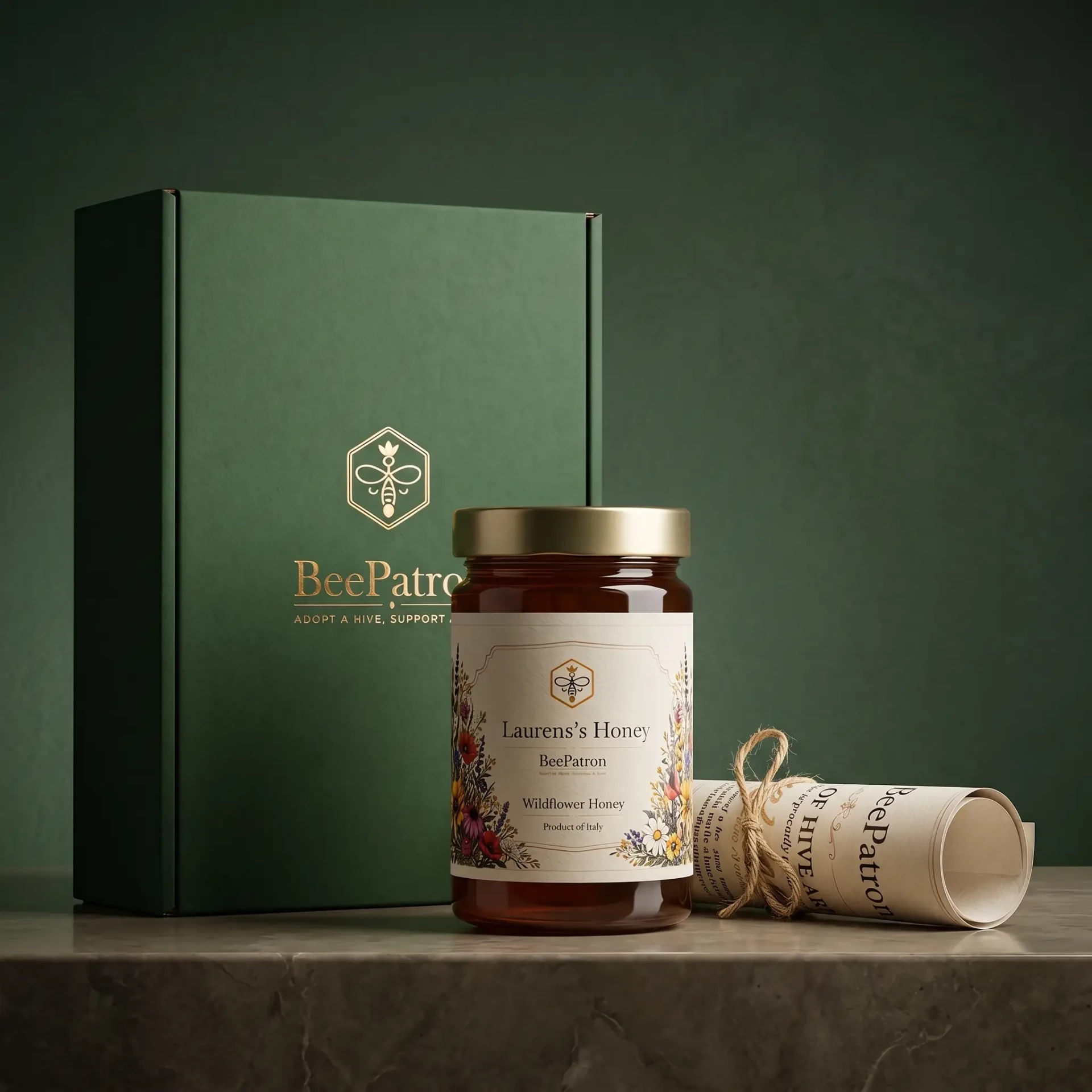
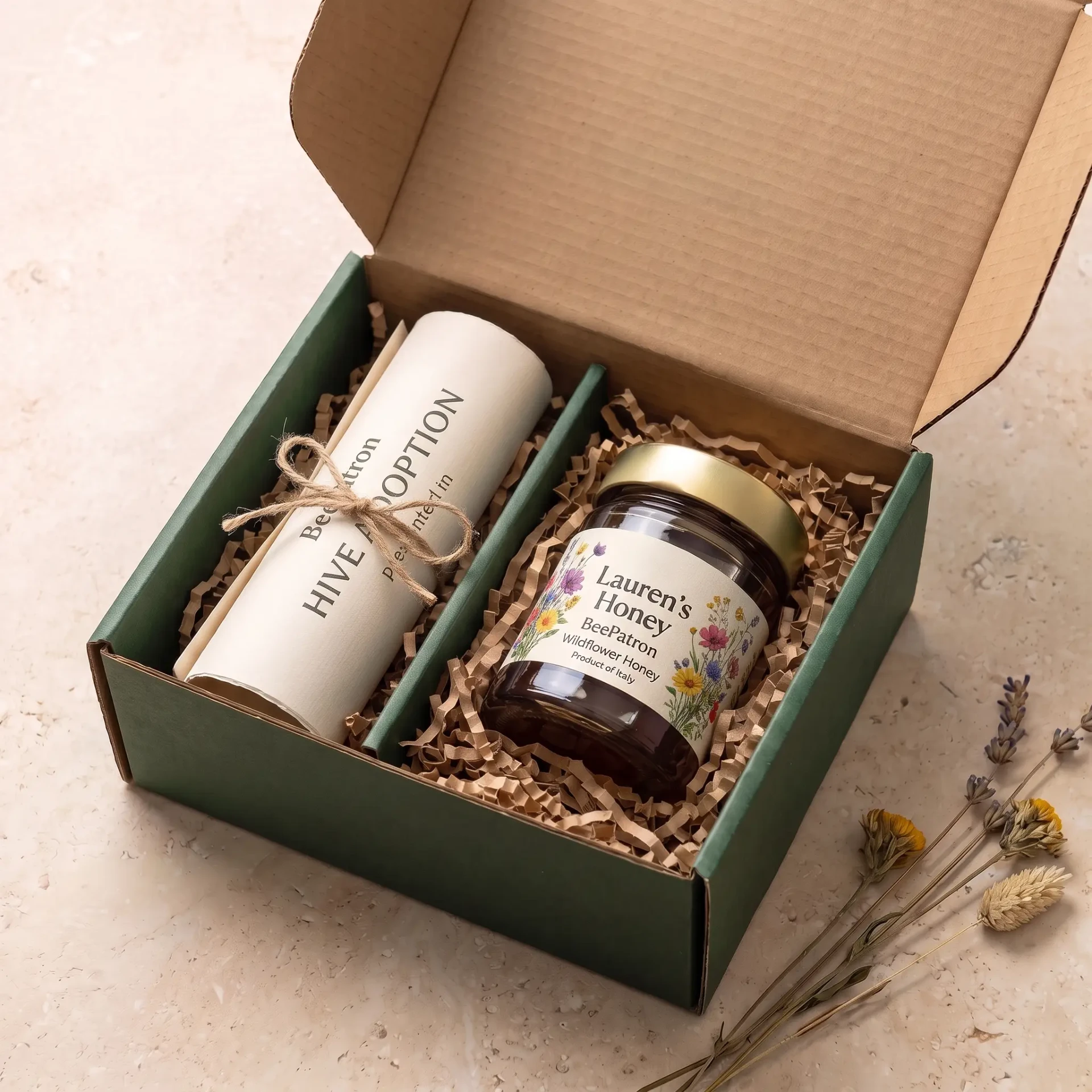
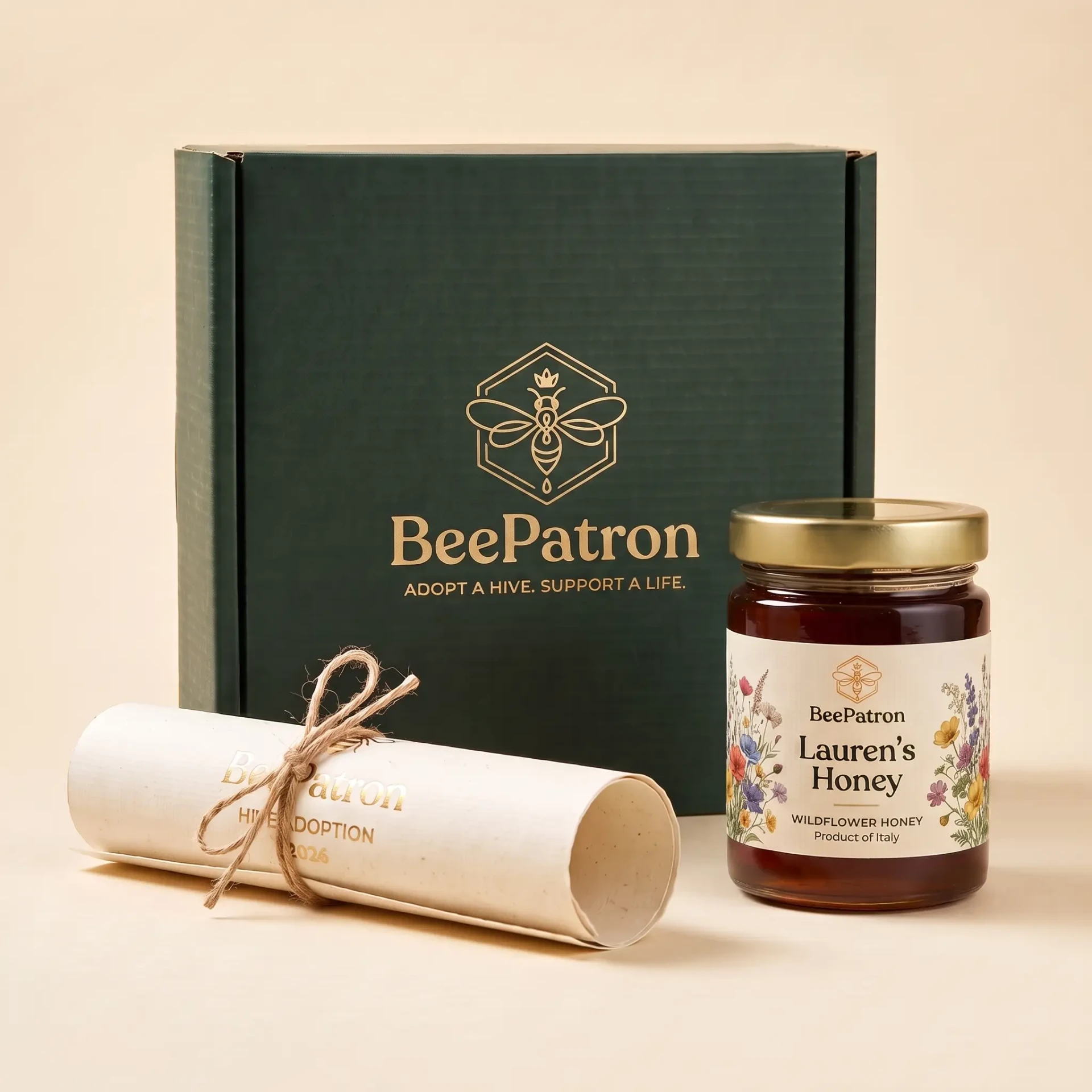
See the BeePatron corporate gift presentation
A considered presentation built around personalized Tuscan honey, a hive adoption certificate and a story recipients can continue following.
Sources and further reading
Primary and institutional references used to review the factual claims in this guide. Product details and prices are BeePatron information.
Frequently asked questions
What is a sustainable client gift?
It is a gift selected with evidence-based attention to provenance, usefulness, materials, delivery and afterlife. No product is sustainable merely because it uses nature imagery or environmental language.
How much should a company spend on a client gift?
There is no universal amount. Consider relationship context, recipient policy, proportionality, tax or compliance rules and the complete delivered cost. Expensive is not automatically appropriate or memorable.
Are food gifts appropriate for clients?
Often, but confirm dietary, cultural, policy and shipping considerations. Provide an alternative or opt-out when the audience is diverse or restrictions are unknown.
How much branding should a premium client gift carry?
Usually enough to identify the giver while allowing the product, maker and recipient message to lead. Oversized branding can make a premium gift feel promotional.
Can beehive sponsorship be a client gift?
Yes, when the recipient is likely to value the apiary, provenance and continuing experience. Explain the sponsorship accurately and confirm all physical and digital inclusions in the proposal.
Give clients a real Tuscany story
Tell BeePatron who the program is for, when it should begin and what a successful recipient experience should feel like.
Explore corporate sponsorship