Corporate gifting guide
Branded Honey Gifts for Clients and Employees
How to plan premium branded honey gifts around provenance, personalization, food labelling, recipient experience and reliable corporate fulfilment.
Quick answer
A strong branded honey gift combines traceable honey, compliant food information, restrained company branding and a clear recipient story. Before ordering, confirm provenance, jar and label specifications, personalization limits, artwork deadlines, address handling, destination restrictions and what happens if harvest or delivery conditions change.
Why honey can work as a corporate gift
Honey is useful, shareable and connected to place. It can feel more considered than disposable promotional merchandise because the recipient can taste it, use it and understand where it came from. A well-presented jar also works across client appreciation, employee milestones, executive gifts and event follow-up.
The product alone is not enough. Generic honey with a large logo can still feel like advertising. The experience becomes more distinctive when the provenance is credible, the branding is proportionate and the recipient understands the apiary or producer behind the jar.
Branded honey and personalized honey are not the same
A branded jar normally carries company identity, campaign artwork or event information. A personalized jar is specific to the recipient, for example through a name or dedication. Some programs combine both, but every additional variable increases artwork, data and fulfilment complexity.
Choose the lightest level of customization that supports the objective. Client gifts often benefit from discreet company recognition and a personal message. Employee recognition may justify individual names. Large event programs usually need a standardized design and a separate activation experience.
- ●Company-branded: consistent design across the order.
- ●Recipient-personalized: individual names or messages requiring accurate data.
- ●Experience-led: certificate or digital journey carries personalization while the food label remains simpler.
Provenance should survive the custom label
Custom presentation must not obscure required food information or create a misleading origin story. Ask who produced or packed the honey, the country of origin, how the floral description was determined and whether the honey comes from one apiary, several apiaries or a wider sourcing program.
A named-hive experience does not automatically mean that every jar was isolated from one exact colony. Honey is often harvested and prepared at apiary level. Credible providers explain that boundary instead of turning a symbolic connection into an unsupported traceability claim.
What belongs in the design and production brief
Give the supplier one approved source of truth covering jar size, label dimensions, print method, brand colors, required copy, personalization fields and proof approval. Confirm whether the custom artwork supplements or replaces any standard presentation and who is responsible for regulatory review.
Avoid designing around an unconfirmed mockup. Physical dimensions, substrates and production methods affect legibility and color. Request a digital proof and, for a significant order, ask whether a physical sample is available before approving the full run.
- ●Final quantity plus an agreed contingency allowance
- ●Jar size, label area and packaging specification
- ●Approved logos, colors, message and personalization fields
- ●Mandatory food and origin information
- ●Artwork, proof and recipient-data deadlines
- ●Approval owner and documented change process
Design the experience beyond the jar
The reveal should answer three questions quickly: who the gift is from, why it was chosen and what the recipient can do next. A short card or certificate can carry this explanation without overloading the food label.
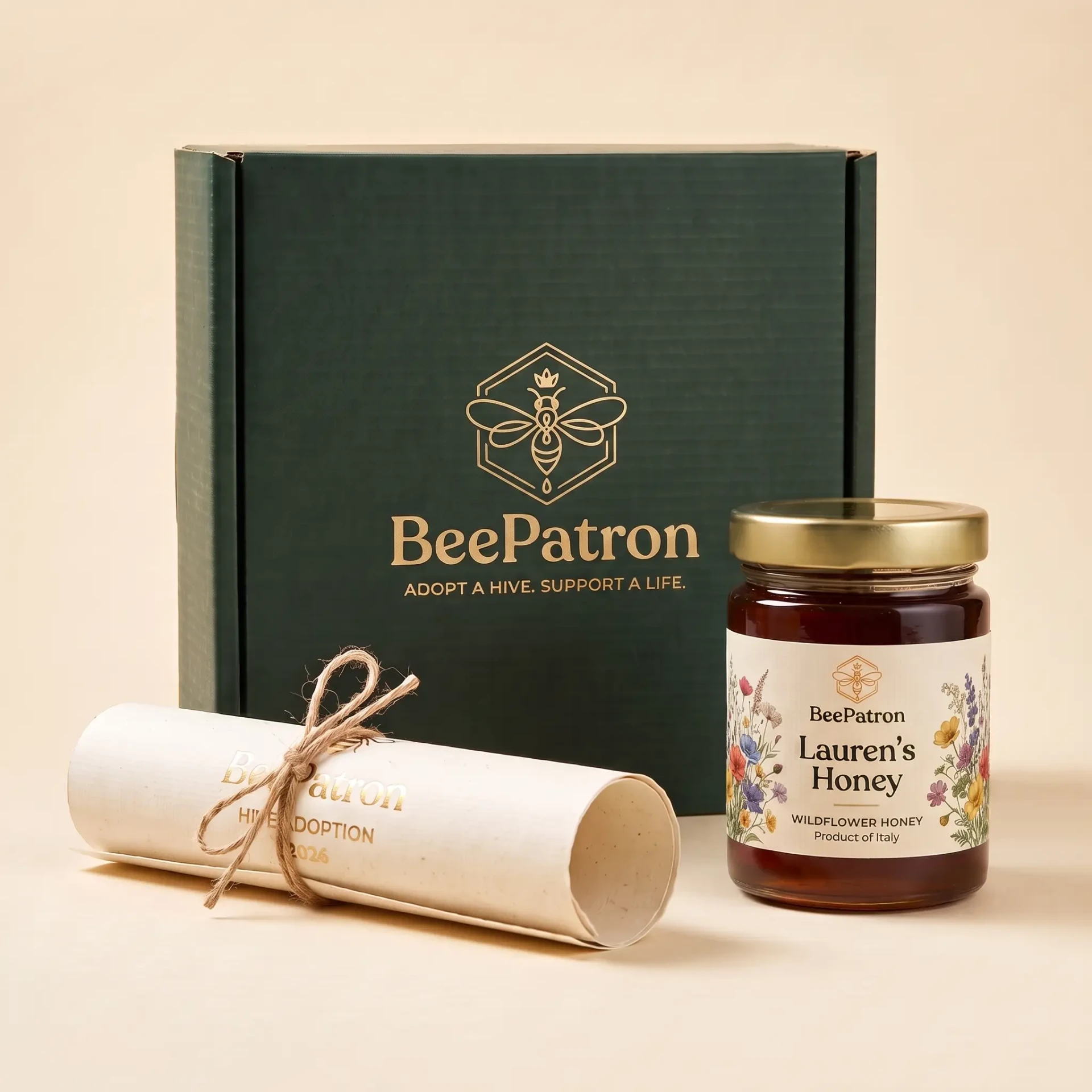
BeePatron can connect the physical gift to a named-hive experience and private Hive Room under an agreed corporate proposal. That creates later points of engagement, but access, personalization, honey and presentation options must be confirmed for the specific program rather than assumed from a concept image.
Plan food-gift fulfilment before collecting addresses
Confirm destination countries, delivery windows, address format, duties, recipient availability and how damaged or undeliverable parcels will be handled. Food shipments may face restrictions or additional requirements, so international eligibility should be checked before the recipient list is promised.
Collect only the personal data required for the program and give recipients an accurate explanation of how it will be used. Set a final correction deadline and define what happens when an address arrives late. Individual-address fulfilment is operationally different from delivering cartons to one office.
- ●Single office, multiple offices or individual recipient addresses
- ●Domestic versus international destinations
- ●Address validation and correction deadline
- ●Tracking, damage and failed-delivery process
- ●Recipient opt-out or non-food alternative where appropriate
- ●Data deletion or retention expectations after fulfilment
Keep sustainability language precise
Reusable, recyclable or responsibly sourced packaging claims should refer to specific materials and evidence. A honey gift does not become sustainable merely because it features bees, nature imagery or the word eco.
If the gift is connected to a hive sponsorship, describe the purchased program accurately. Do not imply carbon neutrality, quantified biodiversity gains or exclusive colony-level honey unless those claims are supported by a relevant method and evidence.
BeePatron presentation
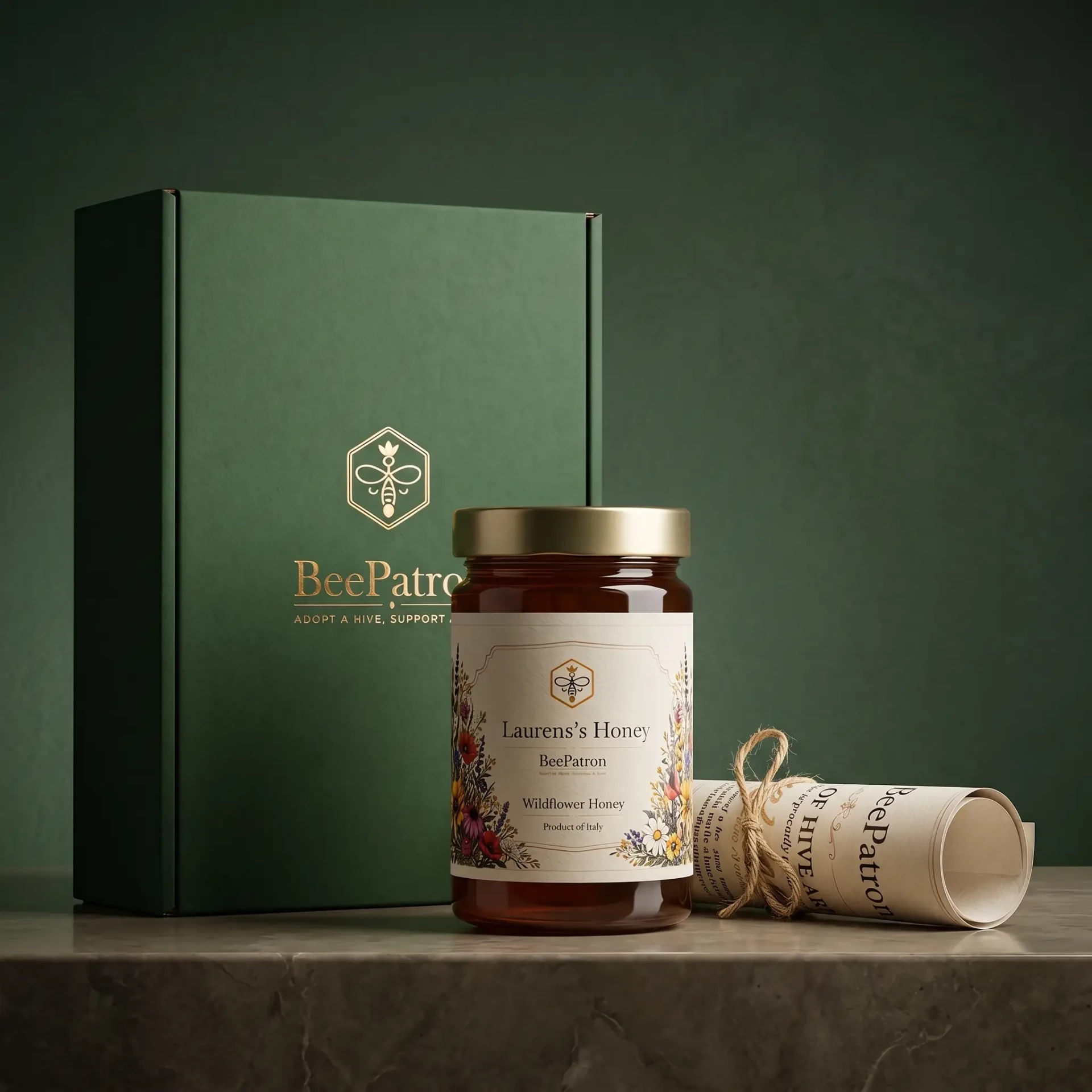
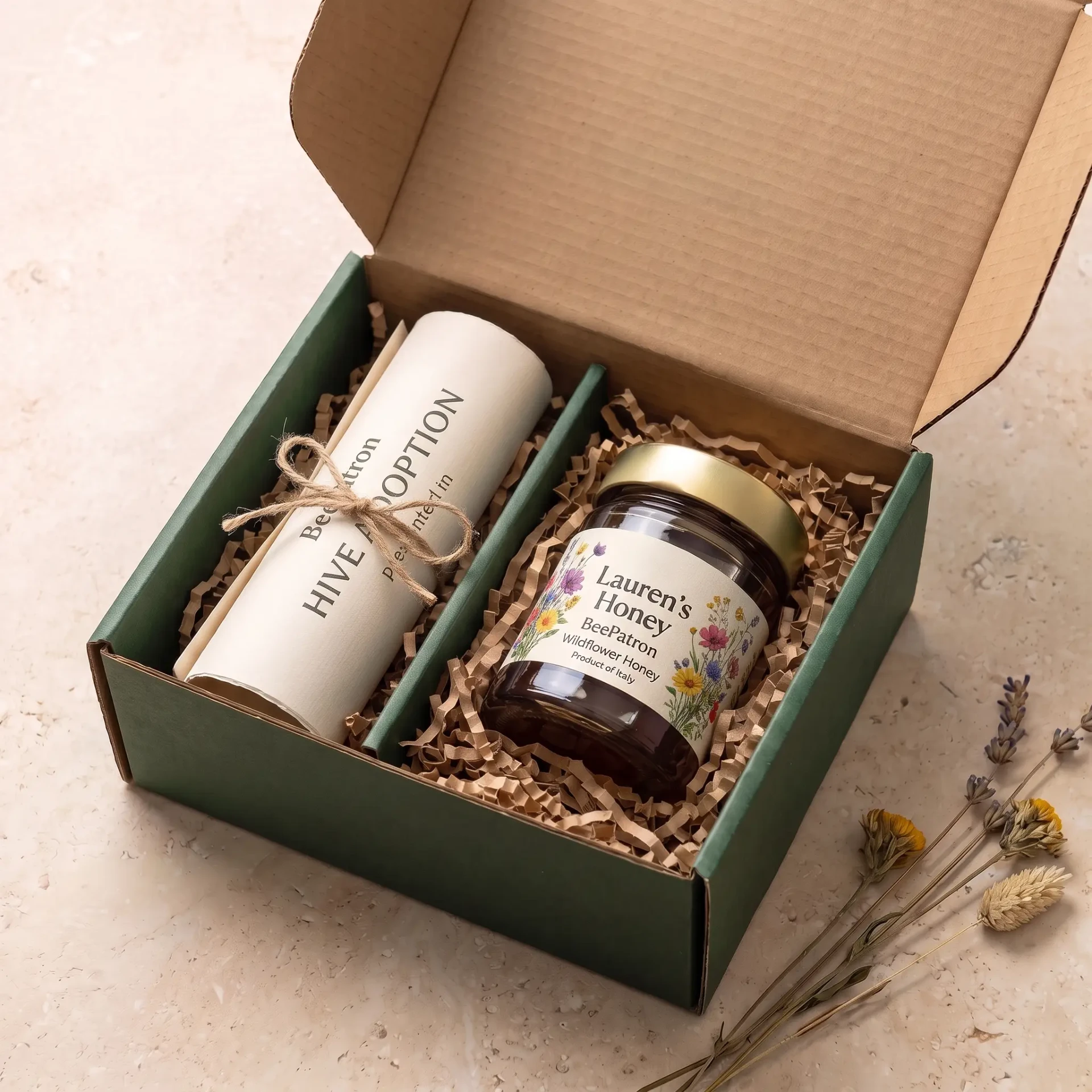
See the BeePatron corporate gift presentation
A considered presentation built around personalized Tuscan honey, a hive adoption certificate and a story recipients can continue following.
Sources and further reading
Primary and institutional references used to review the factual claims in this guide. Product details and prices are BeePatron information.
Frequently asked questions
Can honey jars be customized with a company logo?
Often yes, subject to supplier capability, minimum quantities, artwork deadlines and food-labelling requirements. BeePatron confirms available corporate presentation options in a tailored proposal.
Can every employee receive a jar with their own name?
Recipient-level personalization may be possible, but it requires accurate data, production lead time and a defined correction process. Confirm feasibility before collecting names.
Does branded honey come from the sponsored hive?
Not necessarily. Honey is commonly harvested and prepared at apiary level. The provider should state the actual provenance and must not imply exclusive colony-level origin without evidence.
Is honey suitable for international corporate gifting?
It can be, but food-shipping rules, duties, delivery times and destination eligibility vary. Confirm every destination before promising delivery.
How early should a company order personalized honey gifts?
Allow time for scope confirmation, artwork, proofing, recipient data, production and delivery. The exact lead time depends on volume, customization and destinations, so work backwards from the required arrival date with the supplier.
Create a honey gift with a real apiary story
Tell BeePatron the audience, quantity, destinations and required date so available presentation and fulfilment options can be confirmed.
Request a corporate proposal