Inside the Colony
Why Do Honey Bees Collect Water? Cooling, Food and Colony Life
A bee at a puddle is doing a real colony job. Follow water from the forager's landing spot to the warm nest, with practical ways to observe safely.
Quick answer
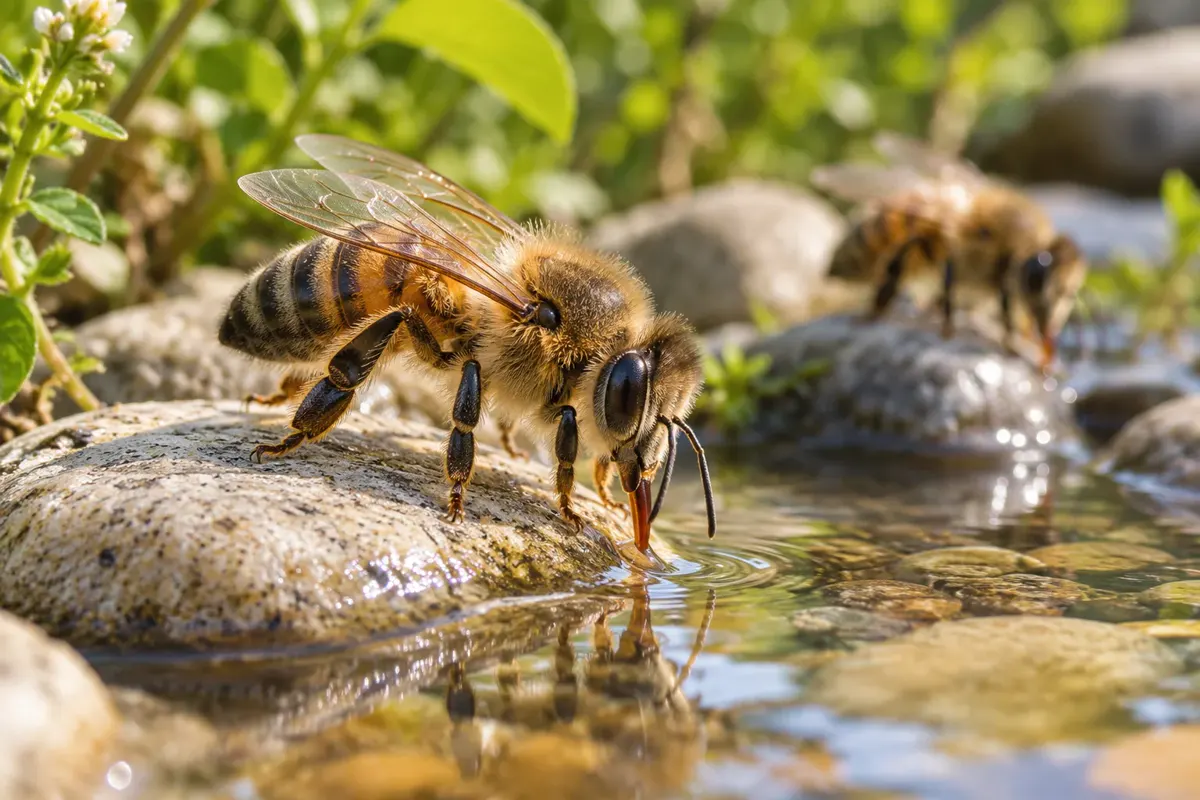
Honey bees collect water because a colony needs it for more than individual drinking. Workers can use water in food for developing brood and to dilute stored honey. On hot days, water spread inside the nest and moved air help cool it through evaporation. Demand changes with weather, brood and incoming nectar, so a bee visiting a puddle does not by itself reveal which task the colony needs most. Watch from a respectful distance and keep any offered water shallow, clean and easy to land beside.
A water forager has a different load from a nectar forager
A worker at the edge of a pond may extend her mouthparts into a wet surface, take up liquid and carry it back to the colony in her crop. That can look like nectar collection, but the source and immediate use differ. Pollen is carried mainly on the body or hind legs; water is transported as liquid. A visitor can therefore be doing essential work without touching a flower.
Honey bees also obtain water as part of nectar and food, so a visible line of bees at a faucet is not a complete measure of a colony's needs. A scientific study of water-collecting workers describes how water demand and foraging respond to conditions. The practical lesson is to observe the behavior without assuming that every forager is collecting the same resource.
Water helps make food usable for developing bees
Young larvae receive food prepared by adult workers. Water contributes to the liquid portion of that food and can be used to dilute stored honey when needed. The role becomes especially relevant when incoming nectar is scarce or brood demand is high. A colony cannot simply replace every water trip with more honey because concentrated stored food and liquid food serve different immediate purposes.
The paper by Kovac and colleagues on water-collecting honey bees identifies adult water balance, dilution of stored honey and brood food among the roles of water. That is an account of colony physiology, not a recipe a gardener should try to provide. Plain, accessible water is the useful resource; sugar or honey added to an outdoor dish changes the situation and can attract other insects.
Evaporation is part of a colony's cooling response
On a hot day, workers can distribute water in the nest while other bees move air with their wings. As water evaporates it takes heat with it. The colony may also change where bees are positioned and how much air moves through the nest. The USDA's honey-bee atlas discusses water and humidity regulation, while field research examines how water foraging responds to heat and colony size.
This is not a tiny air-conditioner with a fixed setting. Air temperature, sun, colony population, brood area and nectar intake all influence the problem the bees must solve. A cluster of bees outside the hive in hot weather can be one behavioral response, but only a beekeeper with the full context can judge what a particular colony needs.
Why bees may prefer one water source over another
A shallow edge gives a bee a place to stand while she drinks, whereas a smooth, deep bowl can be difficult to use. Distance, familiarity and access also affect where bees appear. A damp patch of soil may attract foragers even when a cleaner-looking dish stands nearby. Their choice is an observation, not proof that one source is ideal or safe.
If you offer water in a garden, use a shallow dish with stable stones or another firm landing surface above the waterline. Refresh it and clean the container so stagnant water and mosquitoes do not become a problem. Place it away from busy paths, and do not move close to a swarm or hive to make a photograph. Local conditions determine whether a garden station attracts visitors at all.
Make a small observation without disturbing bees
Choose one safe vantage point and watch for five minutes. Record the time, temperature in general terms, weather and the kind of water surface. Count visits to that location, not an assumed number of individual bees; the same worker may return. Repeat on another day before drawing conclusions about a pattern. A quiet water source does not mean there are no bees nearby.
Notice whether bees can land on a damp edge, whether the dish is shaded or sunny and whether nearby flowers are active. Compare your notes with a second visit at a similar time. This is a useful family activity because it separates what you saw from what you infer. You cannot diagnose brood health, heat stress or honey output from a garden water count.
Water collection is not the same as honey making
Honey bees make honey mainly from nectar or honeydew after workers process and concentrate it. Water gathered at a puddle is not poured into a jar as an ingredient. The colony may use water to dilute food or regulate its environment, while nectar is ripened through a separate process that removes much of its water.
That distinction helps explain why a hive can need both nectar foragers and water foragers on the same day. It also helps a child ask a better question when watching a bee: what resource is she carrying, and what evidence do we actually have? A flower visit, a pollen basket and a puddle visit each tell a different part of the colony story.
Follow a real hive without inventing a daily water report
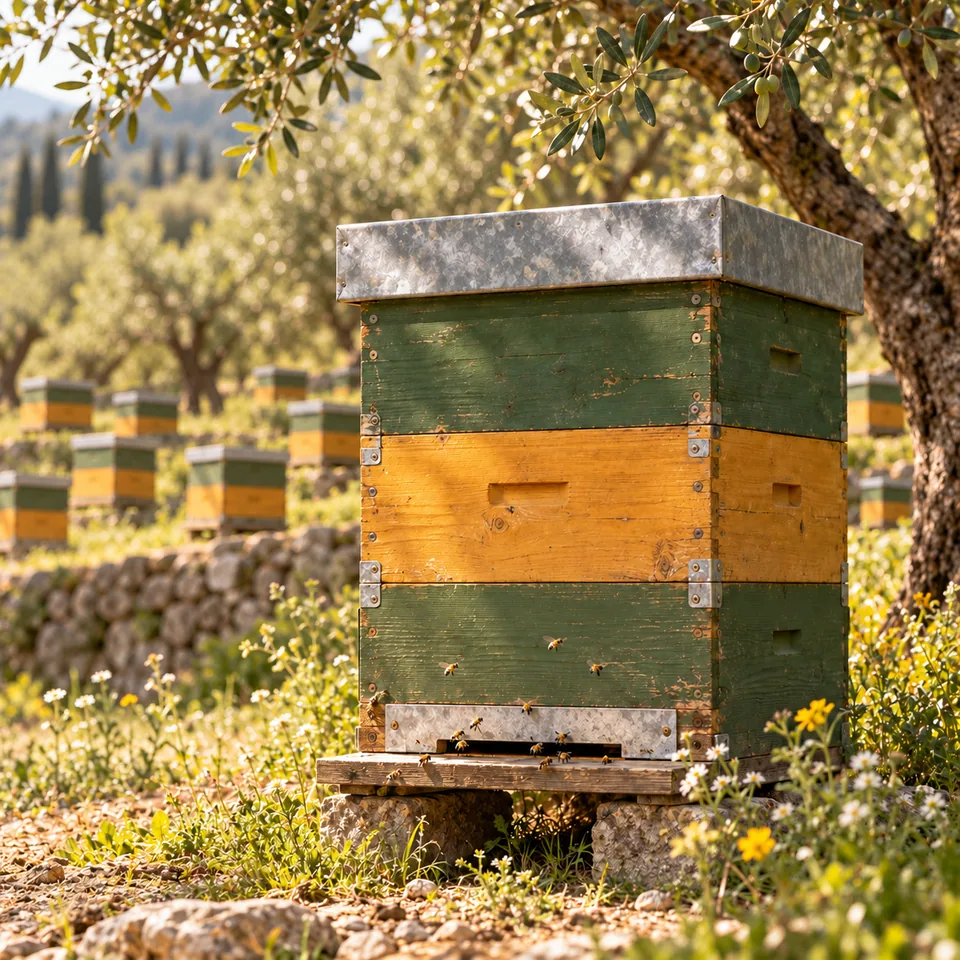
The needs of a Tuscan colony change with weather, flowering and brood. A seasonal apiary story can make the work behind a hive more tangible, but a photograph of one water forager cannot prove the conditions inside a particular named hive. Use the question as an invitation to learn how beekeepers read several signs together, rather than a shortcut to a diagnosis.
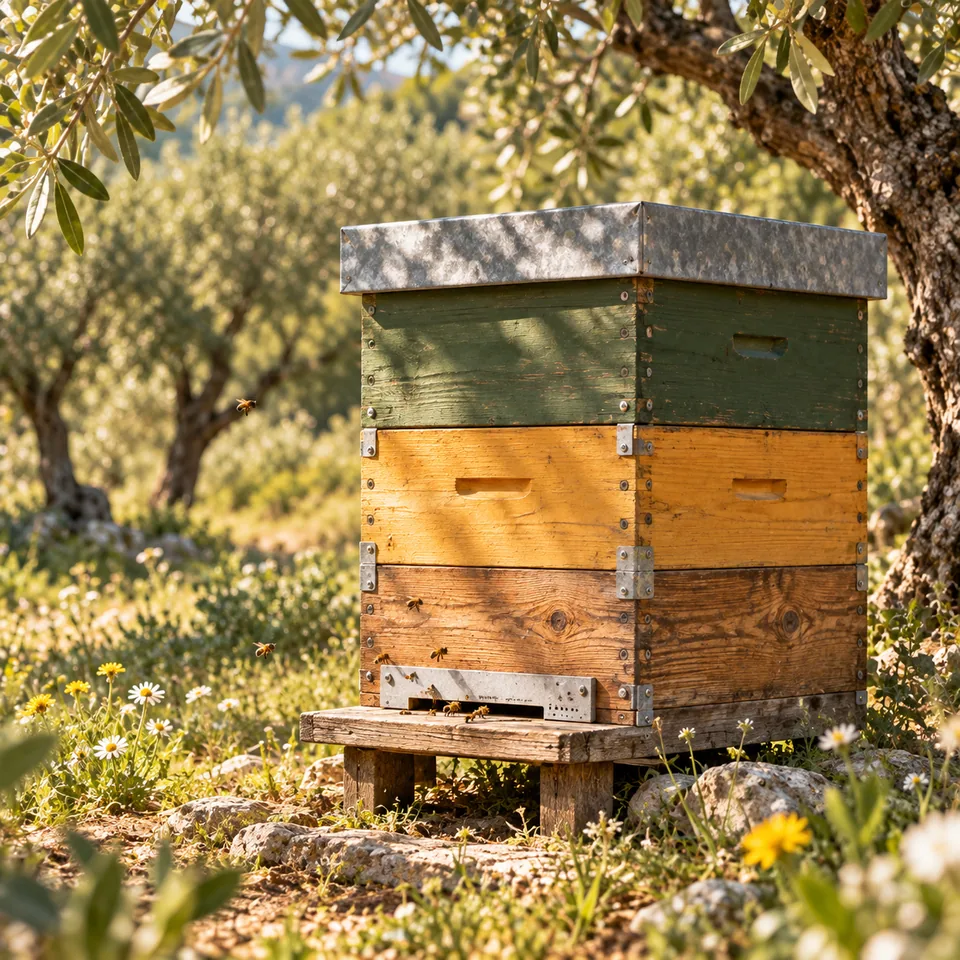
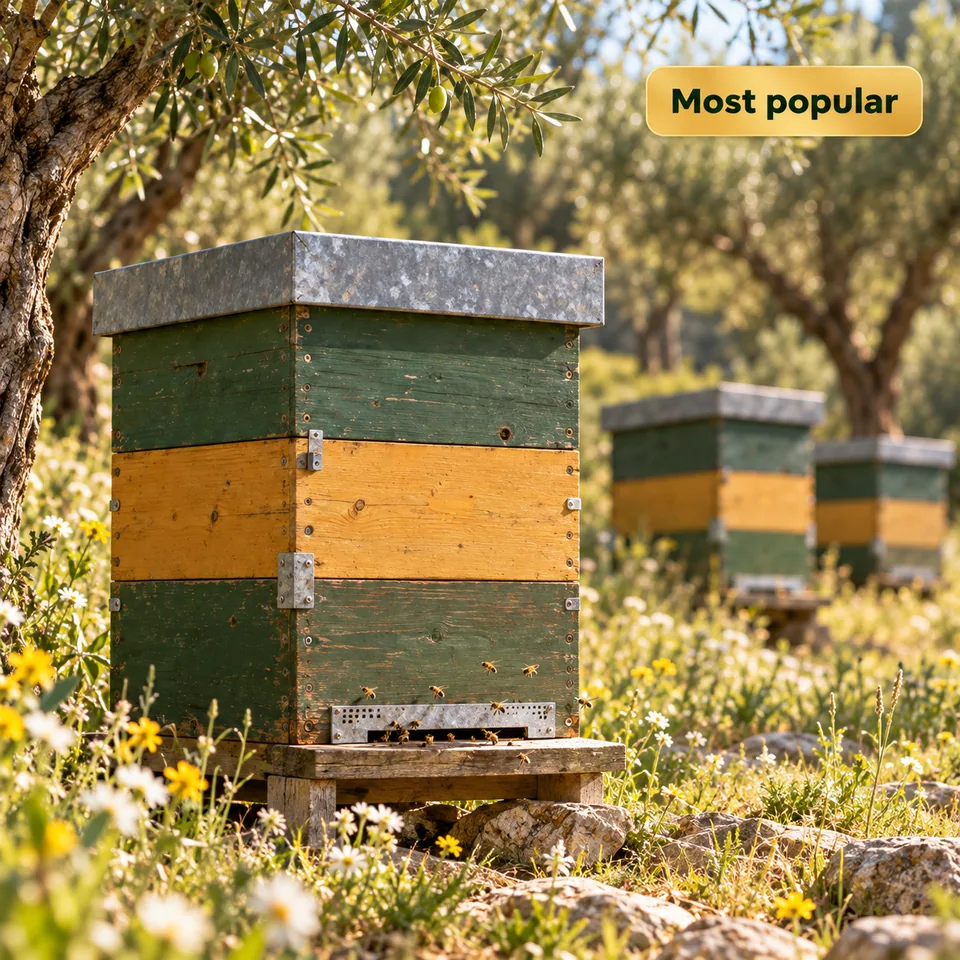
BeePatron connects patrons with a named hive at Le Gusciane, seasonal updates and a private Hive Room. BeePatron is a patronage experience in Tuscany. Patronage does not transfer legal ownership. Honey comes from the supported apiary according to the selected package, harvest and season. A thoughtful patronage experience makes space for both the familiar image of a honey jar and less visible tasks such as keeping the colony supplied with water and food.
Sources and further reading
Primary and institutional references used to review the factual claims in this guide. Product details and prices are BeePatron information.
Frequently asked questions
Do honey bees drink water?
Yes. Water helps meet adult bees' needs and supports colony tasks, including preparing brood food and cooling. A worker may carry liquid back for use inside the nest.
Why are bees at my birdbath instead of flowers?
They may be collecting water for the colony. A safe edge and a familiar location can make a birdbath useful, while flower resources vary by time and weather. One visit cannot reveal the whole reason.
Should I put sugar or honey in a bee water dish?
Offer plain water instead. A shallow, clean dish with secure landing places is a better simple observation and watering setup than sweetened liquid.
Does collecting water mean the hive is too hot?
Not necessarily. Colonies use water for brood food, diluting stored honey and other needs as well as cooling. A water forager alone is not a diagnosis of the hive.
Your next chapter starts in Tuscany
Turn your next spoonful into a Tuscany story.
Adopt a named hive at Le Gusciane, follow its seasons in your private Hive Room and receive premium raw Tuscan honey with a personalized label.
Choose your package, then select your hive name in your private Hive Room after adoption.
Your connection to Tuscany
Hive Experience
$129USD
One payment · One full year
- Live apiary camera & your private Hive Room
- Seasonal stories from your beekeeper
- Personalized digital & printed certificates
1.1–4.4 lb of premium raw Tuscan honeyAnnual harvest shipment. Amount depends on the harvest.
Shipping included
Tuscany, shared together
Family Hive Experience
$229USD
One payment · One full year
- Twice the honey range, with Wildflower & Acacia
- Honey recipes & digital Guided Honey Tasting
- Hive Room, live camera, beekeeper stories & certificates
2.2–8.8 lb of premium raw Tuscan honeyAnnual harvest shipment. Amount depends on the harvest.
Shipping included
Your private Tuscan patronage
Private Hive Patron
$599USD
One payment · One full year
- Your personal name plaque at the apiary
- Personal beekeeper updates & live apiary camera
- Personalized certificates, recipes & Guided Honey Tasting
13.2–22 lb of premium raw Tuscan honeyAnnual harvest shipment. Amount depends on the harvest.
Shipping included
Secure payment with Stripe · Shipping included in every package
What happens after I order?
You'll receive your adoption confirmation and access to your private Hive Room, where you can choose your hive name and follow seasonal updates. Your personalized digital certificate is part of the experience.
When does the honey arrive?
Your package includes an annual harvest shipment of premium raw Tuscan honey and a printed certificate. Timing follows the harvest and packing schedule. See shipping details before ordering for a specific date.
Can I give it as a gift?
Yes. Choose “As a gift” above, select a package and add your recipient's name and personal message. You can send the gift email now, schedule it or have it sent to you to present yourself. Honey delivery follows its own shipping schedule.