
Honey Storage Guide
Does Honey Expire? Shelf Life, Storage & Spoilage Signs
Honey can remain usable for a long time when sealed and stored correctly, but quality changes and contamination are possible. Learn what dates and warning signs mean.
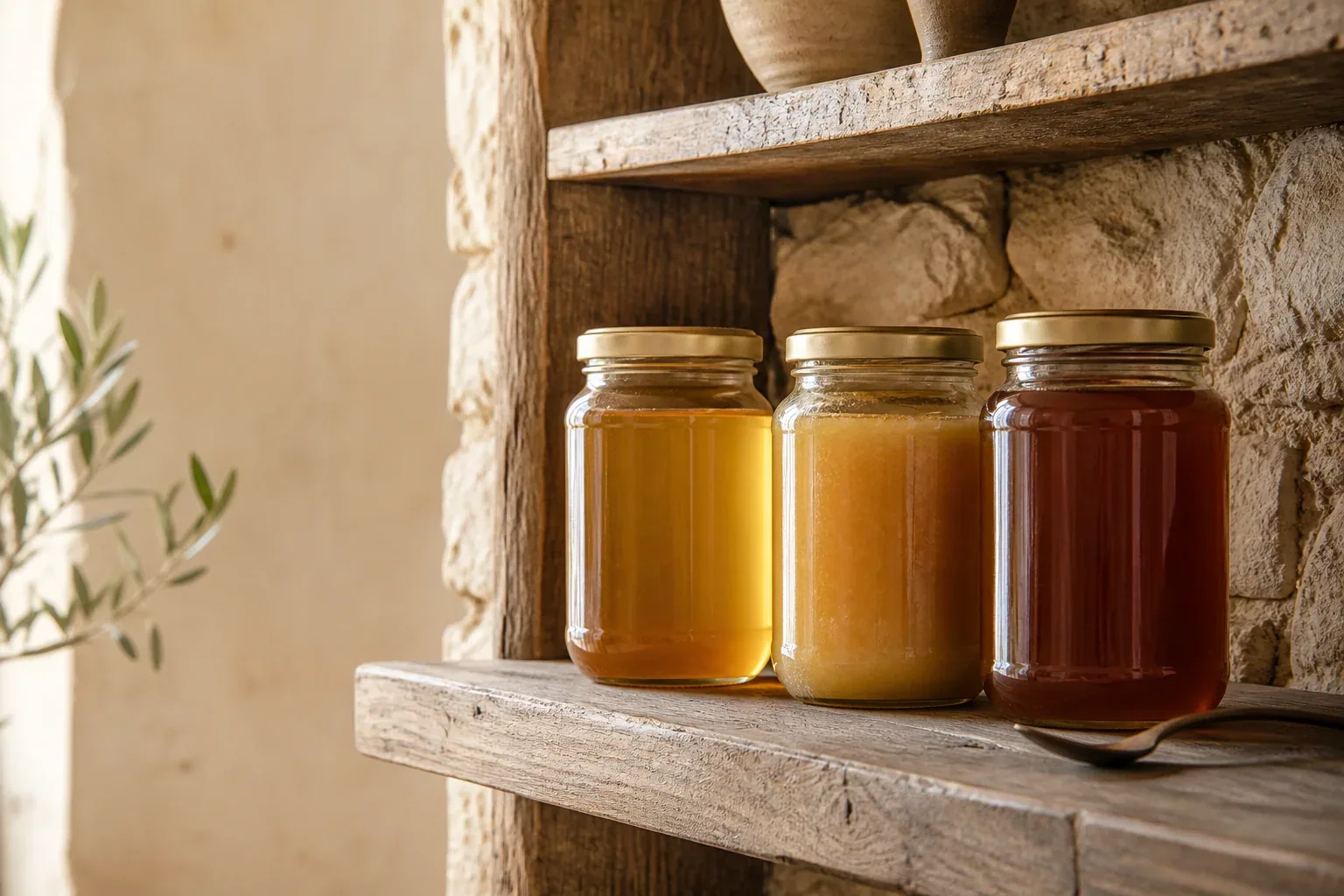
Quick answer
Properly produced honey is naturally resistant to many forms of microbial spoilage because it is acidic, concentrated in sugars and low in available water. An unopened, intact jar can remain usable for a long time, but that does not make every jar immortal or exempt from its label. Honey can absorb moisture, ferment, become contaminated or lose aroma and color quality. Follow the best-before date and producer guidance, keep the jar tightly closed, use clean dry utensils and discard it when packaging integrity or signs of fermentation create doubt.
| Criterion | Usually a quality change | Possible warning sign |
|---|---|---|
| Crystals | Normal glucose crystallization; often reversible with gentle warming. | Not spoilage by itself. |
| Darker color | Can develop gradually with age or heat exposure. | Investigate when combined with damaged packaging or unusual odor. |
| Surface bubbles | A few packing bubbles can be harmless. | Continuing foam, pressure or sour/alcoholic odor can indicate fermentation. |
| Best-before date | Primarily guides expected quality under stated storage. | Do not ignore a use-by instruction or damaged seal. |
Looking for an educational gift rooted in the real world?
Explore BeePatron’s named Tuscan hives and discover the meaning behind each one.
Explore the HivesWhy honey can last much longer than many foods
Ripe honey is a concentrated sugar solution with relatively little available water. Its acidity and natural chemical environment make growth difficult for many ordinary spoilage organisms. Bees create that durability by transforming nectar and removing water before storing mature honey in comb.
Durable does not mean sterile. Honey can contain microorganisms and spores, and its composition varies. The familiar instruction not to feed honey to infants under 12 months exists because infant botulism risk is different from ordinary adult food spoilage. Long shelf life should never be turned into a universal safety claim for every person and circumstance.
Best-before and use-by dates are not interchangeable
A best-before date generally indicates how long the producer expects the food to retain its intended quality when stored as directed. After that point, aroma, color or texture may change even when the product has not suddenly become unsafe. A use-by date is a safety instruction and should not be treated the same way.
Date-label rules differ by market, so read the exact wording on the jar. The producer knows the packaging, batch and intended shelf conditions. When a label provides a storage period or after-opening instruction, that guidance outranks a generic internet claim that honey lasts forever.
How to store honey after opening
Keep honey in a tightly closed food-safe container in a dry place away from strong heat and direct sunlight. Ordinary pantry storage is often appropriate when the producer says so. Refrigeration is usually unnecessary and can speed crystallization, although crystallization itself is not spoilage.
Moisture control is crucial. Honey is hygroscopic, meaning it can take up water from humid air. Leaving a jar open or dipping a wet spoon into it can alter the surface and create more favorable conditions for fermentation. Use a clean, dry utensil and wipe the rim before resealing.
- ●Keep the lid fully closed between uses.
- ●Use clean, dry spoons or measuring tools.
- ●Protect the jar from direct sun and repeated high heat.
- ●Do not add water to the storage jar.
- ●Follow any batch-specific instruction on the label.
Crystallization and darkening do not automatically mean spoilage
Many honeys crystallize as glucose leaves the liquid phase and forms crystals. The result can be creamy, grainy or firm. This is normally a texture change. If liquid honey is preferred, the closed jar can often be warmed gradually in warm water, avoiding boiling or direct high heat.
Honey may also darken or lose delicate aroma during long storage, especially when exposed to warmth. Those are reasons to value fresh, well-stored honey, but color alone cannot diagnose safety, purity or geographical origin.
Signs that deserve caution
Fermentation can occur when honey has enough water and suitable yeasts are active. Warning signs can include continuing foam, gas pressure, leakage or a distinctly sour, yeasty or alcoholic odor. A few trapped air bubbles after filling are different from an active change that keeps developing.
Also examine the package. A broken seal, cracked jar, corrosion, foreign material or evidence that water entered the container changes the decision. Do not taste a questionable food to prove it is safe. Contact the producer when practical or discard the jar if integrity is uncertain.
Should you eat an old jar of honey?
Start with the label, storage history and package condition. If the jar is within its stated period, was stored correctly and shows only normal crystallization, it may simply need stirring or gentle warming. If its history is unknown, the seal is compromised or fermentation signs are present, replacement is the sensible choice.
Age does not improve honey automatically. Fresh botanical aroma can fade, and repeated heating can reduce sensory quality. Buying an amount you will reasonably use and keeping it sealed preserves more of what made the particular harvest distinctive.
Sources and further reading
Primary and institutional references used to review the factual claims in this guide. Product details and prices are BeePatron information.
Frequently asked questions
Can honey go bad after opening?
Yes, especially if it absorbs moisture or is contaminated. Keep it tightly closed and use clean, dry utensils.
Is crystallized honey expired?
No. Crystallization is usually a normal physical change. Check the date, seal, odor and storage history separately.
Does honey need to be refrigerated?
Usually not when the producer directs pantry storage. Refrigeration often speeds crystallization. Always follow the jar's specific instructions.
Can babies eat honey?
Honey should not be given to infants under 12 months because of infant botulism risk, regardless of whether the honey appears fresh.
Choose honey with a place and harvest behind it
Explore named-hive patronage connected with a Tuscan apiary and plan-specific honey.
Choose a Hive Give BeePatron as a Gift