Thoughtful food gifts
Honey Gift Basket Ideas That Feel Personal
Build a thoughtful honey gift basket for a host, food lover, or couple. Find five useful themes, a packing checklist, and ways to make the gift personal.
Quick answer
Build a honey gift basket around one clear use: breakfast, tasting, hosting, tea, or a shared evening. Choose one or two honeys with identifiable origins, add only useful companions, and write a personal note. Keep food labels visible and select packaging for the actual journey. The ideas below are baskets you assemble yourself, not BeePatron product bundles.
Start with the recipient's routine
The most useful honey gift basket answers a small question about the person receiving it: when will they open it, and what will they do next? A keen cook may want something to compare. A busy host may prefer one excellent jar and a note explaining why you chose it. A large hamper is not automatically more thoughtful.
Before shopping, write one sentence: ‘This is for their slow Sunday breakfast,’ or ‘This is something they can taste together after dinner.’ Use that sentence to remove items as well as add them. If an accessory does not help create the intended moment, leave it out.
Check whether the recipient eats honey and whether other foods need to meet dietary preferences. Do not assume a nature lover or a vegan friend wants a honey gift. Asking a discreet, practical question can be more personal than choosing an elaborate surprise that misses their needs.
Five honey gift basket themes with a clear purpose
The slow-breakfast basket pairs a jar of honey with a small packet of a breakfast food the recipient already enjoys and a washable napkin. Add a note suggesting the first morning they might use it. Buy any fresh bread close to the handover instead of treating it as long-lasting packing material.
The curious-taster basket contains two contrasting honeys, two tasting spoons and a blank comparison card. Write ‘Which would you choose again?’ rather than inventing tasting scores. This is a good format for someone who enjoys trying ingredients but does not need another large kitchen tool.
The host-thank-you basket stays compact: one honey, a useful tea towel, and a specific thank-you note. The tea-break basket adds a tea the recipient likes and perhaps a simple infuser if they need one. The evening-for-two basket uses two jars, two small note cards and an invitation to compare them together. Each version gives the gift a use without filling the container with unrelated extras.
- ●Slow breakfast: honey, a familiar breakfast companion, and a napkin.
- ●Curious taster: two jars, clean spoons, and a comparison card.
- ●Host thank-you: one jar, a tea towel, and a specific note.
- ●Tea break: honey and the recipient's preferred tea.
- ●Evening for two: two jars and a plan for a short shared tasting.
Choose the honey before the accessories
Read the jar and the seller's description before deciding that a honey belongs in your basket. Can the recipient identify the producer or seller, origin, and stated variety? Is the jar quantity clear? If the story depends on a named place, make sure the information actually connects that jar to the place.
For two jars, choose a contrast you can explain honestly. Different labeled floral sources, two named regions, or separate documented batches can provide a reason to compare. Do not describe a pale jar as healthier, a darker one as purer, or a crystallized one as inferior simply because of appearance.
Spend on the part the recipient will use. One clearly described honey can be a stronger choice than three anonymous jars selected to fill space. If the person already has a favorite, choose that and personalize the surrounding experience rather than trying to outguess them.
Set a budget without buying filler
Divide your budget into the honey, one useful companion, and the packaging needed to deliver both intact. Leave room for shipping if the gift is traveling. There is no universal amount that makes a honey basket premium; the recipient's preferences and the quality of the choices matter more than the size of the container.
A small gift can be one jar with a thoughtful card. A larger budget might buy a second honey with a distinct origin, or a reusable item the recipient specifically wants. Avoid adding a dipper, spoon, mug, candle and notebook simply because the basket looks empty. Choose a smaller basket instead.
For several recipients, use a consistent base and personalize one element. A short note referencing a shared meal or a different serving suggestion can make the gifts individual without requiring an entirely different shopping list for each person.
Pack for the journey, not just the photograph
A hand-delivered basket and a shipped food gift need different plans. For a local handover, keep jars upright and stop glass from knocking against other hard items. For a parcel, use an outer box and protective packing suitable for the jars; follow the carrier's guidance rather than relying on decorative tissue.
Keep the producer's labels and instructions available. If you add food that needs refrigeration, arrange suitable handling and delivery or choose a different companion. For a shelf-ready gift, commercially packaged foods with their own clear storage directions are simpler to explain than homemade mixtures in unmarked jars.
Add a short honey care card. University of Missouri Extension recommends keeping plain honey tightly covered in a dry, cool place. For families, note that the CDC advises against honey for children under 12 months. Keep both messages straightforward and separate from your personal greeting.
- ●Check every jar and lid before wrapping.
- ●Keep glass separated and the contents secure.
- ●Retain ingredient, origin and storage information.
- ●Confirm the recipient can receive the parcel.
- ●Choose shipping and packing for the actual contents.
Write a note that explains the choice
The note should connect the honey to the person, not repeat the product description. For a host: ‘Thank you for making us feel so welcome. This is for a quiet breakfast after all your cooking.’ For a couple: ‘Two jars for an evening of comparing notes. I hope you each find a different favorite.’
For someone who loves Italy, mention a real shared memory or their interest in regional food. Avoid claiming the basket comes from a particular farm unless that is documented. You can create an Italian-inspired setting without implying that every object in it was produced in Tuscany.
If you want a longer experience rather than a basket alone, explore BeePatron's gift and adoption options separately. Check current plan inclusions and delivery terms. A basket you assemble at home is not an official BeePatron bundle, and it should not promise specific honey varieties, jar counts, or shipment dates that the plan does not state.
Sources and further reading
Primary and institutional references used to review the factual claims in this guide. Product details and prices are BeePatron information.
Frequently asked questions
What should I put in a honey gift basket?
Start with one or two honeys, one useful companion such as a tea or napkin, and a personal note. Choose a theme based on how the recipient will use the gift.
Do I need several different honeys?
No. One well-chosen jar can make a complete gift. Two jars are useful if comparison is part of the experience; more jars are not automatically more thoughtful.
Can I mail a honey gift basket?
Plan packaging around the contents and the carrier's requirements. Protect glass inside a suitable outer box, keep labels available, and account for any foods needing temperature-controlled handling.
Does BeePatron sell the illustrated basket?
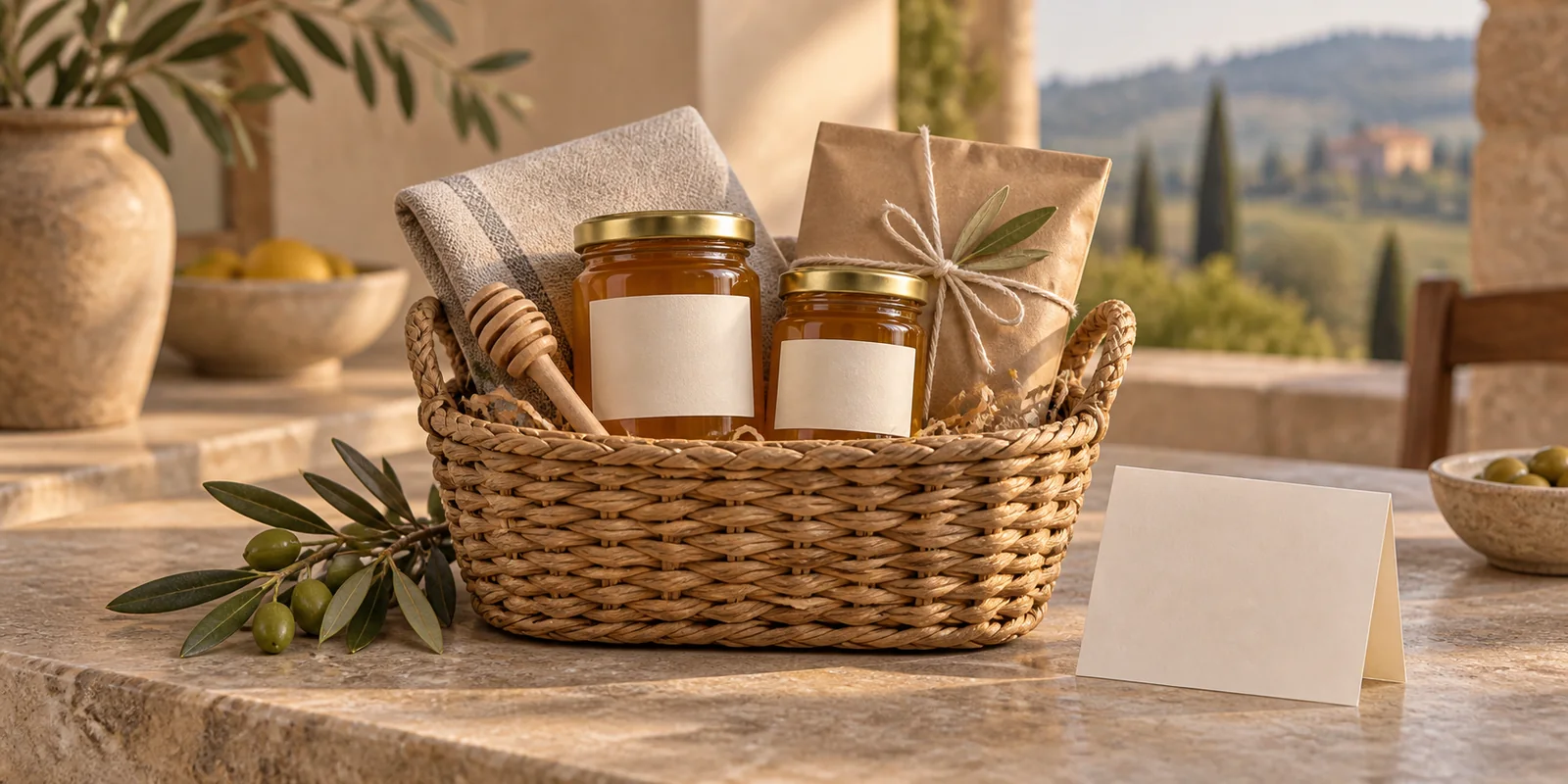
The pictured basket is an AI-generated illustration of a gift you could assemble independently. Check BeePatron's gift page and plan descriptions for the products and experiences currently offered.
Give a connection to a real beehive
Explore BeePatron's gift experience and review the current plan details to see whether it suits your recipient.
Explore BeePatron gifts