
Seasonal Bee Biology
What Do Bees Do in Winter? A Species-by-Species Guide
Honey bees cluster around stored food, many bumblebee queens overwinter alone and solitary bees pause as developing young. Learn how different bees survive winter.
Quick answer
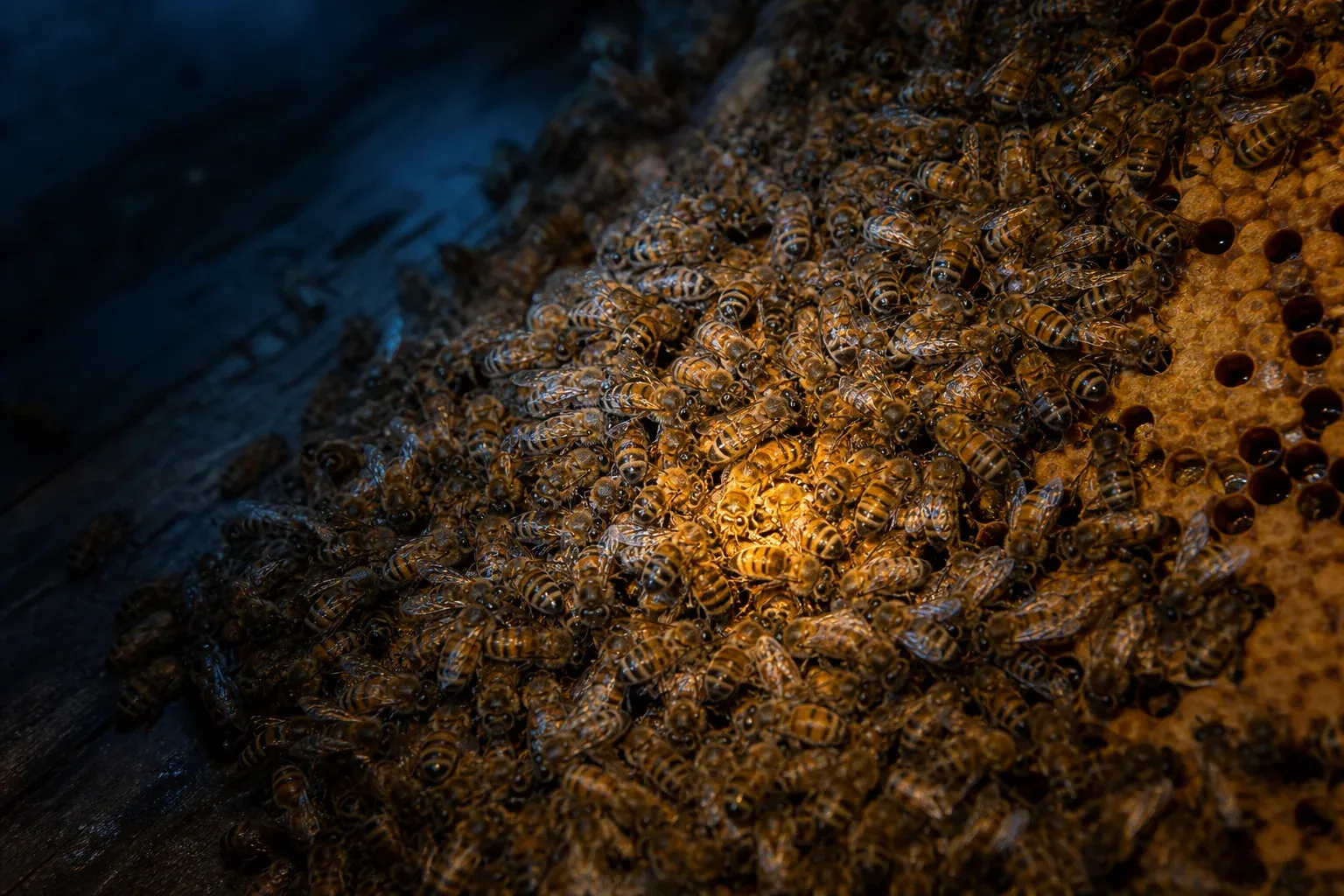
In temperate climates, honey bees usually survive winter as a living colony. Workers form a thermoregulating cluster around the queen and move through stored honey as conditions allow; they do not truly hibernate. Most bumblebee colonies die at the end of their annual cycle, while newly mated queens shelter alone and emerge later to found new nests. Many solitary bees overwinter as larvae, prepupae, pupae or adults inside nests, depending on species. Warm winter days can bring brief activity, but emergence timing and risk differ greatly by bee and region.
| Criterion | Typical winter strategy | What emerges later |
|---|---|---|
| Honey bees | A perennial colony clusters and consumes stored food. | The existing queen and workers resume broader activity. |
| Bumblebees | Usually only newly mated queens overwinter in shelter. | Each surviving queen attempts to found a new annual colony. |
| Cavity-nesting solitary bees | Developing young remain in sealed nest cells. | Independent adults emerge according to species and temperature cues. |
| Ground-nesting solitary bees | Immature or adult stages remain protected underground. | Adults emerge to mate and provision new individual nests. |
Looking for an educational gift rooted in the real world?
Explore BeePatron’s named Tuscan hives and discover the meaning behind each one.
Explore the HivesBees do not share one winter survival plan
The word bee covers thousands of species with different social systems, life cycles and nesting habits. Honey bees live in large perennial colonies. Most bumblebees form annual colonies. Most bee species are solitary, with each female provisioning her own nest rather than living in a worker society.
Climate also matters. Winter in a mild Mediterranean landscape differs from winter at high latitude or elevation. The patterns below describe common temperate strategies, not a calendar that applies to every species and location.
Honey bees form a living winter cluster
As temperatures fall, workers draw together around the queen and brood area. Bees generate heat through muscular activity and adjust cluster density and position. The center can remain much warmer than the outer layer, while workers gradually exchange positions and the colony responds to changing conditions.
The cluster consumes stored honey for energy. It must remain able to reach food as winter progresses, which is why colony strength, stores, health, moisture and hive configuration matter. On suitable mild days, workers may take cleansing or orientation flights; seeing a few bees outside does not mean winter is over.
What beekeepers do—and avoid doing—in winter
Preparation begins before cold weather. Beekeepers assess stores, colony strength, queen status, disease pressure, equipment and local risks during late summer and autumn. Winter management then emphasizes monitoring without repeatedly breaking the colony's protective environment.
Necessary actions vary by climate and management system. A beekeeper may check hive weight, entrances, storm damage, ventilation or food risk, but should avoid opening colonies casually in unsuitable weather. The bees' needs outrank a fixed content or visitor schedule.
Most bumblebee colonies end; queens begin again
In many temperate bumblebee species, the worker colony and old queen die as the season closes. Newly produced queens mate, build energy reserves and find sheltered places to overwinter. They are the bridge between one annual colony and the next.
A surviving queen emerges when conditions and her biology prompt activity, searches for food and then a nest site. Early flowers are therefore particularly important. An unusually warm spell can bring queens out before dependable forage is available, increasing risk when cold returns.
Solitary bees wait inside nests in different life stages
A solitary female typically provisions nest cells with pollen and nectar, lays an egg in each and seals them. The mother often dies before her offspring emerge. Depending on species, the young may spend winter as a larva, prepupa, pupa or fully formed adult within the nest.
Cavity nesters may remain inside hollow stems, beetle holes or bee-hotel tubes. Ground nesters remain below soil. This is why cutting every stem, digging bare patches or opening nest materials on a generic date can kill developing bees. Local species guidance matters more than a universal cleanup calendar.
How to help bees through winter responsibly
Protect habitat rather than trying to wake or feed every bee you see. Leave selected hollow stems standing, retain safe patches of leaf litter and undisturbed soil, reduce pesticide exposure and provide locally appropriate flowers from late winter into spring. Habitat continuity supports more species than a single decorative intervention.
Do not bring occupied nests into a heated home or open sealed cells to check them. If a grounded bee appears during an unusual warm spell, first identify whether it is truly in distress and seek local conservation guidance. The goal is to reduce disturbance and make suitable habitat available when natural emergence occurs.
- ●Leave some stems, soil and leaf litter undisturbed.
- ●Plant region-appropriate early and late forage.
- ●Avoid routine pesticide use and contaminated flowering plants.
- ●Keep managed hive decisions with the beekeeper.
- ●Use species-specific guidance for bee-hotel maintenance.
Sources and further reading
Primary and institutional references used to review the factual claims in this guide. Product details and prices are BeePatron information.
Frequently asked questions
Do honey bees hibernate?
No. A temperate honey bee colony remains alive and active inside the hive, forming a heat-regulating cluster and consuming stored food.
Where do bumblebees go in winter?
In many temperate species, newly mated queens shelter alone while the old queen, workers and males die at the end of the annual colony cycle.
Should I clean out a bee hotel in winter?
Do not use a universal date. Occupants may still be developing. Follow a maintenance protocol suited to the local species and nest materials.
Why are bees flying on a warm winter day?
Honey bee workers may take brief flights, and some overwintering bees can become active during warm spells. Activity does not necessarily mean the cold season has ended.
Follow a real apiary through changing seasons
Explore named-hive patronage and the seasonal story of beekeeping in Tuscany.
Choose a Hive Give BeePatron as a Gift